Introduction
Dear Reader,
As of October 2026, a resale apartment in Berlin is notarised at an average of €5,180 per sqm, and a new development at €8,440 per sqm. Year on year, the price per sqm has changed by -2.0 % for resale apartments and by 3.0 % for new developments. Measured over ten years, resale apartment prices have changed by an average of 7.1 % per year. Over five years, a period that began just before interest rates started to rise, the figure is 0.8 %.
In early 2022, the effective interest rate on residential mortgages with a fixed-rate period of five to ten years stood at around 1.1%, according to the Bundesbank. In the same year, the average price of resale apartments reached its highest level to date. Today, mortgage broker Dr. Klein puts the effective top rate for a ten-year loan at 4.16% (as of 11 October 2026), up from 3.38% a year earlier. Depending on the loan-to-value ratio, rates can be higher. A key factor behind mortgage rates is the yield on ten-year German government bonds. It rose from 2.6% in October 2025 to briefly above 3.6% at the end of September 2026. On top of that, the ECB raised its key interest rates by 0.25 percentage points in both June and September 2026. Zinsentwicklung Baufinanzierung 2026: Prognose, Chart +3
Up to the data cut-off for this edition, 7,529 resale apartments and 924 new developments have been notarised. For the whole of 2025, the figures were 12,514 and 1,428. The current year is still incomplete, partly because notarisations are reported with a delay and partly because the final quarter has only just begun. Up to October, 41,837 purchase listings for resale apartments have been recorded, compared with 28,931 last year.
This report shows in detail how prices per sqm differ across boroughs, districts and construction periods, and how the new-development and rental markets are evolving. To find out where your Berlin property stands in today’s market, use our valuation tool or talk to the team at GUTHMANN®, Berlin’s Data-Driven Real Estate Agents.

Resale market
Resale apartments in Berlin are notarised at an average of €5,180 per sqm. Year on year, the change is -€110 per sqm or -2.0 %.
| Period | Avg. sale price per sqm Change vs. prev. year in % |
|---|---|
| 2012 | 9.0 % |
| 2013 | 11.0 % |
| 2014 | 9.0 % |
| 2015 | 13.0 % |
| 2016 | 13.0 % |
| 2017 | 14.0 % |
| 2018 | 14.0 % |
| 2019 | 17.0 % |
| 2020 | 10.0 % |
| 2021 | 14.0 % |
| 2022 | 8.0 % |
| 2023 | -5.0 % |
| 2024 | -3.0 % |
| 2025 | 6.0 % |
| 2026 | -2.0 % |
Measured over longer periods, average annual change stands at 8.3 % over fifteen years and 7.1 % over ten years.
| Period | Avg. sale price per sqm |
|---|---|
| 2012 | €1,700 per sqm |
| 2013 | €1,890 per sqm |
| 2014 | €2,060 per sqm |
| 2015 | €2,320 per sqm |
| 2016 | €2,620 per sqm |
| 2017 | €2,980 per sqm |
| 2018 | €3,390 per sqm |
| 2019 | €3,950 per sqm |
| 2020 | €4,350 per sqm |
| 2021 | €4,980 per sqm |
| 2022 | €5,360 per sqm |
| 2023 | €5,110 per sqm |
| 2024 | €4,980 per sqm |
| 2025 | €5,290 per sqm |
| 2026 | €5,180 per sqm |
Prices by location
The highest prices per square metre are notarised in Mitte (€6,490 per sqm), Friedrichshain-Kreuzberg (€5,760 per sqm) and Charlottenburg-Wilmersdorf (€5,690 per sqm). The lowest are in Spandau (€3,360 per sqm), Reinickendorf (€3,740 per sqm) and Marzahn-Hellersdorf (€3,910 per sqm). The full ranking of all twelve boroughs is shown in the table.
Within individual boroughs, values lie further apart than between some boroughs. In the district of Mitte the price per square metre is €8,360 per sqm, in the district of Wedding it is €4,110 per sqm. Both belong to the borough of Mitte.
Supply and notarisations
The gap between asking price and transaction price stands at 8 % or €440 per sqm.
| Period | Avg. price difference |
|---|---|
| 2012 | 25 % |
| 2013 | 23 % |
| 2014 | 25 % |
| 2015 | 29 % |
| 2016 | 21 % |
| 2017 | 20 % |
| 2018 | 18 % |
| 2019 | 13 % |
| 2020 | 12 % |
| 2021 | 6 % |
| 2022 | 7 % |
| 2023 | 10 % |
| 2024 | 13 % |
| 2025 | 9 % |
| 2026 | 8 % |
As at the data cut-off for this edition, 7,529 notarisations are recorded. For 2025 the series shows 12,514. The current-year figure is incomplete because notarisations are reported with a lag.
| Period | Number of sales |
|---|---|
| 2012 | 14,310 |
| 2013 | 14,098 |
| 2014 | 10,980 |
| 2015 | 12,669 |
| 2016 | 12,242 |
| 2017 | 11,042 |
| 2018 | 9,901 |
| 2019 | 11,281 |
| 2020 | 11,133 |
| 2021 | 13,705 |
| 2022 | 10,750 |
| 2023 | 9,502 |
| 2024 | 11,364 |
| 2025 | 12,514 |
| 2026 | 7,529 |
On the supply side, 41,837 listings are recorded, against 28,931 for 2025.
| Period | Number of purchase listings |
|---|---|
| 2012 | 25,309 |
| 2013 | 29,608 |
| 2014 | 25,120 |
| 2015 | 27,631 |
| 2016 | 21,840 |
| 2017 | 23,132 |
| 2018 | 23,198 |
| 2019 | 21,559 |
| 2020 | 22,564 |
| 2021 | 19,779 |
| 2022 | 17,166 |
| 2023 | 23,440 |
| 2024 | 31,042 |
| 2025 | 28,931 |
| 2026 | 41,837 |
Other factors in pricing
Alongside location, availability, construction period, condition and size all affect price. The average living area of notarised resale apartments is 70 sqm; in 2010 it was 74 sqm. The average transaction price is €372,300, against €109,200 in 2010.
By availability, sales divide between vacant and occupied units and tenant purchases.
Sales are distributed unevenly across construction periods. The largest share is accounted for by apartments built up to 1918, followed by the 1950 to 1964 period.
The table below describes the characteristics of each construction period.
| Construction period | Characteristics |
|---|---|
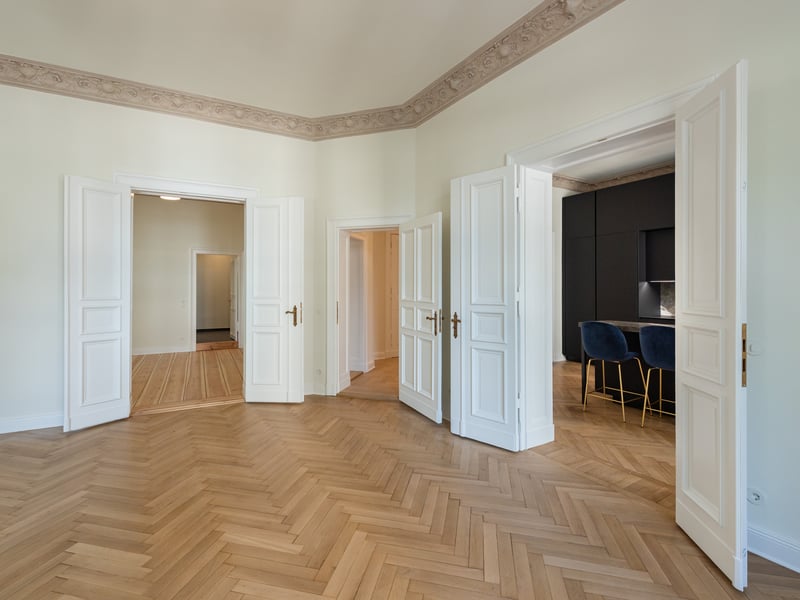
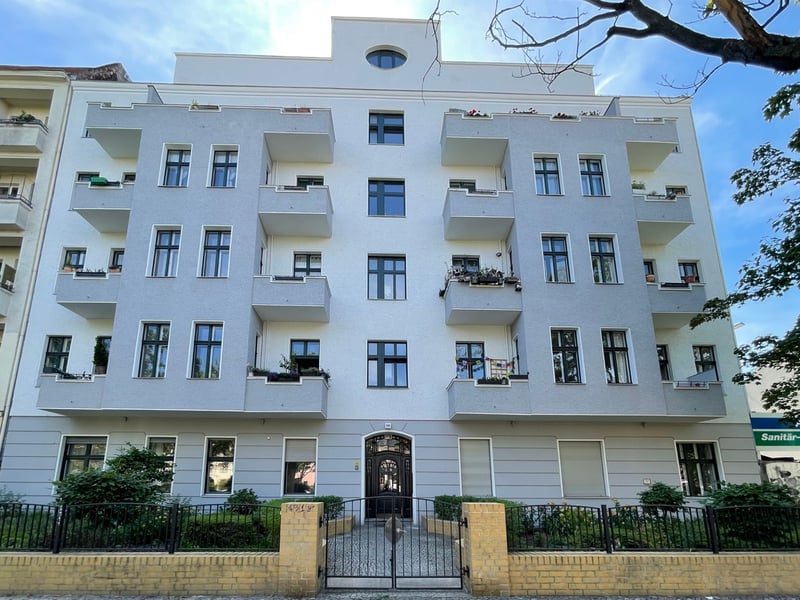
| Up to 1918 | Berlin Altbau with high ceilings, often stucco, solid construction. Predominantly in inner-city locations. |
| 1919–1949 | Interwar and early post-war buildings, more compact layouts, lower ceilings. Condition and quality vary. |
| 1950–1964 | Post-war buildings with basic substance and pragmatic layouts. Weak on energy efficiency. |
| 1965–1972 | Functional layouts of post-war modernism, with different construction methods in East and West. Weak on energy efficiency. |
| 1973–1990 | Late GDR-era stock in the East using industrial construction, occasional higher-quality projects in the West. Heterogeneous quality. |
| 1991–2002 | Post-reunification stock, often standardised developer projects. Mid-range build quality. |
| 2003–2013 | Modern layouts, higher energy standards, established developments. |
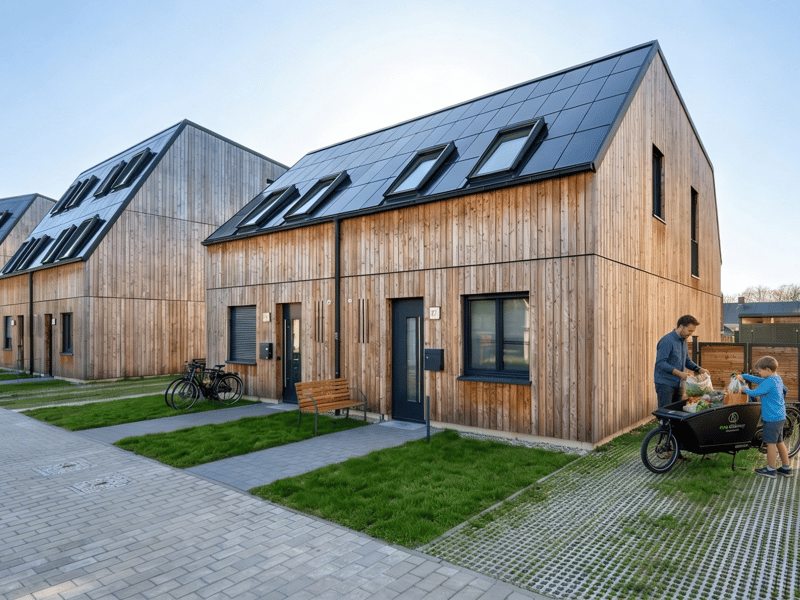
| From 2014 | Current new-build standard with high energy efficiency. Highest prices in the segment. |
New development market
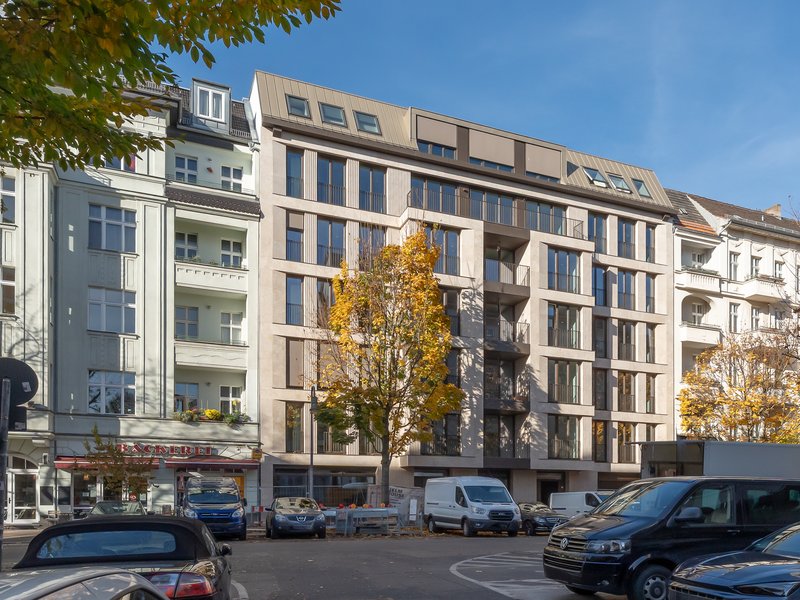
New developments are notarised at an average of €8,440 per sqm. Year on year, the change is €240 per sqm or 3.0 %. Over ten years, the change is 106.0 %, an average annual change of 7.5 %.
| Period | Avg. sale price per sqm |
|---|---|
| 2012 | €2,890 per sqm |
| 2013 | €3,060 per sqm |
| 2014 | €3,350 per sqm |
| 2015 | €3,810 per sqm |
| 2016 | €4,100 per sqm |
| 2017 | €4,550 per sqm |
| 2018 | €4,830 per sqm |
| 2019 | €6,030 per sqm |
| 2020 | €6,500 per sqm |
| 2021 | €7,440 per sqm |
| 2022 | €7,910 per sqm |
| 2023 | €7,840 per sqm |
| 2024 | €7,980 per sqm |
| 2025 | €8,200 per sqm |
| 2026 | €8,440 per sqm |
As at the data cut-off for this edition, 924 notarisations are recorded. For 2025 the series shows 1,428.
| Period | Number of sales |
|---|---|
| 2012 | 4,721 |
| 2013 | 5,224 |
| 2014 | 4,682 |
| 2015 | 7,099 |
| 2016 | 7,270 |
| 2017 | 6,196 |
| 2018 | 4,985 |
| 2019 | 3,501 |
| 2020 | 3,088 |
| 2021 | 3,580 |
| 2022 | 2,102 |
| 2023 | 1,239 |
| 2024 | 1,460 |
| 2025 | 1,428 |
| 2026 | 924 |
The average living area of notarised new developments is 60 sqm. In 2015 it was 82 sqm.
Rental market
The average asking rent for resale apartments is €17 per sqm net cold. For new developments it is €22 per sqm. Year on year, the change for new developments is -€1.00 per sqm.
In 2015 the asking rent in the resale segment was €9 per sqm, in 2020 €11 per sqm.
Asking rents include furnished and fixed-term lettings. Their share of total supply cannot be determined from listing data.
| Period | Avg. rental asking price per sqm |
|---|---|
| 2017 | €10 per sqm |
| 2018 | €11 per sqm |
| 2019 | €11 per sqm |
| 2020 | €11 per sqm |
| 2021 | €12 per sqm |
| 2022 | €13 per sqm |
| 2023 | €15 per sqm |
| 2024 | €17 per sqm |
| 2025 | €18 per sqm |
| 2026 | €17 per sqm |
For new developments the series follows its own path.
| Period | Avg. rental asking price per sqm |
|---|---|
| 2017 | €12 per sqm |
| 2018 | €14 per sqm |
| 2019 | €15 per sqm |
| 2020 | €17 per sqm |
| 2021 | €19 per sqm |
| 2022 | €22 per sqm |
| 2023 | €27 per sqm |
| 2024 | €26 per sqm |
| 2025 | €23 per sqm |
| 2026 | €22 per sqm |
Asking rents relate to new lettings. The 2022 census, by contrast, captures the entire rent level across the existing stock and reports an average net cold rent of €7.8 per sqm. In all twelve boroughs, asking rents lie above census rents. The range by borough is shown in the table.
Social housing
Berlin's building authorities reported 13,754 approved apartments for 2025 according to the final figures of the Berlin-Brandenburg Statistics Office, after 9,772 in 2024. Within social housing, the Senate granted approval for 5,175 apartments. Most subsidised apartments are aimed at middle incomes, with entry rents of €11.50 per square metre. At the end of 2023, Berlin counted just under 100,000 social housing units, against 105,000 a year earlier. Around 5,000 apartments leave their subsidy commitment each year.
Housing demand
For the period from 2022 to 2040, the 2024 Urban Development Plan Housing (Stadtentwicklungsplan Wohnen) puts housing demand at 272,000 apartments. The figure comprises additional demographic demand of 85,000 units from in-migration, relief demand of 137,000 apartments to establish a fluctuation reserve of around three percent, and a land reserve of 50,000 units. The plan makes no statements on future rent or price developments. In inner-city locations, additional housing arises predominantly through densification and conversion, in new quarters on the urban fringe through new construction.
Outlook
There is no clear citywide price trend in the third quarter of 2026. The annual change of -2.0 % is an average across movements in different directions. Prices in the larger districts have changed little through the third quarter of 2026. Friedrichshain, Kreuzberg, Charlottenburg, Wilmersdorf and Neukölln are all within a range of −1% to +3%. Larger movements are mostly found in districts with a low number of transactions. One exception is Halensee, with 15.0 % based on 79 recorded transactions.
On the interest-rate side, the ECB Governing Council raised all three key interest rates by 0.25 percentage points on 10 September 2026, following an initial increase in June. Since 16 September, the deposit facility rate has stood at 2.50%, the main refinancing rate at 2.65% and the marginal lending facility rate at 2.90%. Mortgage brokers reported rates of around 4.2% for ten-year loans on 10 September.
Berlin continues to attract international buyers returning to the market after a period of limited investment activity. International investors tend to take a more detached view of regulation and political change. The elections to the Berlin House of Representatives and the district assemblies on 20 September 2026 do not, for the time being, change the underlying market conditions.
When assessing potential regulatory changes, it is also important to distinguish between federal and state-level powers. Major changes to rent controls, index-linked rents or rent increases following modernisation cannot be implemented by the Berlin Senate alone. At state level, Berlin has greater scope in enforcement, supervision and state-specific regulatory measures. Measures under discussion include tighter rent supervision, a rent register, additional controls and further protected neighbourhood areas.
Structural conditions are likely to remain the main driver of the market. Vacancy remains very low, net additions to the housing stock are limited and supply in the rental market remains tight. Increasing the amount of housing available will therefore depend primarily on additional new construction.
Methodology
Data as of this edition: transaction data from Berlin's Committee of Valuation Experts as of 13 October 2026; interest rate data from the Deutsche Bundesbank up to August 2026. Figures for the current year are year-to-date and not directly comparable with completed years. Purchase contracts are reported to the committee with a delay, so figures for past quarters may still change.
Prices per square metre refer to living area and are shown as both average and median; prices per building and multiples are shown as averages. For 2026, evaluable price data were available for 214 of the 490 sales, and a multiple for 114. Where case numbers are small, for example at borough level, individual large or high-priced properties can strongly influence volume and averages.
Calculation and presentation at the level of boroughs and former boroughs: GUTHMANN®. The figures are based on a model-driven analysis and do not replace official statistics. Deviations are possible.
Subscribe to our newsletter
Receive the latest market analyses and insights directly in your inbox every month.
- Monthly insights
- No spam
Apartment Buildings
Purchase prices, yields, and market trends for residential and commercial buildings in Berlin.
Macroeconomics
Key interest rates, inflation, and economic conditions for the real estate market.
Was this page helpful?
Your feedback helps us improve this page.