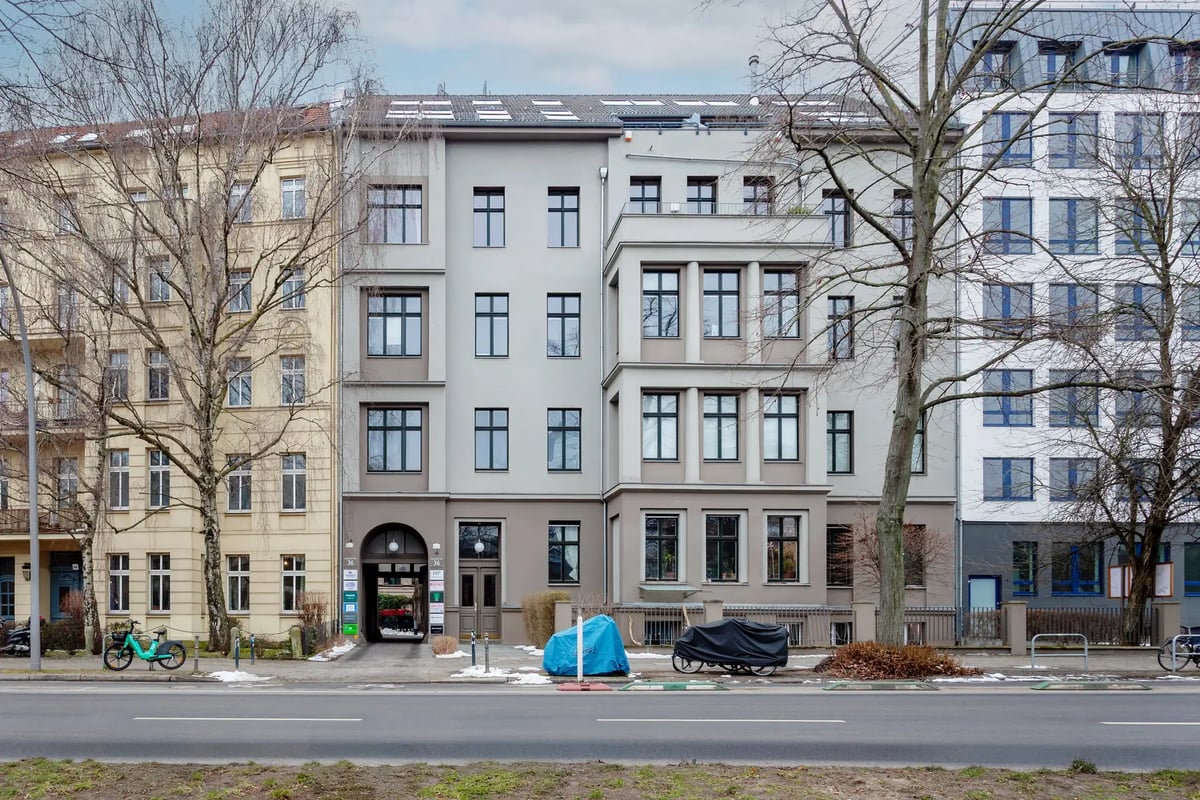


The Berlin Senate has declared the entire city a tight housing market by ordinance. The legal basis is the Building Land Mobilization Act, which came into force in June 2021. Converting rental apartments into condominiums now requires approval under Section 250 of the German Building Code (BauGB) until the end of 2025.
What the approval requirement means
Owners of apartment buildings who want to divide their property into condominiums (WEG division) now need approval from the responsible borough office. The rule applies to existing buildings with more than five apartments. The goal is to slow the conversion and subsequent individual sale of rental apartments. Berlin's market data shows the housing market remains under pressure tight enough to justify city-wide application until end of 2025.
Different impact depending on owner type
For owners of apartment buildings, the most profitable exit strategy, selling individually divided units, is blocked for the coming years. In boroughs like Neukoelln and Friedrichshain-Kreuzberg, where conversions were common, the impact will be felt most strongly. Prices for undivided apartment buildings may soften as investors lose an exit option.
Owners of already divided apartments in Berlin stand to benefit from the reduced supply. Fewer new condominiums entering the market from conversions should push purchase prices for existing condominiums higher.
Exceptions and their limits
The law provides exceptions to the approval requirement. Approval is to be granted if the owner commits to selling the apartments exclusively to existing tenants within seven years. The most relevant exception applies when at least two thirds of tenants are willing to buy. In practice, reaching this threshold in the diverse tenant mix of a Berlin apartment building is difficult. Further exceptions exist for inheritance cases and economic hardship. How the boroughs will interpret economic hardship remains to be seen.
Buy-and-hold confirmed, division business needs recalculating
In the short term, the measure is likely to push condominium prices higher and make acquiring residential property more difficult. Long term buy and hold investors are confirmed in their strategy. Business models based on short term value creation through division need to be recalculated. In conservation areas, the timeline to a free individual sale extends to 2032 at the earliest. Outside these areas, free sales are possible from 2025.
Disclaimer
This article is for general information only and does not constitute tax or legal advice. The content does not replace individual consultation with a tax advisor or attorney. No liability is assumed for accuracy or completeness.