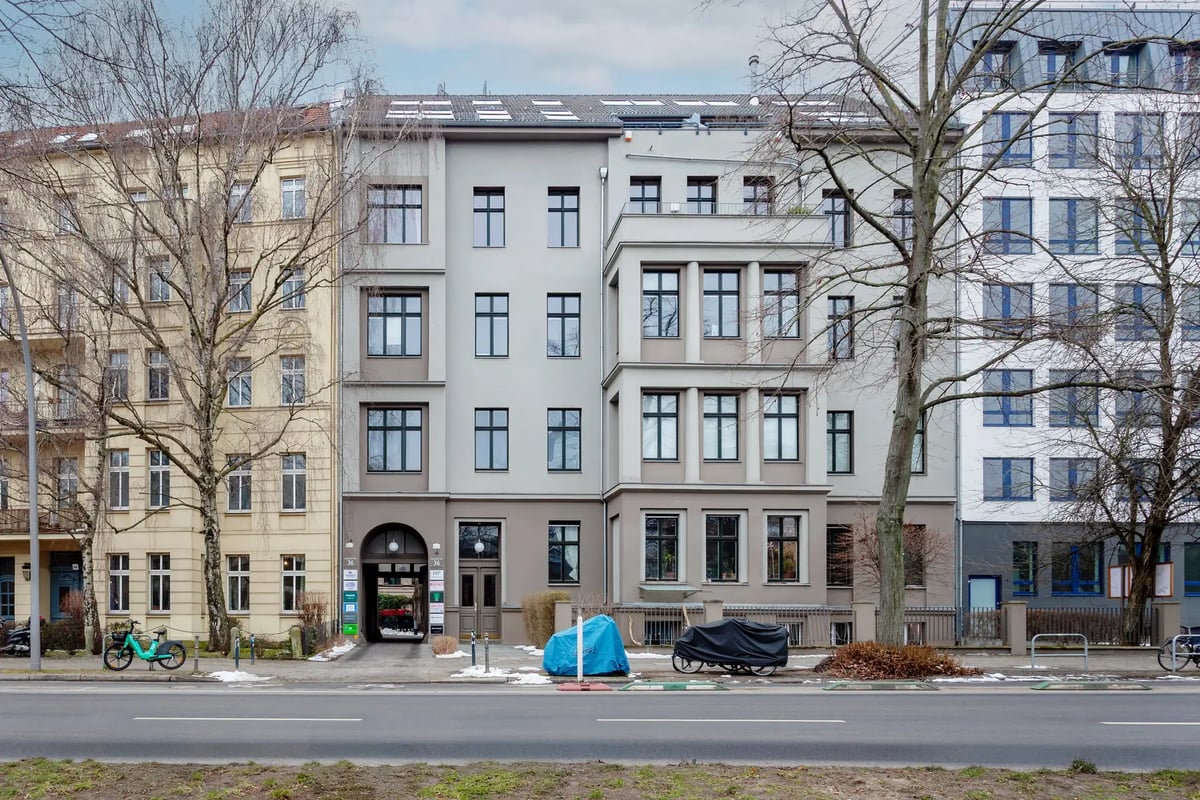

Berlin's municipal right of first refusal in social preservation areas remains in law. In practice, since the Federal Administrative Court's judgment of 9 November 2021, it has only been exercised in rare individual cases. In each of 2023 and 2024, the right was used citywide just once. No new waiver agreements have been concluded since 2024; those already in place remain valid. There are concrete efforts at federal level to strengthen the instrument again.
Berlin practice up to 2021
Where a Berlin neighbourhood was designated a social preservation area (soziales Erhaltungsgebiet), the borough authority could exercise its statutory right of first refusal, or use it as leverage to conclude what are known as waiver agreements (Abwendungsvereinbarungen) with the buyer. Under such an agreement, the borough waived its right in exchange for concessions from the buyer on the future use of the property, particularly on rent levels, modernisations and conversion into condominiums.
Procedure
Municipalities are notified of new property sales directly by the notary. After the notarisation, the notary sends a copy of the purchase contract to the relevant borough authority and asks it to review the right of first refusal. The notary then waits for the borough to confirm that the right does not apply or will not be exercised. This confirmation is known as a Negativzeugnis (clearance certificate). If the borough does not issue the certificate and does not otherwise respond, the notary completes the contract after the three-month review period.
If the borough exercises its right of first refusal, it steps into the contract in place of the original buyer. The terms originally agreed remain in force.
The 2021 Federal Administrative Court ruling
In its judgment of 9 November 2021 (case ref. 4 C 1.20), the Federal Administrative Court (Bundesverwaltungsgericht) significantly restricted Berlin's previous practice. A municipal right of first refusal may only be exercised where the public interest justifies it in the specific case. It may not be exercised where the property is already built and used in line with the aims of the urban planning measure or the relevant land-use plan. What counts is the actual use at the moment of exercise. The forecast previously offered by Berlin boroughs as justification, namely that the property would in future be used contrary to the aims of the preservation regulation, is irrelevant under the judgment.
Existing waiver agreements
For some time it remained unclear whether waiver agreements already concluded could be legally challenged in light of the Federal Administrative Court's ruling. In its decision of 26 March 2026, the Berlin Administrative Court (Verwaltungsgericht Berlin) ruled that the agreements remain valid. A subsequent shift in the case law of the highest courts does not automatically nullify obligations already entered into. Existing waiver agreements therefore stand, even though the boroughs could no longer exercise the right of first refusal today on the original basis.
Current practice
Since the Federal Administrative Court's ruling, the right of first refusal has been exercised only rarely in Berlin. According to reports by the Berlin Senate Chancellery, seven sales were reviewed citywide in 2023 and only five in 2024. In each of those years, the right was actually exercised in one case. In 2024, no new waiver agreements were concluded.
In November 2025, the borough of Neukölln exercised its right of first refusal in the Reuterplatz preservation area for the property at Jansastraße 12 (22 apartments), in favour of the state-owned housing company STADT UND LAND. The basis was serious breaches of the preservation regulation, in particular unauthorised structural alterations and non-approved commercial use. After the legal challenges were withdrawn, the pre-emption is now final and binding.
Impact on transactions
Even though the right of first refusal is now exercised far less often, the three-month review period still gives the boroughs scope to delay property transactions. Buyer and seller should factor this period into the closing schedule.
Planned reform
There are concrete efforts at federal level to strengthen the municipal right of first refusal again. Since 2022, Berlin, Hamburg and Munich have pressed via the Bundesrat for a statutory reform that would widen the limits set by the Federal Administrative Court. An initial draft from the previous federal government in September 2024 was not passed before the early end of the Ampel coalition.
The coalition agreement between CDU/CSU and SPD of 9 April 2025 explicitly provides for strengthening the municipal right of first refusal. Four key points:
- Strengthening the right of first refusal in social preservation areas and in cases of distressed or substandard properties (Schrottimmobilien)
- Simplified valuation procedures
- Price-capped pre-emption rules with a dampening effect on market-based pricing
- Regulation of share-deal structures, which have until now allowed circumvention of the right of first refusal
In April 2026, the Federal Ministry for Housing, Urban Development and Construction (BMWSB) launched the inter-ministerial consultation for the second amendment to the Federal Building Code (Baugesetzbuch), which is intended to implement these provisions. As of May 2026, the specific statutory rules have not yet been adopted.
Sources
- Federal Administrative Court, judgment of 9 November 2021, case ref. 4 C 1.20 (Press release 70/2021): https://www.bverwg.de/pm/2021/70
- Verwaltungsgericht Berlin, decision of 26 March 2026 on the validity of waiver agreements
- Berlin Senate Chancellery: Reports on the exercise of pre-emption rights in social preservation areas 2023 and 2024: https://www.berlin.de/rbmskzl/aktuelles/pressemitteilungen/2026/pressemitteilung.1658092.php
- Bezirksamt Neukölln, press release on the exercise of the pre-emption right at Jansastraße 12: https://www.berlin.de/ba-neukoelln/aktuelles/pressemitteilungen/2025/pressemitteilung.1618153.php
- Bundesrat initiative by Berlin and Hamburg to strengthen the municipal right of first refusal: https://www.berlin.de/rbmskzl/aktuelles/pressemitteilungen/2022/pressemitteilung.1194875.php
- Coalition agreement between CDU/CSU and SPD, 9 April 2025: https://www.cdu.de/app/uploads/2025/04/KoaV-2025-Gesamt-final-0424.pdf
- BMWSB, press release of April 2026 on the second amendment to the Federal Building Code: https://www.bmwsb.bund.de/SharedDocs/pressemitteilungen/DE/2026/04/baugb-upgrade.html
Read the other parts of this feature:
- Property purchase contracts in Germany. Part I: A secure process
- Property purchase contracts in Germany. Part II: Before the notary appointment
- Property purchase contracts in Germany. Part IV: The speculation period
- Property purchase contracts in Germany. Part V: Costs of buying and selling property
Disclaimer
This article is for general information only and does not constitute tax or legal advice. The content does not replace individual consultation with a tax advisor or attorney. No liability is assumed for accuracy or completeness.