

Character and Identity
Hellersdorf lies on the eastern edge of Berlin and belongs to the borough of Marzahn-Hellersdorf, on the boundary with the surrounding Brandenburg countryside. The district is home to 94,933 residents, with a housing stock of 43,599 apartments in 3,663 buildings, spread across 42,726 households (source: Amt für Statistik Berlin-Brandenburg).
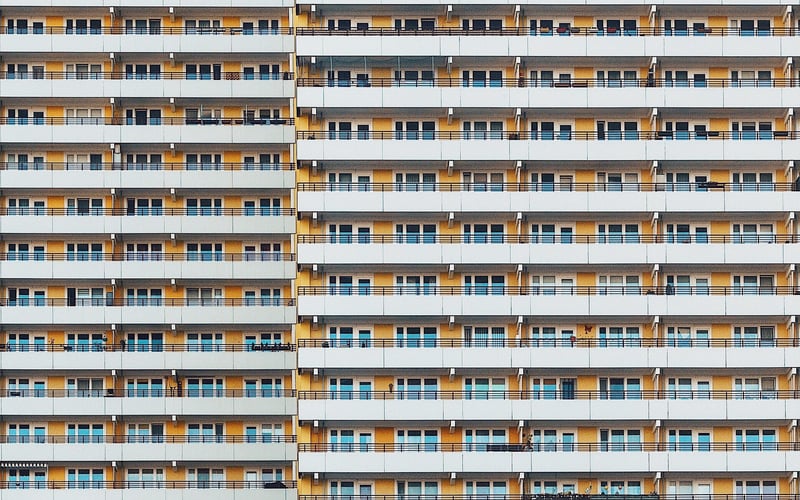
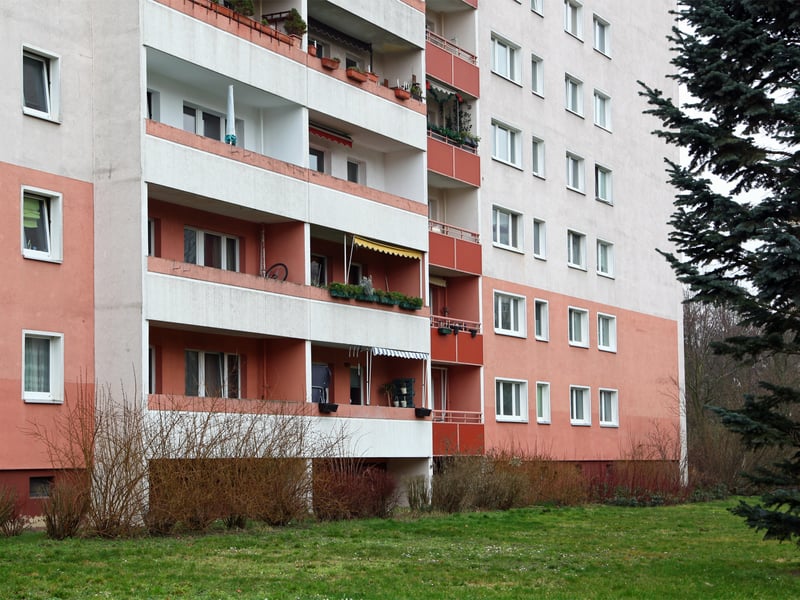
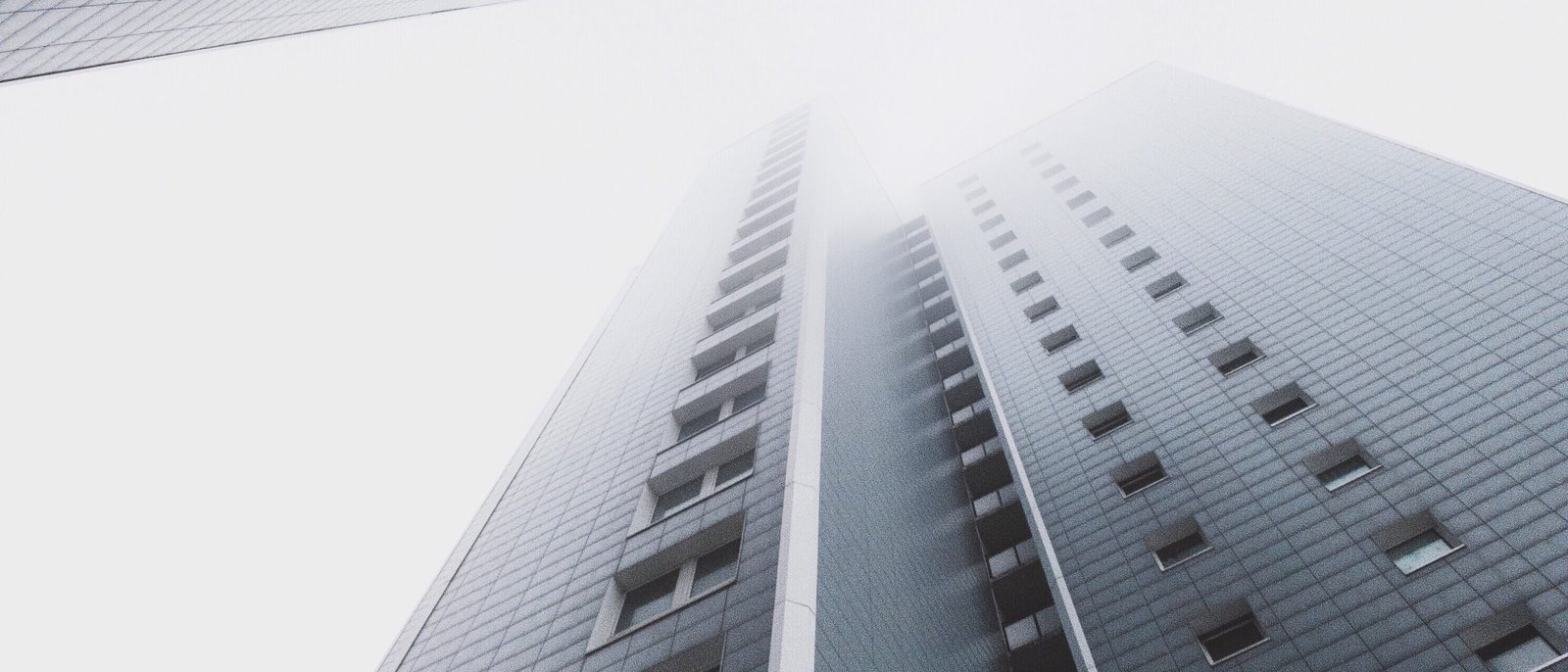
Hellersdorf is young, not in the age of its residents, but in its building stock. What stands here was largely built in the 1980s, when the GDR erected one of its last major new housing estates on the fields at the city's edge. This makes Hellersdorf one of Berlin's most distinct large housing estates, shaped by the industrial prefab construction of those years. But that reputation only tells half the story.
Walk through Hellersdorf and you quickly notice that the high-rises stand more loosely than the cliché suggests. Broad green corridors, playgrounds and old village cores lie between the residential rows, along with Kienberg, a genuine hill with a view, and the Wuhle valley, a long landscape corridor. Hellersdorf is less dense and less urban than the inner city, but greener and quieter. Living here means trading the bustle of the big city for space, fresh air and short trips into the surrounding countryside.
The district's sense of itself has shifted. Over the years, the image of a pure dormitory quarter has given way to a place of residence that knows its strengths: green, affordable, family-friendly, and connected directly to the centre by the U5. The International Garden Exhibition of 2017 gave this transformation a visible flagship with the Gardens of the World.
History and Change
Hellersdorf's history reaches back further than the prefab buildings suggest. The village core was originally an old village green at the edge of Berlin, documented since the Middle Ages. For centuries Hellersdorf remained rural in character, a village among fields, far out beyond the gates of the growing city. The historic core, set against the modern estate areas, still bears witness today to the old village green and individual surviving farmsteads.
The real upheaval came late and fast. In the 1980s, the GDR leadership decided to build one of its last major new housing estates here. Within a few years, an entirely new district arose on the fields in industrial prefab construction. Thousands of apartments were put up, whole streets newly laid out, and a new population moved in, often young families who switched here from the cramped and unrenovated old buildings of the inner city. A flat of one's own with a bathroom and district heating was considered a step up at the time.
After 1990, Hellersdorf faced a dual task. The estate had to be renovated and upgraded at the same time, while parts of the population moved away to other districts or to the surrounding countryside. Over the years, façades were insulated, green spaces redesigned, and a functional centre built with Helle Mitte. The International Garden Exhibition created a large park and recreation area at Kienberg, which has continued since 2017 as the Gardens of the World. This path from mass housing construction to a green-laced residential location shapes Hellersdorf to this day. In 1979 the borough of Marzahn was carved out, followed in 1986 by Hellersdorf as its own borough, before the administrative reform of 2001 merged the two into today's borough of Marzahn-Hellersdorf.
Points of Interest
The best-known destination in Hellersdorf is the Gardens of the World. The sprawling park at the foot of Kienberg gathers themed gardens from various cultures, from the Chinese and Balinese to the Oriental garden, and draws visitors from across the city. From Kienberg itself, the view from the Wolkenhain, a walkable observation tower, reaches far across Berlin's east and into the surrounding countryside. A cable car connects the Gardens of the World with Kienberg Park and turns the ascent into an experience.
Around Kienberg stretches the Wuhle valley, the green course of the Wuhle river, which runs as a long landscape corridor through the east. Here you can hike, cycle and stroll, in the middle of the city and yet far from the traffic. The Wuhle trail connects the north with the south of the borough. The Jelena Šantić Peace Park rounds out the green offering closer to the residential quarters.
The functional heart of the district is Helle Mitte around Alice-Salomon-Platz and Cecilienplatz. Here shops, administration, culture and, with the Eastgate, a large shopping centre come together. With the Alice Salomon University of Applied Sciences, the square is also home to a university for social work and health, which gives the quarter student life and a firm educational anchor. The cinema, the Theater am Park and the neighbourhood facilities round off public life.
Popular Kieze in Hellersdorf
- Helle Mitte: The urban centre around Alice-Salomon-Platz and Cecilienplatz. Shopping at the Eastgate, errands at the authorities, the university, gastronomy. If you want to live centrally and well served, this is the place.
- Kienberg and Gardens of the World: Arguably the greenest residential locations, with the park and Wuhle valley right outside the door. Playgrounds, walking paths and local recreation are part of everyday life here, attractive for families and nature lovers.
- Stadtgut Hellersdorf and old village cores: Historic building stock and small-scale structures as a counterpoint to the prefab estate. A village character that has become rare in Berlin's east.
- Transitions to Kaulsdorf and Mahlsdorf: To the south, extensive settlement areas with single-family homes and gardens adjoin. Living in Hellersdorf puts these quiet residential locations right outside your door.
Scene and Everyday Life
Everyday life in Hellersdorf is down-to-earth and practical. The Eastgate and Helle Mitte cover daily needs, from the weekend shop to a café. Discounters, supermarkets and weekly markets are spread across the residential area, so the way to the nearest shop stays short.
Cultural life takes place less in clubs and galleries than in the parks, at the university and in the neighbourhood houses. In summer the Gardens of the World are both a meeting point and a venue, with concerts, festivals and guided tours among the themed gardens. The Wuhle valley draws joggers, cyclists and dog owners, and Kienberg is a popular excursion destination for the whole city. If you want more liveliness, the inner city is reachable by U5 in a manageable amount of time.
Hellersdorf's character lies not in the hustle but in the opposite: plenty of space, plenty of greenery, a relaxed pace. This also shapes the social fabric, which is defined more by neighbourhood than by anonymity. Clubs, citizens' meeting places and community centres carry communal life in the individual residential areas.
Who Lives in Hellersdorf
Over the decades, Hellersdorf's population has aged along with the estate and at the same time been renewed again and again by younger families. The result is a broad mix across the generations that differs markedly from the inner-city dominance of single-person households.
| Age group | Count | Share |
|---|---|---|
| under 6 | 6,391 | 7 % |
| 6–15 | 10,162 | 11 % |
| 15–18 | 3,137 | 3 % |
| 18–27 | 9,770 | 10 % |
| 27–45 | 27,814 | 29 % |
| 45–55 | 9,696 | 10 % |
| 55–65 | 12,280 | 13 % |
| 65+ | 15,683 | 17 % |
The household structure follows this pattern. Families and larger households play a stronger role here than in the city, where small households set the tone. The generously sized prefab apartments with three or more rooms have attracted families for decades and keep this structure stable.
| Household size | Count | Share |
|---|---|---|
| 1 person | 22,164 | 52 % |
| 2 people | 10,980 | 26 % |
| 3 people | 5,066 | 12 % |
| 4 people | 2,945 | 7 % |
| 5 people | 937 | 2 % |
| 6+ people | 634 | 1 % |
The origin of residents also paints a distinct picture of the district and shows how the once homogeneous new-build population has changed over the years.
| Region of origin | Count | Share |
|---|---|---|
| EU | 8,441 | 31 % |
| Ukraine | 3,301 | 12 % |
| Syria | 3,188 | 12 % |
| Russia | 2,687 | 10 % |
| Vietnam | 2,539 | 9 % |
| Afghanistan | 2,137 | 8 % |
| Kazakhstan | 1,408 | 5 % |
| Turkey | 1,059 | 4 % |
| India | 875 | 3 % |
| Iraq | 648 | 2 % |
| Iran | 434 | 2 % |
| unassigned | 423 | 2 % |
| Lebanon | 146 | <1 % |
| China | 110 | <1 % |
| United Kingdom | 85 | <1 % |
| USA | 59 | <1 % |
Who Is Drawn to Hellersdorf
Hellersdorf attracts above all people looking for space and affordable living space. Part of the influx comes from across the city boundary and from abroad, as the migration across the external boundary shows.
| # | Country | Inflow | Outflow | Net |
|---|---|---|---|---|
| 1 | Rumänien | 343 | 316 | 27 |
| 2 | Ukraine | 255 | 206 | 49 |
| 3 | Vietnam | 140 | 79 | 61 |
| 4 | Republik Moldau | 132 | 117 | 15 |
| 5 | Polen | 130 | 216 | -86 |
| 6 | Indien | 125 | 45 | 80 |
| 7 | Arabische Republik Syrien | 122 | 73 | 49 |
| – | Deutschland | 995 | 1,933 | -938 |
Within Berlin, the exchange is closely tied to the neighbouring districts of the borough and the eastern large estates. Those who move to Hellersdorf often come from Marzahn, quarters near Hellersdorf and the adjoining urban areas in the east.
| # | District | People |
|---|---|---|
| 1 | Marzahn | 614 |
| 2 | Neu-Hohenschönhausen | 157 |
| 3 | Friedrichsfelde | 156 |
| 4 | Biesdorf | 144 |
| 5 | Prenzlauer Berg | 126 |
In the opposite direction, the movement runs similarly small-scale. Many departures go to the single-family home areas to the south around Kaulsdorf and Mahlsdorf, or to the nearby Brandenburg countryside, when families move from renting to owning their own home.
| # | District | People |
|---|---|---|
| 1 | Marzahn | 770 |
| 2 | Biesdorf | 155 |
| 3 | Köpenick | 118 |
| 4 | Neu-Hohenschönhausen | 117 |
| 5 | Friedrichsfelde | 113 |
Buildings and Apartments
The stock is strongly shaped by the prefab construction of the 1980s, supplemented by renovated holdings, individual new builds and the small-scale old village cores. The apartment sizes reflect the family-oriented layout of the large estate, with a high share of three- and four-room apartments.
| Size class | Count | Share |
|---|---|---|
| Unter 40 m² | 4,612 | 11 % |
| 40-59 m² | 13,463 | 31 % |
| 60-79 m² | 19,830 | 46 % |
| 80-99 m² | 4,912 | 11 % |
| 100-119 m² | 510 | 1 % |
| 120-139 m² | 175 | <1 % |
| 140-159 m² | 29 | <1 % |
| 160-179 m² | 9 | <1 % |
| 200+ m² | 21 | <1 % |
The use of the apartments likewise follows the character of the estate. The share of rental apartments is high, and a large part of the stock is held by municipal and cooperative housing companies. Owner-occupied apartments are rarer than in the inner city, but do occur in the renovated and newly built quarters.
| Type of use | Count | Share |
|---|---|---|
| Rented | 42,520 | 97 % |
| Owner-occupied | 346 | <1 % |
| Vacant | 691 | 2 % |
| Commercial | 113 | <1 % |
New construction concentrates on densification and individual projects in the peripheral locations, where land is still available. How the housing balance has developed over the years is shown by construction activity over time.
| Period | Apartment balance |
|---|---|
| 2021 | 262 apartments |
| 2022 | 1,408 apartments |
| 2023 | 974 apartments |
| 2024 | 285 apartments |
Among the construction periods, the phase of the GDR large estate clearly dominates. The vast majority of apartments date from the 1980s, supplemented by the older stock of the village cores and the new builds after 1990. This construction-period structure shapes the district's energy and renovation profile, as many buildings have been upgraded energetically in recent decades.
Transport and Infrastructure
The backbone of the connection is the U5 underground line. From the Hellersdorf underground station and the surrounding stops such as Cottbusser Platz and Louis-Lewin-Straße, the line runs via Wuhletal directly through the east to Alexanderplatz, on to Museum Island, Unter den Linden and the main railway station. This keeps the district consistently connected to the centre despite its peripheral location. At Wuhletal station, the U5 and S-Bahn meet, so the S5 line additionally makes the south and west of the city reachable. Bus and tram lines open up the residential areas across the area and link them with the neighbouring districts.
The social infrastructure is geared towards families. Schools, daycare centres and doctors' practices are spread across the residential area, and the supply of retail is secured by the Eastgate and Helle Mitte. With the Alice Salomon University of Applied Sciences, there is a higher-education location directly in the district, bringing students and staff into the quarter. If you want to get out into the green, it is not far: the Wuhle valley, Kienberg and the Gardens of the World lie right outside the door, along with the Jelena Šantić Peace Park and numerous smaller green corridors between the residential rows. For car traffic, the location on the eastern edge of the city connects quickly to the arterial roads towards Brandenburg and to the Berlin ring road.
Who Hellersdorf Suits
- Families needing space: Generously sized apartments, short distances and plenty of open space for children. The household and age structure shows a higher share of families than in the inner city.
- Nature-oriented city dwellers: The Wuhle valley, Kienberg and the Gardens of the World lie right outside the front door. If you value local recreation and fresh air over urban density, you will find both here.
- Commuters with a connection to the centre: The U5 links Hellersdorf directly with Alexanderplatz and the main railway station. If you work in the centre but want to live more cheaply and quietly, you benefit from the connection.
- Price-conscious renters and first-time buyers: The housing market, shaped by municipal and cooperative stock, offers comparatively affordable living space on the city's edge.