

Character and Identity
Köpenick lies in the far southeast of Berlin, belongs to the borough of Treptow-Köpenick and, at a good 38 km², is one of the largest districts in the city by area. The district is home to 72,778 residents; the housing stock is spread across 38,030 apartments and 37,188 households (source: Amt für Statistik Berlin-Brandenburg).
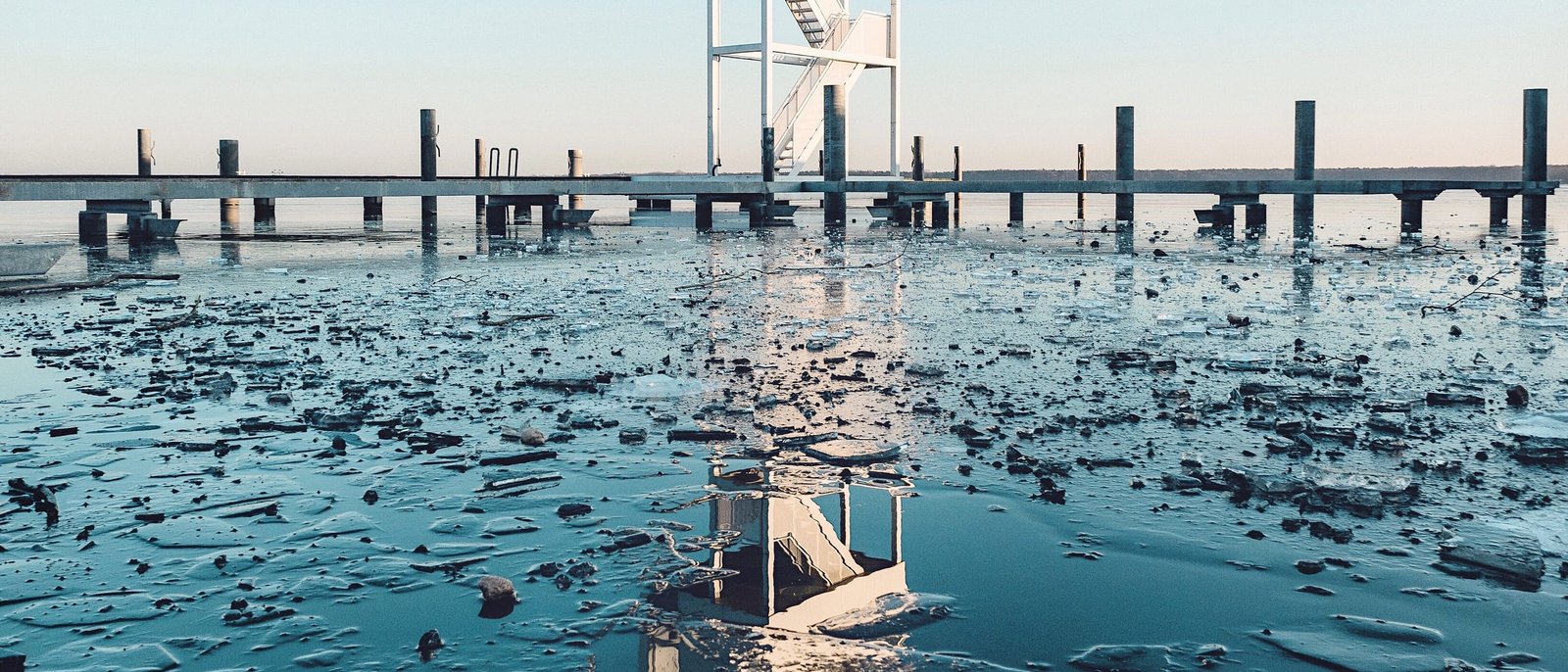
The waterside setting shapes everything. Köpenick sits where the Dahme flows into the Spree, surrounded by the Müggelsee, the Langer See and extensive woodland. Hardly any other Berlin district has such a high share of water and green space. In between lies the historic old town on an island setting encircled by the Spree and the Dahme, with cobblestones, a town hall and Köpenick Palace at the southern end.
Anyone who knows Köpenick knows its blend of small-town charm and big-city connections. The old town feels like a place of its own, with its own market square, while a few kilometres away stands the stadium at the Alte Försterei, home of 1. FC Union Berlin. Quiet residential streets, boat jetties and excursion restaurants meet the S-Bahn, the tram and the commuter flows towards the city centre and the airport.
For context: this portrait covers the district of Köpenick. The borough of Treptow-Köpenick additionally comprises neighbouring districts such as Friedrichshagen, Grünau, Müggelheim, Rahnsdorf, Adlershof and Oberschöneweide, each with a character of its own.
History and Transformation
Köpenick is older than Berlin. A Slavic castle settlement already stood on the site of today's old town in the Middle Ages, and an independent town grew out of it. For a long time Köpenick remained a self-contained town of farmer-burghers and fishermen on the water; the Kietz, a fishing settlement of low houses south of the old town, still recalls that past today. It was only in 1920, with the formation of Greater Berlin, that Köpenick was incorporated.
Köpenick Palace was built in the 17th century as a baroque residence on the palace island and today houses a collection of the Kunstgewerbemuseum. The place became famous in 1906 through the cobbler Wilhelm Voigt, who occupied the town hall in a borrowed captain's uniform and seized the town treasury. The story of the Captain of Köpenick travelled the world as a satire on Prussian subservience and shapes the place's self-image to this day.
With industrialisation came shipyards, breweries and cable works along the waterways. By way of the Spree and the Dahme, Köpenick was a transport hub and a location of the early electrical industry. The closure of large plants after 1990 left behind brownfields and a long structural transformation that reshaped the whole borough into a science and technology location, with the HTW Berlin and the nearby science hub of Adlershof as anchors. For parts of Köpenick-Nord, the borough council resolved on a coarse screening to examine conservation statutes (source: BVV Treptow-Köpenick).
Points of Interest
The best-known ensemble is Köpenick's old town, with its town hall, the historic market square and the narrow lanes around the church. As the setting of the Köpenickiade, the town hall has itself become a point of interest. At the southern end of the island lies Köpenick Palace with its palace park and views over the Dahme.
The adjoining Kietz is regarded as one of the oldest surviving fishing settlements in the Berlin area and is a listed heritage site. Walking along the water, you reach the steamer landings from which the excursion boat services across the Müggelsee and the Dahme set off. The Müggelsee is Berlin's largest lake and a central recreation area for the entire southeast.
In sporting terms, Köpenick is defined by the stadium at the Alte Försterei, set in the middle of the forest and known far beyond the district as the home of 1. FC Union Berlin. The venue and the club's surroundings are among the identity markers with which Köpenick is associated across the city.
Popular Kieze in Köpenick
- Old town and palace island: The historic core on the island setting encircled by the Spree and the Dahme. Cobblestones, town hall, market square and the palace; a fine-grained, heritage-listed fabric with high quality of stay on the water.
- Kietz: The old fishing settlement south of the old town, with low, heritage-listed houses right on the Dahme. One of the quietest and oldest residential quarters in the district.
- Köpenick-Nord: The area towards the Wuhlheide and Oberschöneweide, with prewar and postwar stock, for which a conservation screening is underway. Well connected and closer to the city than the lakeside locations.
- Allende-Viertel: A large housing estate from the late GDR years in the south, with a high housing stock, plenty of greenery and its own local amenities. Affordable housing close to the water.
- Wendenschloss: A peninsula between the Langer See and the Dahme in the south, characterised by single- and two-family houses, villas and waterfront properties. A quiet, green residential setting on the shore.
Scene and Everyday Life
Social life in Köpenick plays out on the water and in the old town. Around the market square and the lanes of the old town you find cafés, restaurants and small shops; along the banks, excursion restaurants and beer gardens line up that, in summer, live off walkers and boat tourists. The steamer landings make Köpenick a starting point for tours across the Müggelsee and the Dahme.
Over the course of the year, recurring dates shape the district, above all the old-town festival with its re-enactment of the Köpenickiade, in which the story of the Captain of Köpenick is replayed. For many, the home matches of 1. FC Union at the Alte Försterei structure the weekly rhythm and regularly bring tens of thousands into the forest by the stadium. If you prefer it quieter, you find expansive recreation areas in the Wuhlheide and on the Müggelsee right on your doorstep.
Who Lives in Köpenick
Köpenick is shaped more strongly by families and established households than the central districts. The following breakdown shows how households are distributed by size.
| Household size | Count | Share |
|---|---|---|
| 1 person | 19,836 | 53 % |
| 2 people | 10,569 | 28 % |
| 3 people | 3,779 | 10 % |
| 4 people | 2,084 | 6 % |
| 5 people | 574 | 2 % |
| 6+ people | 346 | <1 % |
In a Berlin-wide comparison, the age structure is more balanced and tends to be older than in the inner city, which fits the district's quieter, residentially oriented character.
| Age group | Count | Share |
|---|---|---|
| under 6 | 3,771 | 5 % |
| 6–15 | 5,803 | 8 % |
| 15–18 | 1,811 | 2 % |
| 18–27 | 6,546 | 9 % |
| 27–45 | 19,888 | 27 % |
| 45–55 | 8,124 | 11 % |
| 55–65 | 9,321 | 13 % |
| 65+ | 17,514 | 24 % |
The share of the population with a foreign background is below the Berlin average. The following illustration shows how the resident population is composed by region of origin.
| Region of origin | Count | Share |
|---|---|---|
| EU | 4,390 | 35 % |
| Ukraine | 1,823 | 14 % |
| Russia | 1,148 | 9 % |
| Syria | 1,129 | 9 % |
| India | 798 | 6 % |
| Turkey | 666 | 5 % |
| Afghanistan | 572 | 5 % |
| Vietnam | 353 | 3 % |
| Iran | 287 | 2 % |
| unassigned | 285 | 2 % |
| Kazakhstan | 266 | 2 % |
| Iraq | 249 | 2 % |
| United Kingdom | 240 | 2 % |
| USA | 231 | 2 % |
| Lebanon | 144 | 1 % |
| China | 130 | 1 % |
Who Is Drawn to Köpenick
The migration data show how the population renews itself. Köpenick traditionally grows more from internal moves within Berlin than across the city boundary, and in the exchange with the surrounding Brandenburg area the district tends to lose people.
| # | Country | Inflow | Outflow | Net |
|---|---|---|---|---|
| 1 | Indien | 184 | 86 | 98 |
| 2 | Ukraine | 154 | 133 | 21 |
| 3 | Arabische Republik Syrien | 70 | 35 | 35 |
| 4 | Rumänien | 65 | 92 | -27 |
| 5 | Polen | 52 | 136 | -84 |
| 6 | Bulgarien | 37 | 59 | -22 |
| 7 | Türkei | 37 | 46 | -9 |
| – | Deutschland | 1,181 | 1,680 | -499 |
Within Berlin, the exchange is close with the neighbouring districts of the southeast.
| # | District | People |
|---|---|---|
| 1 | Friedrichshain | 204 |
| 2 | Tegel | 178 |
| 3 | Neukölln | 175 |
| 4 | Oberschöneweide | 160 |
| 5 | Prenzlauer Berg | 136 |
In the opposite direction, the movement runs similarly small-scale, above all into the neighbourhood and the nearby surrounding area.
| # | District | People |
|---|---|---|
| 1 | Friedrichshagen | 120 |
| 2 | Altglienicke | 99 |
| 3 | Hellersdorf | 95 |
| 4 | Oberschöneweide | 94 |
| 5 | Mahlsdorf | 94 |
Buildings and Apartments
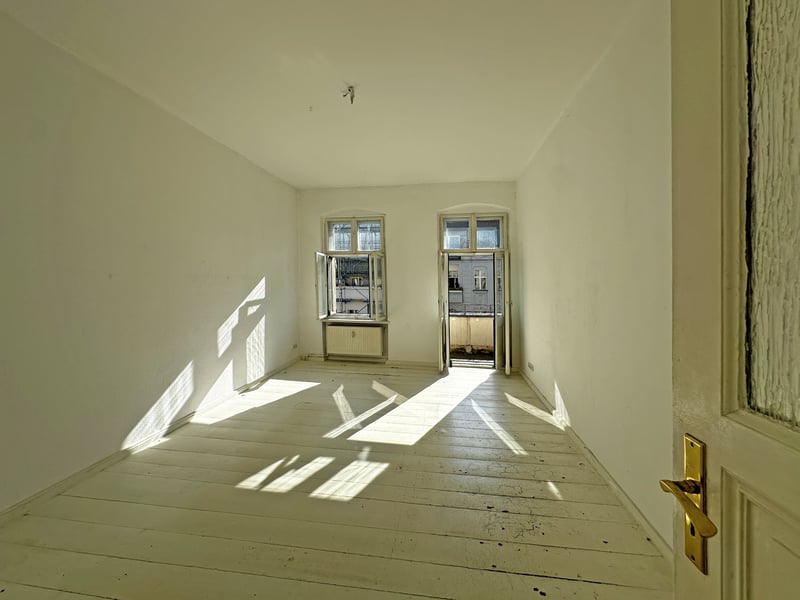
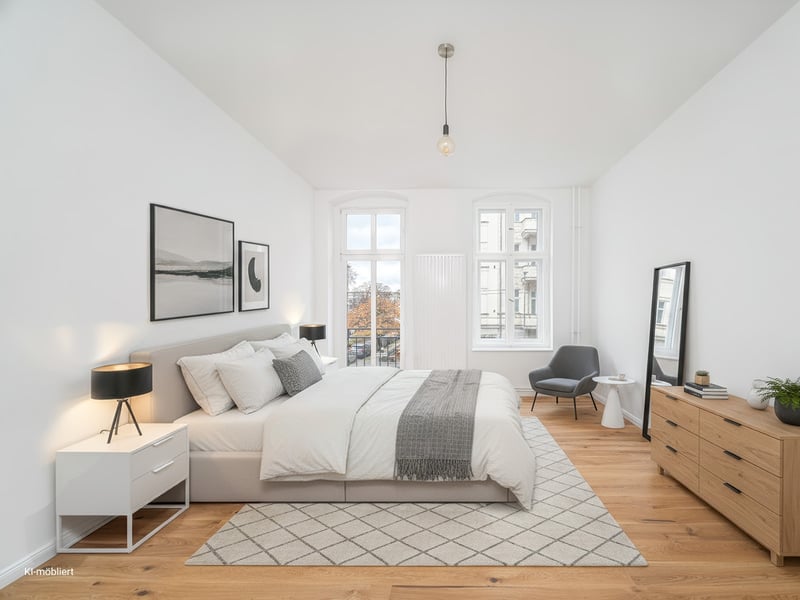
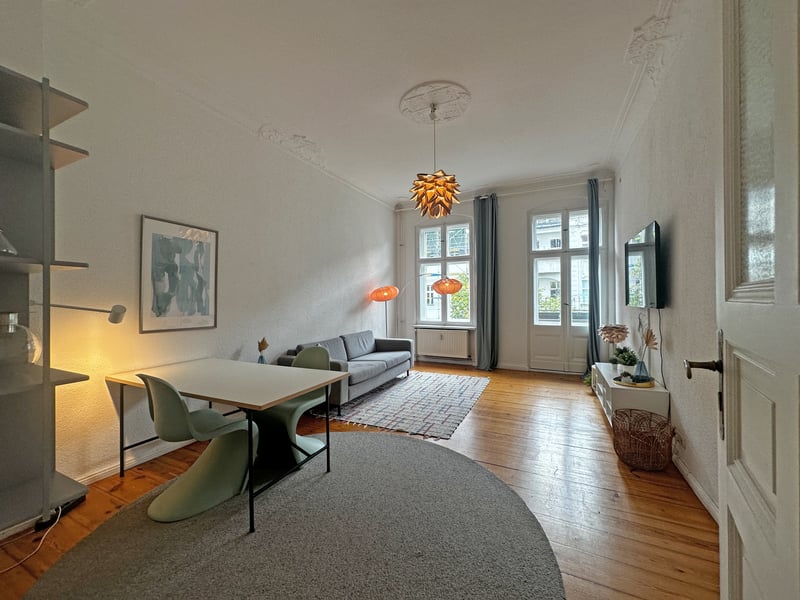
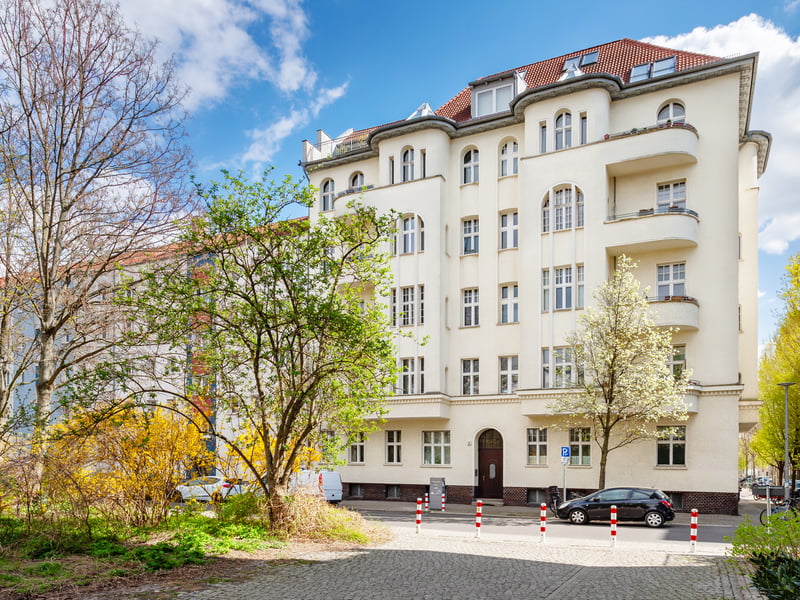
The building stock comprises 7,930 buildings. The mix is characteristic of Köpenick: classic prewar buildings in the northwestern quarters around the old town, large stocks of single- and two-family houses in the southern locations such as Wendenschloss, plus large GDR-era housing estates, for instance in the Allende-Viertel, and new development on former commercial and brownfield sites. No dedicated chart data source for construction periods is available; this assessment is based on the Guthmann market report.
Compared with the inner city, the share of larger apartments and houses is higher, in keeping with the family profile. The following overview shows how the stock is distributed across the size classes.
| Size class | Count | Share |
|---|---|---|
| Unter 40 m² | 2,788 | 7 % |
| 40-59 m² | 12,993 | 34 % |
| 60-79 m² | 12,046 | 32 % |
| 80-99 m² | 5,402 | 14 % |
| 100-119 m² | 2,247 | 6 % |
| 120-139 m² | 1,237 | 3 % |
| 140-159 m² | 654 | 2 % |
| 160-179 m² | 292 | <1 % |
| 180-199 m² | 120 | <1 % |
| 200+ m² | 210 | <1 % |
The use of the stock is also revealing for the district's social mix; the share of owner-occupied property is higher than in the densely built-up inner-city locations.
| Type of use | Count | Share |
|---|---|---|
| Rented | 32,116 | 84 % |
| Owner-occupied | 5,213 | 14 % |
| Vacant | 639 | 2 % |
| Commercial | 336 | <1 % |
Köpenick has most recently been among the districts with the highest construction activity relative to the existing stock, because former industrial and brownfield sites offer room for new quarters.
| Period | Apartment balance |
|---|---|
| 2021 | 161 apartments |
| 2022 | 825 apartments |
| 2023 | 497 apartments |
| 2024 | 1,217 apartments |
Transport and Infrastructure
In transport terms, Köpenick is served by the S-Bahn line S3, which connects Köpenick station via Karlshorst and Ostkreuz with the inner city and, in the other direction, with Erkner. The rail is complemented by a dense tram network: tram lines run from the station into the old town, into the southern residential locations as far as Wendenschloss and into the neighbouring districts. A network of bus lines links the water-encircled quarters that are not directly on the rail.
By road, the federal highway connects the district towards the inner city and towards the city edge; the proximity to BER Airport in neighbouring Brandenburg is a practical argument for many. On the water, ferries and the excursion boat services round out the picture, and along the Dahme and the Müggelsee extensive cycling and hiking trails run through the Wuhlheide and the Müggelwald.
In education, Köpenick benefits from its proximity to the HTW Berlin and to the science and technology hub of Adlershof, which give the southeast an academic and research-oriented profile. Within the district itself, primary schools, secondary schools and day-care centres provide local amenities for families. Local amenities are concentrated in the old town and along the axes of the tram, with a weekly market on the market square, supermarkets on the main streets and the excursion restaurants on the banks. If you are looking for greenery, you have it on your doorstep everywhere: the Müggelsee as Berlin's largest lake, the Dahme banks, the palace park and the Wuhlheide form a connected recreation area.
Who Köpenick Suits
- Families needing space: Larger apartments and houses, plenty of greenery and water, plus schools and day-care centres in the residential surroundings. The quieter southern locations are geared to families, yet the inner city is still reachable by S-Bahn.
- Owner-occupiers on the water: Wendenschloss, the Kietz and the waterfront locations on the Dahme and the Langer See offer living right on the water, from the heritage-listed fisherman's house to the villa plot. The share of owner-occupied property lies above the inner-city level.
- Commuters with connections to the south: The S3 and the proximity to BER make Köpenick appealing to anyone regularly travelling between the inner city, the city edge and the airport without wanting to give up a green residential setting.
- Buyers of new developments on conversion sites: New quarters are emerging on former commercial and brownfield sites; for buyers seeking modern living space in a water-rich edge location, the offer here is broader than in the inner city.