

Character and Identity
Marzahn lies in the northeast of Berlin and belongs to the borough of Marzahn-Hellersdorf, which was formed in 2001 from the former boroughs of Marzahn and Hellersdorf. The district stretches from the wide open fields at the city's edge to the densely built large-scale housing estate. The district is home to 120,584 residents; the housing stock is spread across 60,451 apartments and 59,204 households (source: Amt für Statistik Berlin-Brandenburg).
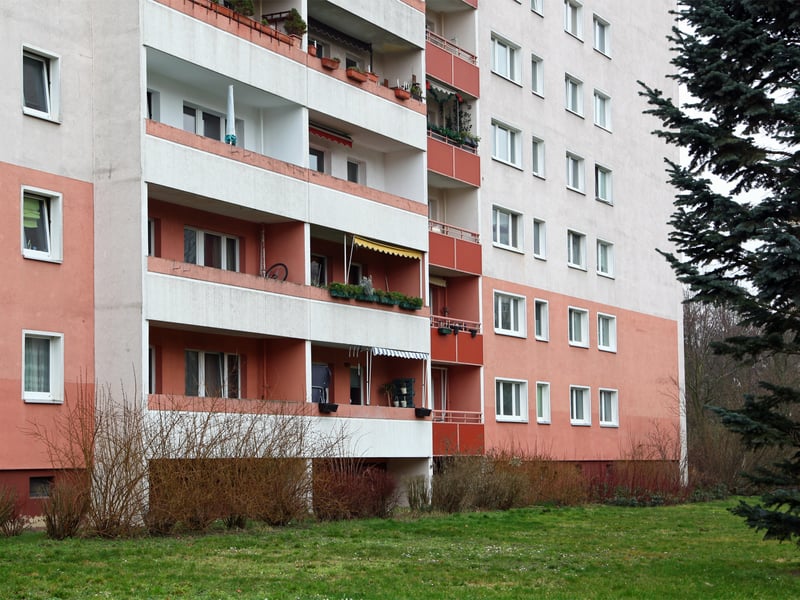
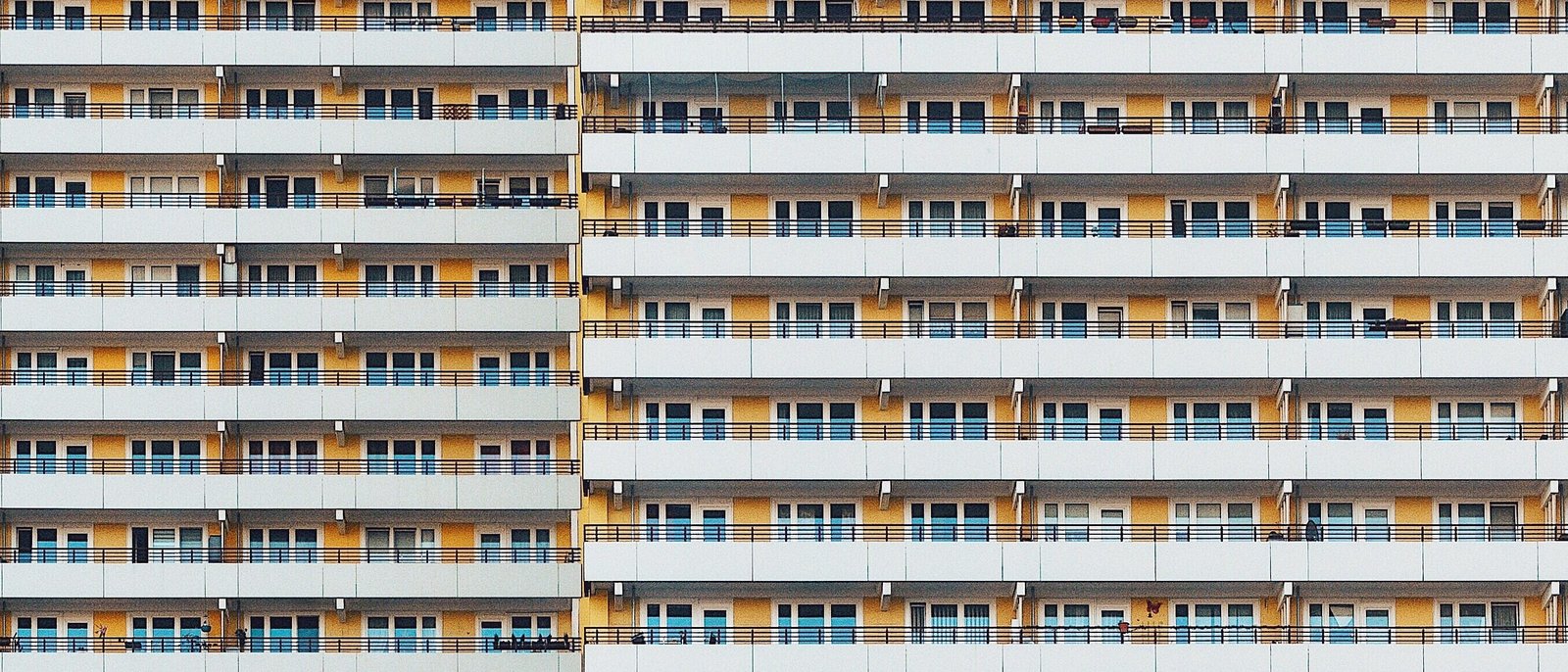
When you hear the name Marzahn, the first thing that comes to mind is the prefab estate: rows of eleven-storey residential blocks built on former sewage farms in the late 1970s and 1980s, which became a symbol of the industrial prefabricated construction of the GDR for many. To this day, this large-scale housing estate remains one of the largest of its kind in Germany.
Stay longer and you will see the other Marzahn. The historic village core of Alt-Marzahn features a medieval village green with a village church and a reconstructed post mill. At the eastern edge, the Kienberg rises above the open fields, and at its foot lie the Gardens of the World, the district's largest park. Only a few minutes separate the high-rise rows from the field paths. This range, from densely built living to abundant greenery and a preserved village core, defines the district.
History and Change
Marzahn is older than its reputation. The village was founded in the 13th century as a village-green settlement and was shaped by agriculture for centuries. The preserved village green with its village church still forms the historic core of the district today. In the late 19th century, Berlin laid out sewage farms on the surrounding land to irrigate the wastewater of the growing city. The agricultural fields were thus spared dense urban growth for decades.
The decisive change came in the 1970s. From 1977, the GDR built a large-scale housing estate using industrial prefabricated construction on the former sewage farms in order to ease the housing shortage in East Berlin. Within a few years, an entirely new district emerged with tens of thousands of apartments, schools, retail halls and supply facilities. In 1979, Marzahn was elevated to an independent city borough of East Berlin. At the time, prefabricated construction was seen as a modern answer to the housing question: running hot water, district heating and elevators were a tangible gain in comfort for many newcomers compared to the unrenovated period buildings of the inner city.
After 1990, the estate lost population. Vacancy and outmigration led to individual high-rises being partially deconstructed and storeys removed. In the course of the urban redevelopment programmes, many blocks were renovated, facades insulated and open spaces redesigned. With the International Garden Exhibition in 2017, the eastern part of the district came into focus: the Gardens of the World were expanded, the Kienberg made accessible and a cable car strung across the grounds. Today, Marzahn stands for both, the large-scale housing estate and the expansive greenery at its edge.
Sights
The district's best-known address is the Gardens of the World at the foot of the Kienberg. The park brings together themed gardens of various cultures, including a Chinese, a Japanese and an Oriental garden, along with greenhouses and expansive open spaces. The 2017 International Garden Exhibition added the cable car, which runs across the grounds and the Kienberg and forms one of the few Berlin cable car sections in regular operation.
The Kienberg itself is a rise at the eastern edge of the city and offers a wide view across the open fields and the estate from its viewing structure. To the north and east, the Ahrensfelder Berge adjoin it, hills built up from rubble and excavated material that today serve as a local recreation area.
In contrast stands the village core of Alt-Marzahn. Around the historic village green cluster the village church, former farmhouses and the reconstructed post mill, a wooden windmill that recalls the agricultural past. The preserved village core is a listed heritage site and forms an unusual oasis of calm amid the younger large-scale estate. The Springpfuhl, a small lake with surrounding green space, rounds out the picture of this green district.
Popular Kieze in Marzahn
- Alt-Marzahn: The historic village core around the village green with its village church, old farmsteads and the post mill. A listed oasis of calm with museum and cultural uses, embedded in the surrounding large-scale estate.
- Marzahn-Mitte: The dense centre of the large-scale housing estate around the Marzahner Promenade. This is where the supply axes, the shopping centre at the S-Bahn station and the district's tallest residential rows are located.
- Marzahn-Nord: The northern section of the estate, shaped by prefab housing rows and bordering the open fields of the Ahrensfelder Berge. An edge-of-city location with abundant greenery and direct proximity to the local recreation area.
- Marzahn-Süd: The southern section along the S-Bahn line, with residential rows, the Springpfuhl park and proximity to the Gardens of the World and the Kienberg.
Scene and Everyday Life
Everyday life in Marzahn plays out along the estate's supply axes. The Marzahner Promenade is the central shopping and strolling boulevard, connecting the S-Bahn station with the residential quarters. At the station lies a large shopping centre, the Eastgate Berlin, which supplies the district and the surrounding area with a broad retail offering. Alongside it, successors to the retail halls, discounters and local suppliers along the main streets shape the daily shopping experience.
Culturally, much is concentrated in the village core of Alt-Marzahn, where museum and event spaces explore the history of the district and the large-scale estate. The Gardens of the World are an event venue beyond the park itself, with an open-air stage for concerts and seasonal festivals. The district is shaped less by bar and gallery scenes than the inner city; social life is organised more around family, clubs, allotment gardens and the large green spaces at the city's edge.
Who Lives in Marzahn
Marzahn is a family-oriented district with a broad mix of household sizes. The following breakdown shows how households are distributed by size.
| Household size | Count | Share |
|---|---|---|
| 1 person | 31,229 | 53 % |
| 2 people | 16,776 | 28 % |
| 3 people | 5,894 | 10 % |
| 4 people | 3,617 | 6 % |
| 5 people | 1,129 | 2 % |
| 6+ people | 559 | <1 % |
The age structure bears the traces of the estate's history. Many residents moved in during the 1980s as young families and have grown older with the estate, while new arrivals and renovation draw in younger households.
| Age group | Count | Share |
|---|---|---|
| under 6 | 6,865 | 6 % |
| 6–15 | 10,765 | 9 % |
| 15–18 | 3,472 | 3 % |
| 18–27 | 12,702 | 11 % |
| 27–45 | 32,074 | 27 % |
| 45–55 | 12,943 | 11 % |
| 55–65 | 13,018 | 11 % |
| 65+ | 28,745 | 24 % |
The origins of the resident population also say something about the district's transformation. The composition by area of origin is shown in the following overview.
| Region of origin | Count | Share |
|---|---|---|
| EU | 7,634 | 23 % |
| Russia | 5,300 | 16 % |
| Vietnam | 5,026 | 15 % |
| Ukraine | 3,517 | 11 % |
| Kazakhstan | 3,198 | 10 % |
| Syria | 2,527 | 8 % |
| Afghanistan | 1,734 | 5 % |
| Turkey | 1,322 | 4 % |
| India | 976 | 3 % |
| Iraq | 685 | 2 % |
| unassigned | 648 | 2 % |
| Iran | 386 | 1 % |
| Lebanon | 152 | <1 % |
| China | 107 | <1 % |
| USA | 77 | <1 % |
| United Kingdom | 66 | <1 % |
Who Is Drawn to Marzahn
The migration data shows how the population renews itself. The district attracts people from abroad across the city limits while also exchanging closely with the adjoining surrounding area in Brandenburg.
| # | Country | Inflow | Outflow | Net |
|---|---|---|---|---|
| 1 | Rumänien | 373 | 287 | 86 |
| 2 | Ukraine | 343 | 206 | 137 |
| 3 | Vietnam | 339 | 190 | 149 |
| 4 | Republik Moldau | 233 | 248 | -15 |
| 5 | Indien | 229 | 65 | 164 |
| 6 | Arabische Republik Syrien | 136 | 86 | 50 |
| 7 | Afghanistan | 123 | 77 | 46 |
| – | Deutschland | 1,432 | 2,347 | -915 |
Within Berlin, the exchange takes place mainly with the neighbouring districts in the east of the city.
| # | District | People |
|---|---|---|
| 1 | Hellersdorf | 770 |
| 2 | Alt-Hohenschönhausen | 334 |
| 3 | Neu-Hohenschönhausen | 309 |
| 4 | Friedrichshain | 300 |
| 5 | Biesdorf | 272 |
In the opposite direction, outmigration is similarly small-scale, often to the adjoining districts and the nearby surrounding area.
| # | District | People |
|---|---|---|
| 1 | Hellersdorf | 614 |
| 2 | Neu-Hohenschönhausen | 224 |
| 3 | Biesdorf | 193 |
| 4 | Alt-Hohenschönhausen | 183 |
| 5 | Friedrichsfelde | 160 |
Buildings and Apartments
The building stock comprises 4,516 buildings. The largest share is made up of the residential rows of the large-scale housing estate, built from 1977 using industrial prefabricated construction and largely renovated in the following decades. Alongside this, the village core of Alt-Marzahn holds a small stock of historic building fabric, and at the edge of the estate there are detached and terraced house areas as well as allotment gardens. No chart data source is available for construction periods; this classification is based on the Guthmann market report.
The large-scale estate was planned for families, which is reflected in the apartment layouts. The following overview shows how the stock is distributed across the size classes.
| Size class | Count | Share |
|---|---|---|
| Unter 40 m² | 9,950 | 16 % |
| 40-59 m² | 13,732 | 23 % |
| 60-79 m² | 23,709 | 39 % |
| 80-99 m² | 10,003 | 17 % |
| 100-119 m² | 2,186 | 4 % |
| 120-139 m² | 417 | <1 % |
| 140-159 m² | 234 | <1 % |
| 160-179 m² | 99 | <1 % |
| 180-199 m² | 58 | <1 % |
| 200+ m² | 75 | <1 % |
The use of the stock is also revealing for the social mix of the district, where the share of rental apartments is traditionally high.
| Type of use | Count | Share |
|---|---|---|
| Rented | 57,286 | 94 % |
| Owner-occupied | 2,290 | 4 % |
| Vacant | 872 | 1 % |
| Commercial | 183 | <1 % |
At the city's edge, undeveloped land still exists, so new development here can arise on open ground rather than through infill within the tight existing stock.
| Period | Apartment balance |
|---|---|
| 2021 | 715 apartments |
| 2022 | 772 apartments |
| 2023 | 770 apartments |
| 2024 | 346 apartments |
Transport and Infrastructure
Marzahn is connected to the inner city via the S7 S-Bahn line, which links the district to the city centre and the central station via the stations Springpfuhl, Marzahn, Poelchaustraße and others. At Springpfuhl station, the S-Bahn line from the direction of Lichtenberg crosses, giving the southern part of the district a second rail connection.
The tram network is especially dense in Berlin's east and serves the residential quarters across the board. Several tram lines connect the large-scale estate internally as well as with the neighbouring boroughs of Lichtenberg and Hellersdorf, supplemented by a close-knit bus network. Via the nearby main roads and the federal motorway at the eastern edge of the city, the district is also easily reached by car, which matters to many households given its edge-of-city location.
The social infrastructure was planned alongside the estate from the very beginning. Schools, day-care centres and sports facilities lie close to residences, many of them renovated in the course of the urban redevelopment. Local supply is concentrated on the shopping centre at the S-Bahn station, the Marzahner Promenade and the supply locations along the main axes.
The green offering is unusually large for such a densely built district. The Gardens of the World, the Kienberg, the Ahrensfelder Berge and the Springpfuhl form a connected band of park and recreation areas at the eastern and northern edge. Allotment gardens and the open fields round out the picture and make Marzahn one of the greener residential locations at the edge of Berlin.
Who Marzahn Suits
- Families needing space: Larger, family-friendly apartment layouts and abundant greenery at the city's edge with a comparatively affordable rent level, plus schools and day-care centres close to home.
- Nature-oriented edge-of-city residents: If you are looking for parks, open fields and local recreation on your doorstep, the Gardens of the World, the Kienberg and the Ahrensfelder Berge offer a rare density of greenery alongside an existing S-Bahn connection.
- Commuters to the inner city and surrounding area: The S7 to the centre and the proximity to the motorway towards Brandenburg make the district appealing for professionals who commute between the city and the surrounding area.
- Owner-occupiers at the estate's edge: The detached and terraced house areas at the edge of the large-scale estate appeal to buyers who want to combine quiet living with a garden and still have an urban connection.