

Character and Identity
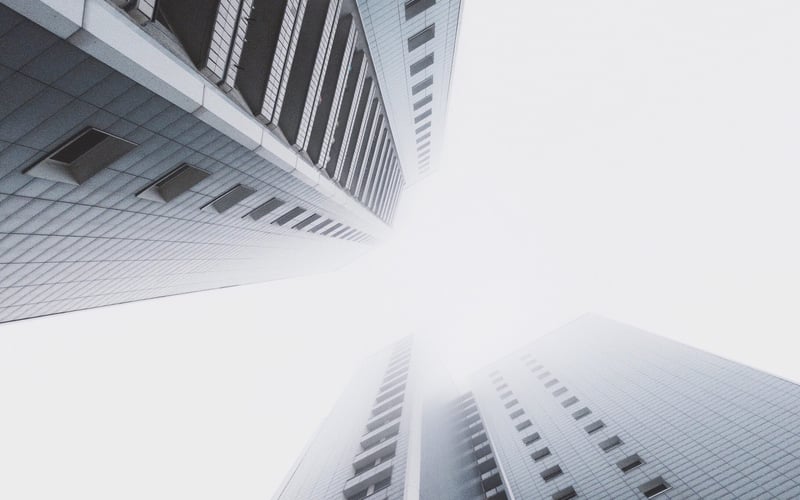
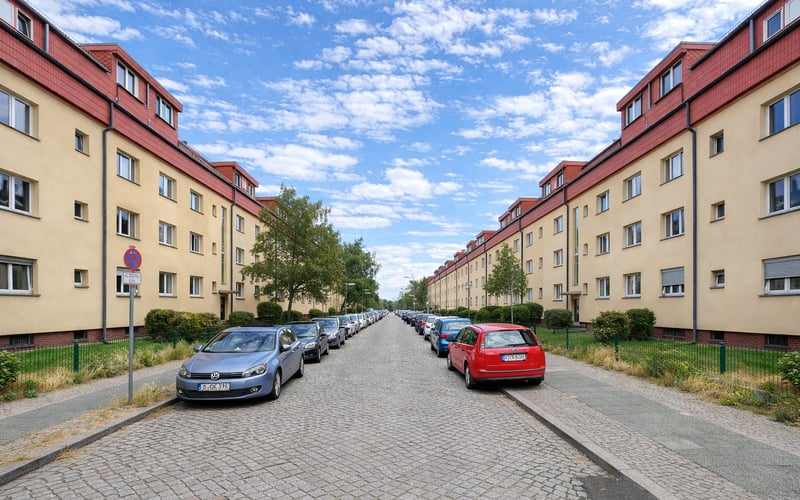
Lichtenberg is Berlin's east in all its contradictions. Here the prefab housing rows of the late GDR stand next to renovated period streets, Europe's largest landscape zoo sits beside commercial yards, and the former headquarters of the state security service are only a few train stops from the new residential quarters at Rummelsburg Bay. Anyone who reduces Lichtenberg to concrete slabs and prefab blocks does not really know the district.
Lichtenberg is not a uniform place. The large estates in the north have little in common with the small-scale Weitlingkiez near Lichtenberg station, and the waterside locations of Rummelsburg Bay follow a logic of their own. What ties the district together is its position in the city's east: close enough to the centre to be well connected, far enough out to have stayed affordable.
History and Change
Lichtenberg was long a village outside the gates of Berlin before it grew in the course of industrialisation and became part of Greater Berlin in 1920. Frankfurter Allee, the old arterial road heading east, shaped its development: along this axis grew working-class quarters, commerce and, later, the showpiece buildings of the GDR.
In the GDR, Lichtenberg was a place of power and of the masses at once. The state security service expanded its headquarters on Normannenstrasse into a quarter of its own, while in the north of the district entire large estates of prefab housing were thrown up to ease the housing shortage. Both layers still shape the picture today.
After 1990, change came more slowly here than in the inner-city districts. While Prenzlauer Berg and Friedrichshain transformed quickly, Lichtenberg long remained in the shadows. Only in recent years has the district come more sharply into view: the period quarters have been renovated, new apartments have gone up at Rummelsburg Bay, and the old Stasi headquarters have become a memorial and a place of learning.
Sights and Landmarks
Lichtenberg's best-known landmark is Tierpark Berlin, Europe's largest landscape zoo. In the middle of its sprawling grounds stands Schloss Friedrichsfelde, a baroque country palace that gives the zoo an anchor from an earlier age. Its own underground station, Tierpark, leads straight to the entrance.
Of an entirely different weight is the memorial in the former Stasi headquarters. The Stasi Museum on Normannenstrasse documents the work of the state security service at the authentic site, in the preserved offices of the ministry. Hardly anywhere else in Berlin makes the machinery of the GDR surveillance state so tangible.
Among the green spaces lies Landschaftspark Herzberge, a broad expanse of meadows and grazing sheep that shows how much room Lichtenberg offers beyond its dense streets. And Rummelsburg Bay in the south opens the district up to the water, a waterfront that has turned from an industrial site into a place to live and unwind.
Popular Kieze in Lichtenberg
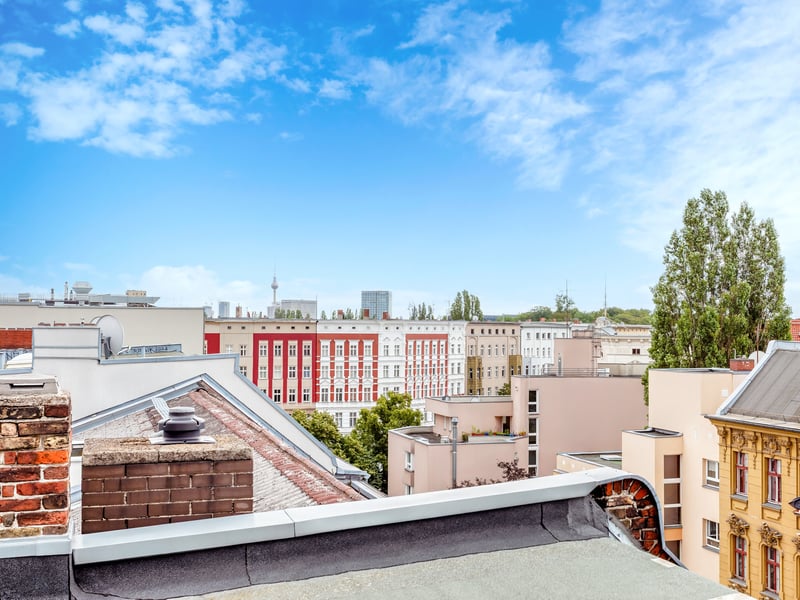
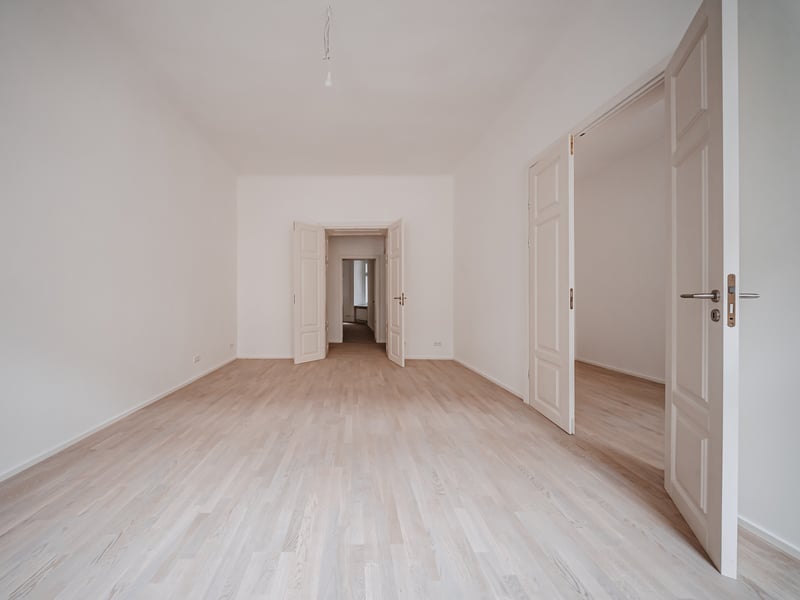
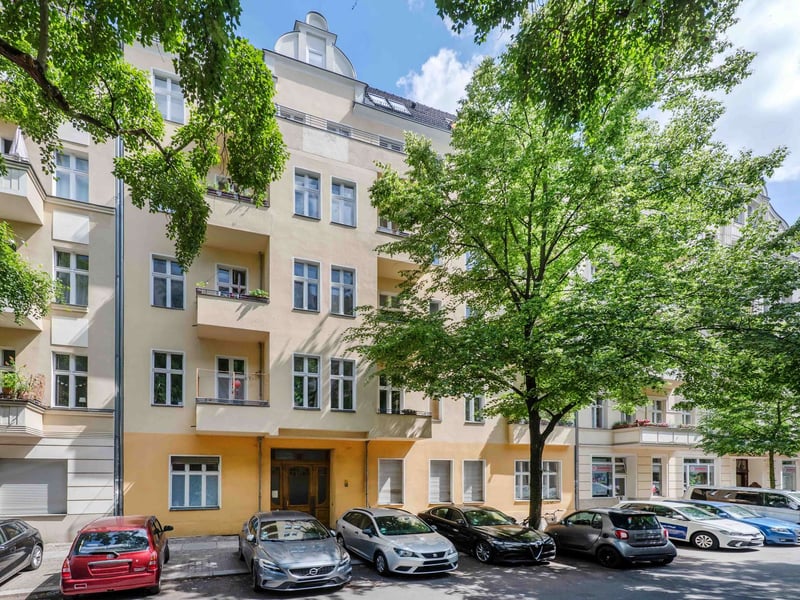
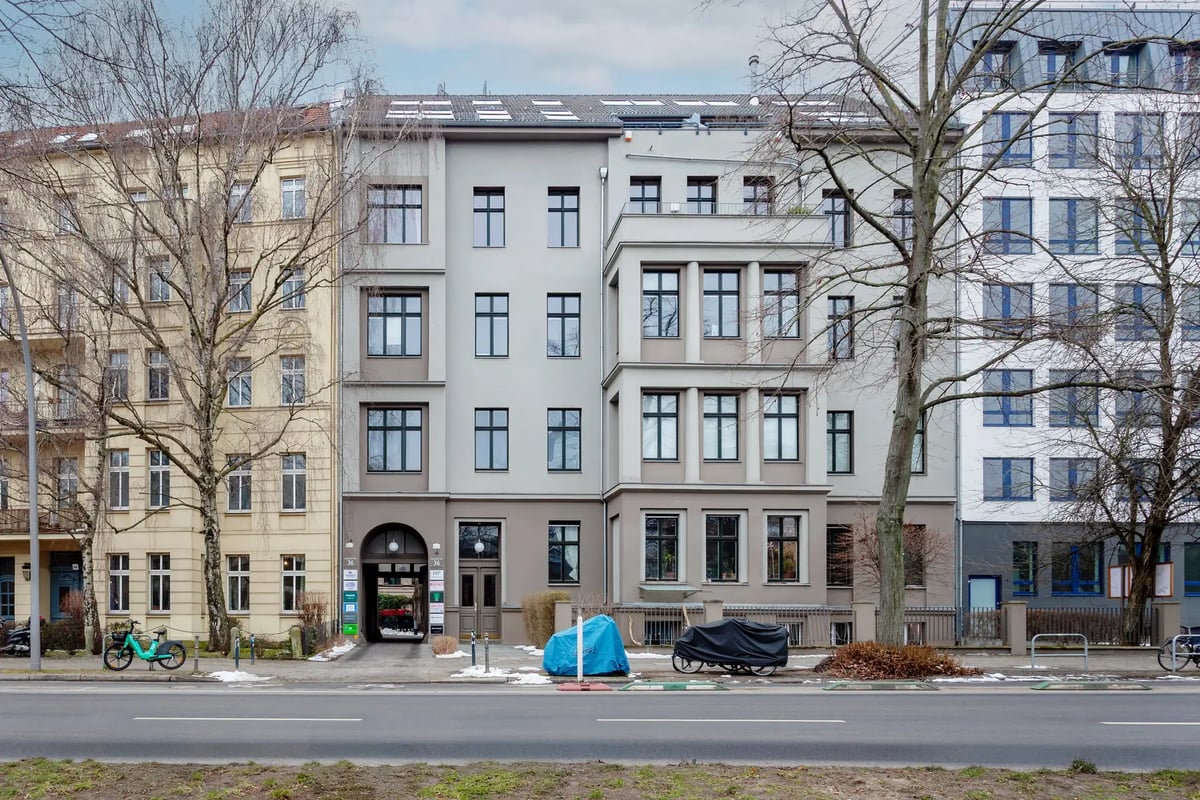
The Weitlingkiez around Lichtenberg station is the small-scale, Wilhelminian heart of the district. Period buildings define the picture here, the streets are dense, and everyday amenities are good. The Kiez is seen as one of the places where Lichtenberg's transformation shows most clearly.
Victoriastadt, often called Kaskelkiez, lies in the south near Rummelsburg Bay. This self-contained period quarter with its quiet character is among the more sought-after residential locations in Lichtenberg and stands out clearly from the large estates.
At Rummelsburg Bay, a new residential quarter on the water has emerged over recent decades. Living here is different from the rest of the district: on the shore, with views of the Spree and paths that invite you out for a walk.
The large estates in the north around Frankfurter Allee and further towards the city edge stand for the other Lichtenberg: prefab blocks, plenty of green between the rows, affordable rents and a settled neighbourhood. Those who live here value space and connections more than period charm.
Scene and Everyday Life
Everyday life in Lichtenberg is low-key and practical. Life plays out along the major axes, above all Frankfurter Allee, where shops, snack bars and amenities line up. If you live in the Weitlingkiez or Victoriastadt, you have cafés and small shops on your doorstep without the bustle of the inner-city districts.
One particular feature is the Dong Xuan Center on Herzbergstrasse, a wholesale and market hub with a Vietnamese character that makes Lichtenberg a centre of Berlin's Vietnamese community. Between the halls you find restaurants, hairdressers and stalls without equal elsewhere in the city.
Amenities are no problem in Lichtenberg. Weekly markets, supermarkets and the many small shops along the main streets cover everyday needs. What the district offers less of than the middle of the city is a dense cultural scene. In return, you have water, woodland and the Tierpark on your doorstep.
Who Lives in Lichtenberg
Lichtenberg counts 45,253 residents and is among the growing districts in Berlin's east. The population is mixed: long-standing residents of the large estates live alongside younger arrivals who are discovering the period quarters and the waterside locations for themselves.
| Age group | Count | Share |
|---|---|---|
| under 6 | 2,570 | 6 % |
| 6–15 | 3,615 | 8 % |
| 15–18 | 1,049 | 2 % |
| 18–27 | 5,512 | 12 % |
| 27–45 | 16,241 | 36 % |
| 45–55 | 5,243 | 12 % |
| 55–65 | 4,458 | 10 % |
| 65+ | 6,565 | 15 % |
The social range is wide. The renovated period buildings of Victoriastadt give way to the prefab blocks in the north, and both worlds belong to the same district. This mix makes Lichtenberg more down-to-earth than some of the inner-city locations.
| Region of origin | Count | Share |
|---|---|---|
| EU | 4,656 | 33 % |
| Vietnam | 1,857 | 13 % |
| Ukraine | 1,410 | 10 % |
| Syria | 1,163 | 8 % |
| Russia | 1,035 | 7 % |
| India | 780 | 6 % |
| Turkey | 762 | 5 % |
| Afghanistan | 503 | 4 % |
| unassigned | 414 | 3 % |
| Kazakhstan | 404 | 3 % |
| Iran | 210 | 1 % |
| China | 209 | 1 % |
| USA | 202 | 1 % |
| Iraq | 186 | 1 % |
| United Kingdom | 146 | 1 % |
| Lebanon | 104 | <1 % |
The international share is noticeable, shaped among other things by the Vietnamese community around the Dong Xuan Center, but also by younger arrivals from Germany and abroad.
| Household size | Count | Share |
|---|---|---|
| 1 person | 13,059 | 60 % |
| 2 people | 4,963 | 23 % |
| 3 people | 2,063 | 9 % |
| 4 people | 1,224 | 6 % |
| 5 people | 325 | 1 % |
| 6+ people | 212 | <1 % |
Who Is Drawn to Lichtenberg
Lichtenberg is growing through new arrivals, above all from the more expensive inner-city districts. Those pushed out of Friedrichshain or Prenzlauer Berg often find the next affordable address here, well connected and not yet fully renovated.
| # | District | People |
|---|---|---|
| 1 | Wittenau | 329 |
| 2 | Friedrichshain | 316 |
| 3 | Prenzlauer Berg | 183 |
| 4 | Friedrichsfelde | 166 |
| 5 | Kreuzberg | 151 |
People moving away are partly following the wish for more space on the city edge or in the surrounding region, partly the general mobility of a growing city.
| # | District | People |
|---|---|---|
| 1 | Friedrichshain | 226 |
| 2 | Marzahn | 218 |
| 3 | Alt-Hohenschönhausen | 186 |
| 4 | Friedrichsfelde | 176 |
| 5 | Prenzlauer Berg | 121 |
Immigration from abroad also shapes the district.
| # | Country | Inflow | Outflow | Net |
|---|---|---|---|---|
| 1 | Ukraine | 165 | 148 | 17 |
| 2 | Indien | 155 | 52 | 103 |
| 3 | Türkei | 146 | 68 | 78 |
| 4 | Vietnam | 143 | 93 | 50 |
| 5 | Polen | 135 | 336 | -201 |
| 6 | Republik Moldau | 105 | 131 | -26 |
| 7 | Rumänien | 70 | 133 | -63 |
| – | Deutschland | 713 | 947 | -234 |
Buildings and Apartments
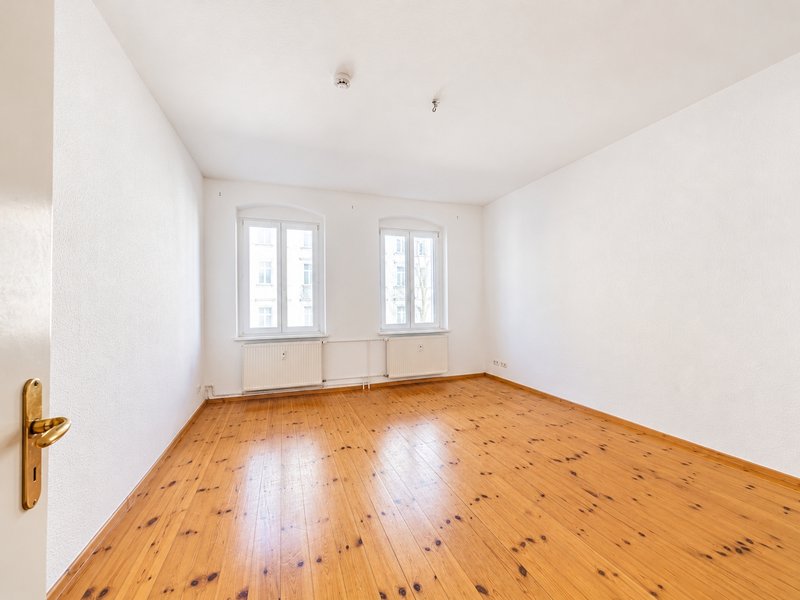
Lichtenberg counts 2,088 buildings with a total of 22,483 apartments. The stock ranges from Wilhelminian period buildings in the Weitlingkiez to the prefab blocks of the large estates and the new builds at Rummelsburg Bay.
| Size class | Count | Share |
|---|---|---|
| Unter 40 m² | 3,517 | 16 % |
| 40-59 m² | 7,463 | 33 % |
| 60-79 m² | 7,452 | 33 % |
| 80-99 m² | 2,498 | 11 % |
| 100-119 m² | 735 | 3 % |
| 120-139 m² | 405 | 2 % |
| 140-159 m² | 329 | 1 % |
| 160-179 m² | 46 | <1 % |
| 180-199 m² | 35 | <1 % |
| 200+ m² | 25 | <1 % |
The share of rental apartments is high, and a considerable part of the stock sits in the large estates, which still secure affordable living space today.
| Type of use | Count | Share |
|---|---|---|
| Rented | 21,141 | 90 % |
| Owner-occupied | 922 | 4 % |
| Vacant | 421 | 2 % |
| Commercial | 971 | 4 % |
Construction activity is concentrated on the waterside locations and on infill along the well-connected axes.
| Period | Apartment balance |
|---|---|
| 2021 | 151 apartments |
| 2022 | 452 apartments |
| 2023 | 1,079 apartments |
| 2024 | 38 apartments |
In total, 21,846 households live in Lichtenberg.
Transport and Infrastructure
Lichtenberg is well connected to the Berlin network. Lichtenberg station is an important hub with long-distance, regional, S-Bahn and U-Bahn connections, and a starting point for journeys east. The underground line beneath Frankfurter Allee links the district directly to the city centre, with its own station right up to the Tierpark.
Add to this S-Bahn stations such as Nöldnerplatz in the south, which connect to Rummelsburg Bay and to Friedrichshain. Local amenities are solid, schools and daycare centres are in place, and the abundance of green between the housing rows makes everyday life with children easier than in the dense inner-city locations.
Who Lichtenberg Suits
Lichtenberg suits people looking for affordable living space with good connections who are not put off by the mix of prefab blocks and period buildings. If you value space, green and water and can do without the pace of the city centre, you will find a district here that offers more than its reputation suggests.
Those, on the other hand, who are after a dense cultural scene and the urban pace of the central districts will miss a few things in Lichtenberg. The district is quieter, more spread out and more practical. For many who want to stay in the city's east, that is precisely the reason to move here.