
Character and Identity
Tempelhof is a district in the north of the borough of Tempelhof-Schöneberg, stretching from the border with Kreuzberg south towards Mariendorf. To the west it borders Schöneberg and Steglitz, to the east Neukölln. The district is home to 63,983 residents; the stock is spread across 32,854 apartments and 32,238 households (source: Amt für Statistik Berlin-Brandenburg).
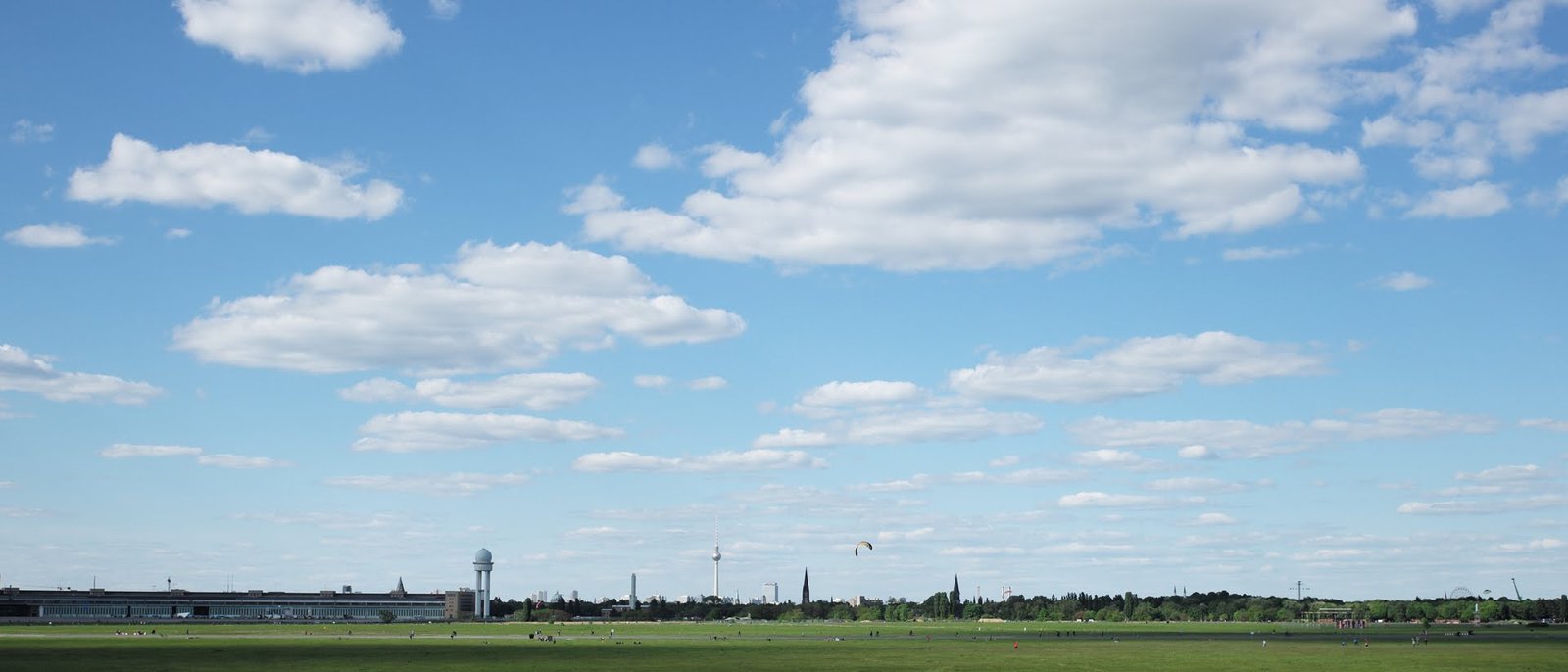
The defining feature of the district is an absence. Where aircraft took off until 2008 now lies the Tempelhofer Feld, at around 300 hectares one of the largest inner-city open spaces in Europe. In front of it stands the listed airport building, one of the largest structures in the world, which closes off the district to the north. Tempelhof Airport is the address that has made Tempelhof known across the region.
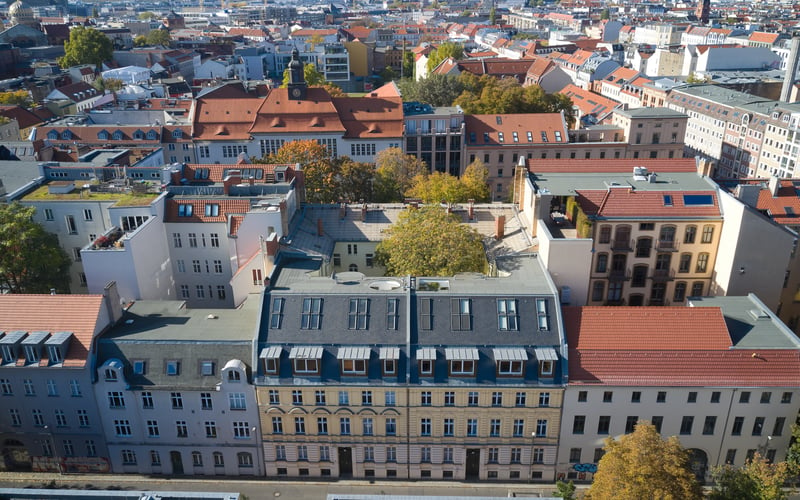
Those who live in Tempelhof know the other side. West of the Tempelhofer Damm, quiet residential streets with terraced houses from the 1920s and 1930s line up one after another; the so-called Fliegerviertel, with its streets named after aviation pioneers, is the best-known Kiez here. To the south, around the Südkreuz long-distance station and in the more urban locations, residential complexes from the interwar and post-war years dominate, with many three- and four-room apartments. This mix of metropolitan edge in the north and comfortable, settled calm in the residential streets shapes the district.
Tempelhof was an independent borough until 2001. Since the administrative reform, the district has belonged to the merged borough of Tempelhof-Schöneberg. This portrait covers the district of Tempelhof; the districts of Mariendorf, Marienfelde and Lichtenrade further to the south belonged to the old borough but are districts in their own right.
History and Change
The name Tempelhof goes back to the Order of the Templars, who settled the area in the 13th century. For centuries Tempelhof remained a village outside the gates of Berlin; the old village green and the village church on today's Reinhardtstraße are still reminders of this. In 1920 Tempelhof was incorporated into Berlin under the Greater Berlin Act and gave the then-new borough its name.
From the 1920s, aviation shaped the character of the district. On the Tempelhofer Feld, which had previously been a parade ground, one of the first commercial airports in Europe was built. In the 1930s today's terminal building was erected, whose sweeping curved form still defines the cityscape. In parallel, the residential settlements west of the Tempelhofer Damm grew; the terraced-house quarters of the Fliegerviertel belong to this interwar settlement construction.
The airport gained international fame with the Berlin Airlift of 1948/49. During the blockade of West Berlin, the Allies supplied the city by air via Tempelhof; the Airlift Memorial at the Platz der Luftbrücke commemorates this episode. After war damage, much post-war stock was built in Tempelhof, which explains today's mix of buildings.
Flight operations ended in 2008. In a 2014 referendum, Berliners voted against development along the edges of the field; since then the open space has been protected by law. The former airport building is now being developed as a future site and a location for culture, administration and business; full repurposing is a long-term process.
Sights
The best-known address is the former Tempelhof Airport. The monumental building from the 1930s can be visited on guided tours and today serves as an event venue, for example for trade fairs and concerts in the hangars. In front of the main entrance at the Platz der Luftbrücke stands the Airlift Memorial, whose three struts pointing west are colloquially known as the Hungerharke (Hunger Rake).
Directly behind it, the Tempelhofer Feld opens up. The former runways are now paths for cyclists, skaters and walkers, with meadows, gardening projects and a large dog run in between. The field is the central recreational and leisure space of the district and draws people from all over the city.
In the historic village centre, the medieval village church and the old village green recall the rural origins. Architecturally interesting are the 1920s and 1930s residential settlements west of the Tempelhofer Damm, whose uniform terraced-house rows show a piece of Berlin settlement history. The Stadtmuseum devotes its own exhibition references to Tempelhof and its airport.
Popular Kieze in Tempelhof
- Fliegerviertel: A terraced-house quarter west of the Tempelhofer Damm with streets named after aviation pioneers. Quiet, green and family-oriented, where property often changes hands within families.
- Tempelhofer Damm: The central north-south axis with retail, dining and the U6 running beneath the street. The supply corridor and urban backbone of the district.
- Alt-Tempelhof: The historic village centre around the village church and village green, a mix of older and newer residential buildings.
- Around Südkreuz station: Well-kept residential complexes from the interwar period at the transition to Schöneberg, long regarded as an insider tip for central and affordable living.
- Neu-Tempelhof / by the Tempelhofer Feld: Residential locations at the edge of the open space, valued for their proximity to the open field and the connection towards the city centre.
Scene and Everyday Life
The Tempelhofer Feld is the social centre of the district. On weekends, kitesurfers with land boards meet here alongside joggers, families and barbecue groups; the community gardens at the edge of the field are a social meeting point in their own right. Events in the hangars of the airport building, from trade fairs to festivals, bring an additional audience to the district.
Everyday life plays out along the Tempelhofer Damm. Here you will find supermarkets, bakeries, pharmacies and long-established dining, complemented by weekly markets in the district. Compared with the inner-city districts, the density of bars and galleries is low; Tempelhof is more of a residential than a going-out quarter. Those looking for more nightlife are quickly in Kreuzberg via the U6.
Who Lives in Tempelhof
Tempelhof is more strongly shaped by families and larger households than the central districts, which fits the high share of terraced houses and three- to four-room apartments. The following breakdown shows how households are distributed by size.
| Household size | Count | Share |
|---|---|---|
| 1 person | 19,569 | 61 % |
| 2 people | 6,665 | 21 % |
| 3 people | 2,892 | 9 % |
| 4 people | 1,897 | 6 % |
| 5 people | 655 | 2 % |
| 6+ people | 560 | 2 % |
The age structure is more mixed than in the young scene Kieze of the inner city, with a noticeable share of older residents in the long family-bound settlement locations.
| Age group | Count | Share |
|---|---|---|
| under 6 | 3,228 | 5 % |
| 6–15 | 4,898 | 8 % |
| 15–18 | 1,594 | 2 % |
| 18–27 | 7,019 | 11 % |
| 27–45 | 19,277 | 30 % |
| 45–55 | 7,405 | 12 % |
| 55–65 | 8,544 | 13 % |
| 65+ | 12,018 | 19 % |
In Tempelhof, too, the resident population is internationally composed. The following overview shows how the population is distributed by region of origin.
| Region of origin | Count | Share |
|---|---|---|
| EU | 7,289 | 31 % |
| Turkey | 4,839 | 21 % |
| unassigned | 2,499 | 11 % |
| Ukraine | 2,449 | 11 % |
| Syria | 1,171 | 5 % |
| Lebanon | 972 | 4 % |
| India | 779 | 3 % |
| Russia | 665 | 3 % |
| Afghanistan | 510 | 2 % |
| USA | 478 | 2 % |
| United Kingdom | 374 | 2 % |
| Iran | 361 | 2 % |
| Iraq | 255 | 1 % |
| Vietnam | 231 | <1 % |
| China | 191 | <1 % |
| Kazakhstan | 102 | <1 % |
Who Is Drawn to Tempelhof
The migration data show how the population renews itself. The favourable rent level makes Tempelhof attractive for inflows from beyond the city limits, while the district has a net loss of population to other boroughs and to the surrounding area.
| # | Country | Inflow | Outflow | Net |
|---|---|---|---|---|
| 1 | Ukraine | 292 | 170 | 122 |
| 2 | Türkei | 239 | 258 | -19 |
| 3 | Indien | 187 | 91 | 96 |
| 4 | Arabische Republik Syrien | 174 | 95 | 79 |
| 5 | Republik Moldau | 145 | 140 | 5 |
| 6 | Rumänien | 88 | 92 | -4 |
| 7 | Afghanistan | 73 | 44 | 29 |
| – | Deutschland | 904 | 1,281 | -377 |
Within Berlin, the exchange is closely tied to the adjacent districts.
| # | District | People |
|---|---|---|
| 1 | Wittenau | 960 |
| 2 | Tegel | 803 |
| 3 | Neukölln | 310 |
| 4 | Kreuzberg | 298 |
| 5 | Schöneberg | 274 |
In the opposite direction, the movement runs along similarly small-scale lines, supplemented by departures to the southern surrounding area.
| # | District | People |
|---|---|---|
| 1 | Neukölln | 359 |
| 2 | Mariendorf | 321 |
| 3 | Kreuzberg | 267 |
| 4 | Schöneberg | 267 |
| 5 | Friedrichshain | 192 |
Buildings and Apartments
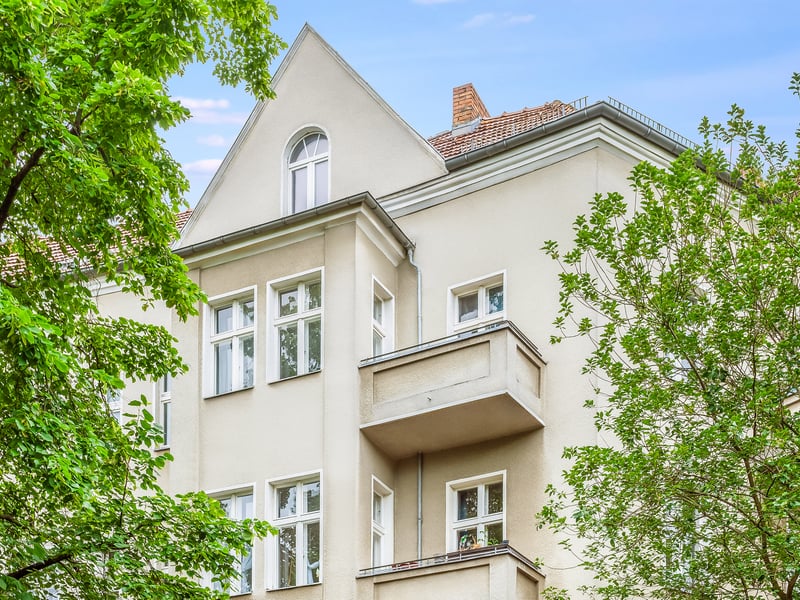
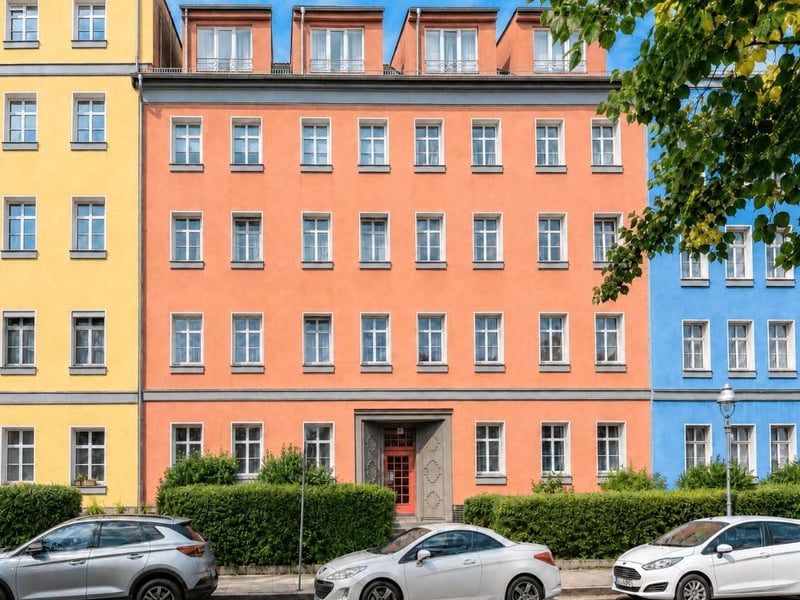
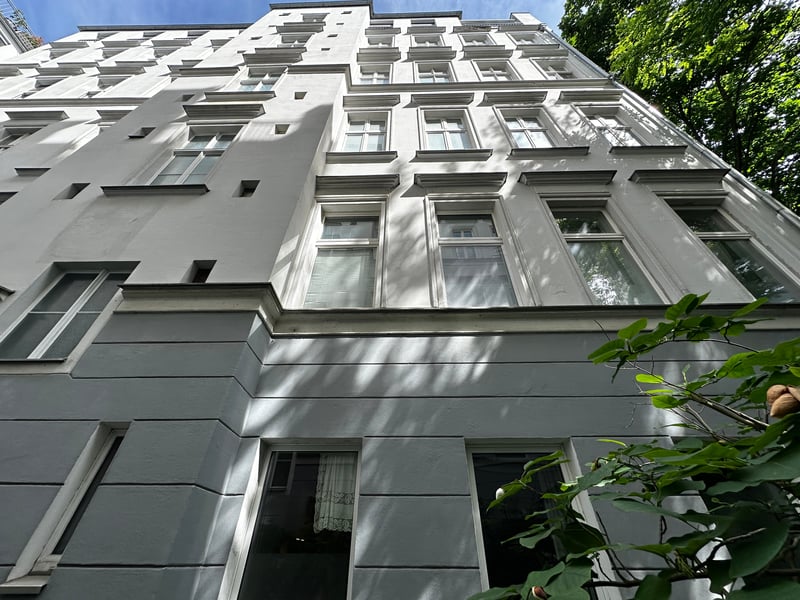
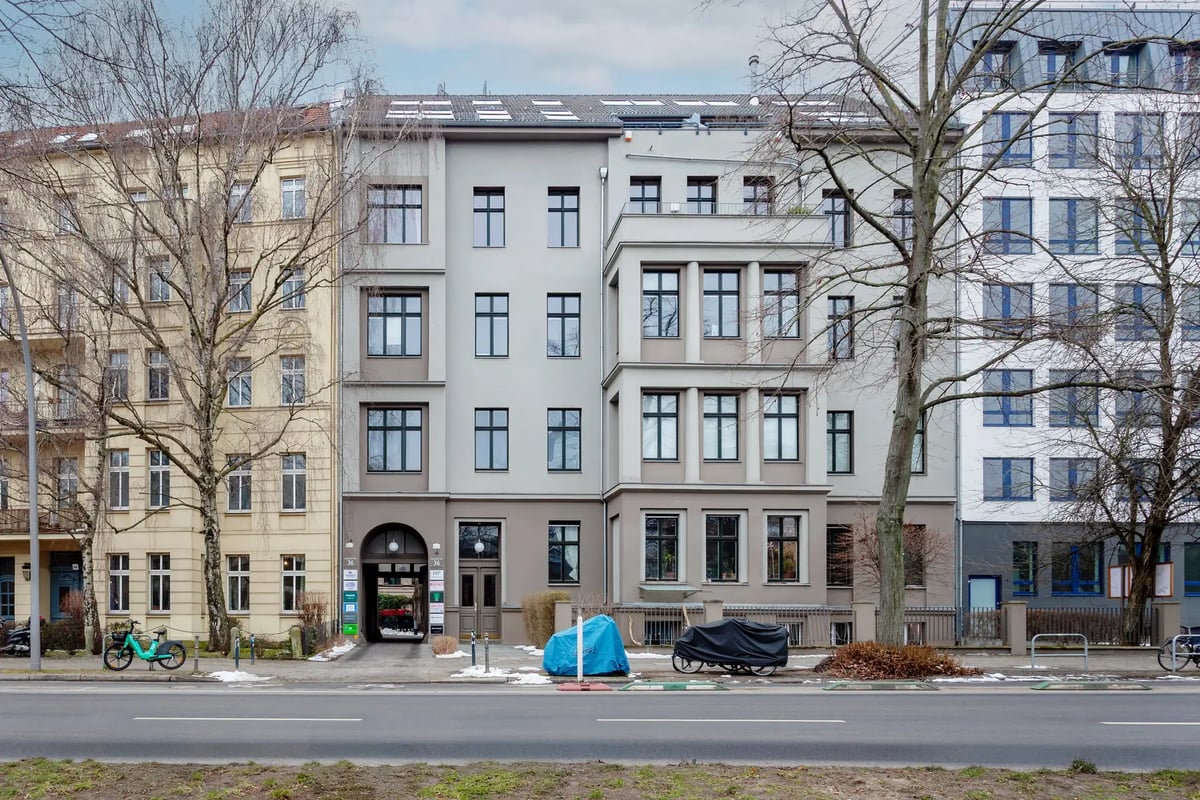
The building stock comprises 4,471 buildings. Characteristic of Tempelhof is the high share of single- and two-family houses, above all the terraced-house rows of the 1920s and 1930s settlement construction west of the Tempelhofer Damm. Added to this is a large post-war stock that replaced the residential buildings destroyed in the war, as well as interwar residential complexes around Südkreuz station. Pre-war buildings from the Gründerzeit are less common than in the inner city. A chart data source for construction periods is not available; this assessment is based on the Guthmann market report.
The distribution of apartment sizes reflects the family-oriented character of the district. The following overview shows how the stock is distributed across the size classes.
| Size class | Count | Share |
|---|---|---|
| Unter 40 m² | 3,007 | 9 % |
| 40-59 m² | 11,927 | 36 % |
| 60-79 m² | 10,449 | 32 % |
| 80-99 m² | 4,079 | 12 % |
| 100-119 m² | 1,527 | 5 % |
| 120-139 m² | 836 | 3 % |
| 140-159 m² | 400 | 1 % |
| 160-179 m² | 270 | <1 % |
| 180-199 m² | 172 | <1 % |
| 200+ m² | 182 | <1 % |
How the stock is used is also revealing for the social mix.
| Type of use | Count | Share |
|---|---|---|
| Rented | 29,131 | 88 % |
| Owner-occupied | 3,245 | 10 % |
| Vacant | 428 | 1 % |
| Commercial | 371 | 1 % |
New development in Tempelhof arises above all through densification in existing quarters; building on the Tempelhofer Feld is ruled out by referendum.
| Period | Apartment balance |
|---|---|
| 2021 | 14 apartments |
| 2022 | 55 apartments |
| 2023 | 34 apartments |
| 2024 | 41 apartments |
Part of the apartment building stock lies in a social conservation area under Section 172 of the German Building Code (BauGB). The conservation statute is intended to protect the established resident structure and regulates modernisation and conversion in the affected locations (source: Bezirksamt Tempelhof-Schöneberg).
Transport and Infrastructure
The backbone of access is the U6, which runs beneath the Tempelhofer Damm through the district from north to south and, via the stations Platz der Luftbrücke, Paradestraße, Tempelhof, Alt-Tempelhof and Kaiserin-Augusta-Straße, leads directly into the city centre. At Tempelhof station, the U6 meets the S-Bahn ring, which closely connects the northern district to Kreuzberg, Schöneberg and Neukölln.
Südkreuz station on the western edge is a regional hub. Long-distance trains, regional trains and the S-Bahn stop here, giving Tempelhof a direct connection to the ICE and IC network. Numerous bus lines and the Tempelhofer Damm as a continuous main road complement local transport; the Tempelhofer Feld also offers wide, car-free paths for cyclists and pedestrians.
Provision is concentrated on the Tempelhofer Damm and the side streets with supermarkets, specialist shops and weekly markets close to home. Schools and daycare centres are distributed across the residential quarters; the family-oriented layout of the settlement locations goes hand in hand with a solid range of educational facilities. Tempelhof is also an employment location; medium-sized and international companies have branches here, and the former airport building is developing into a location for business and culture.
When it comes to green spaces, the Tempelhofer Feld outshines everything else. With its roughly 300 hectares of open space, the district offers a recreational amenity that is hard to match in the densely built-up inner city. Smaller green areas and the quiet, leafy settlement streets west of the Tempelhofer Damm round out the picture.
Who Tempelhof Suits
- Families wanting a terraced house: The settlement quarters of the Fliegerviertel offer terraced houses in the green with a city-centre connection via the U6, a rare offering in Berlin. The stock is often older and in need of energy-efficiency refurbishment.
- Commuters with long-distance travel needs: Südkreuz station, with its ICE, regional and S-Bahn connections, makes Tempelhof attractive for people who regularly travel across regions.
- Owner-occupiers with a budget focus: Those who want to live close to the centre will find larger apartments and a more affordable entry level in Tempelhof than in the inner-city districts, with a direct location by the Tempelhofer Feld.
- Buy-and-hold investors in the apartment building segment: The heterogeneous building stock and the social conservation area determine the investment logic; modernisation and conversion are regulated in the affected locations.