
Character and identity
Schöneberg lies south of the Großer Tiergarten and, since the Berlin borough reform of 2001, belongs to the borough of Tempelhof-Schöneberg, which the district forms together with Tempelhof. The district extends across roughly 10.6 km², from the Tauentzienstraße in the north to the Ringbahn in the south. 128,702 people live here in 68,950 households; the stock is spread across 70,516 apartments in 5,145 buildings (source: Amt für Statistik Berlin-Brandenburg).
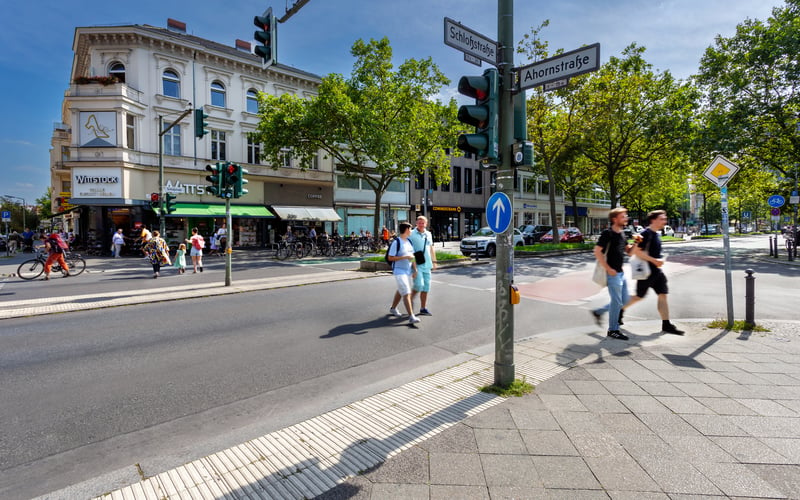
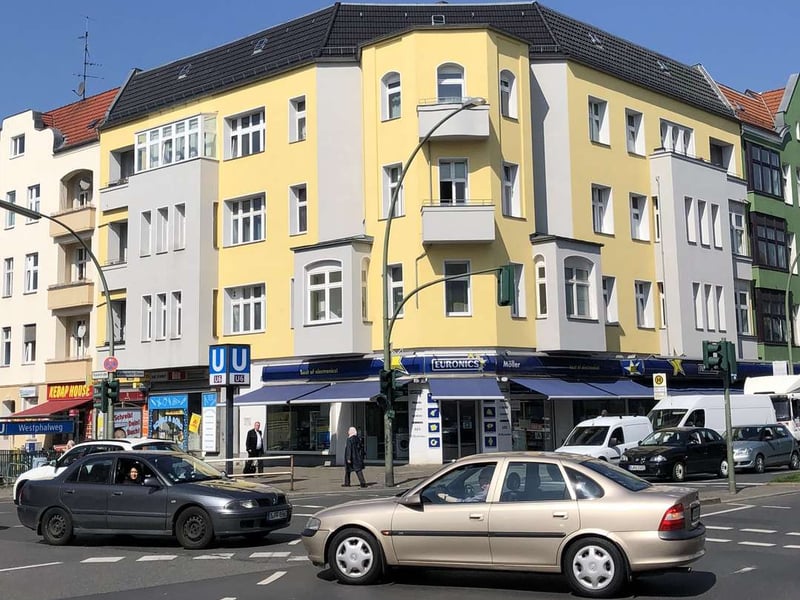
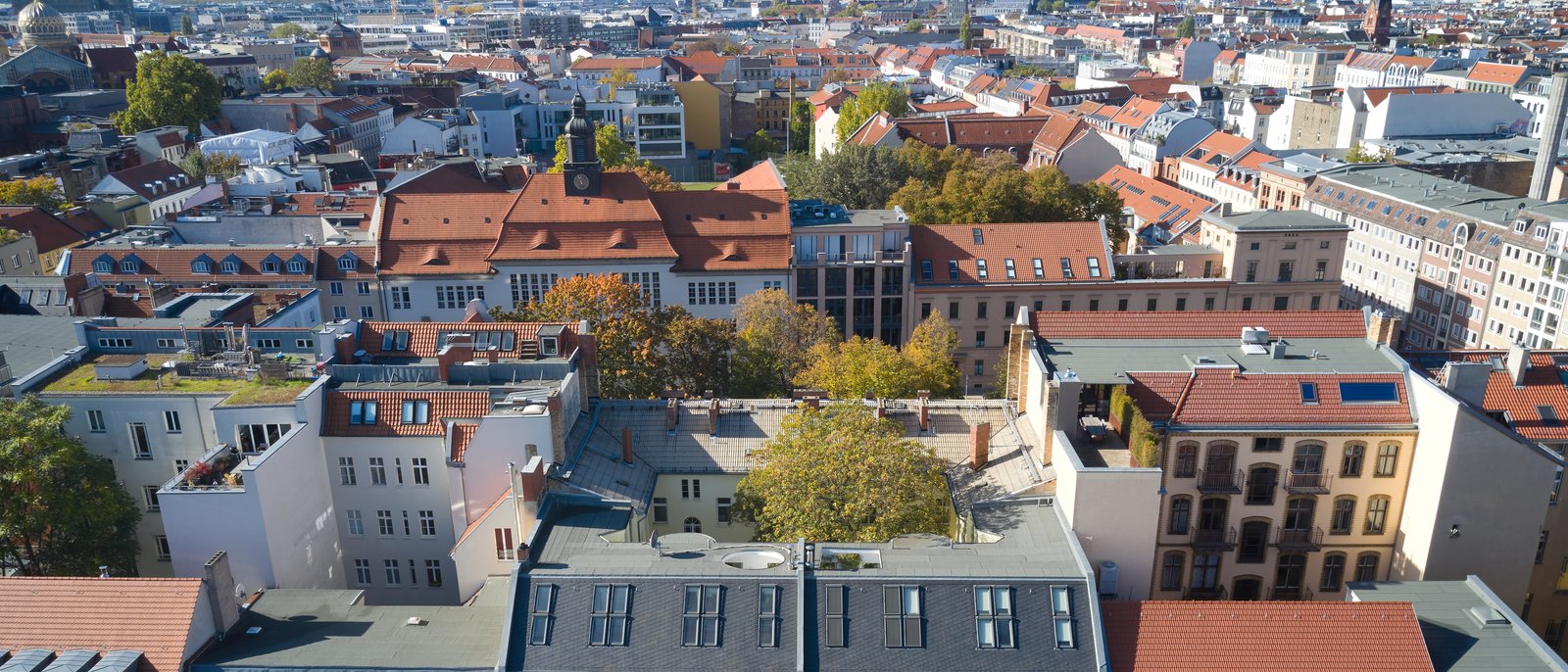
Schöneberg is made up of very different quarters that share little common ground. In the north-west the district reaches the City West, where the KaDeWe at Wittenbergplatz and the Tauentzienstraße mark the transition to Charlottenburg. Around the Nollendorfplatz lies the densest, loudest part, with bars, clubs and the queer scene that shapes Schöneberg to this day. A few minutes south, the Bavarian Quarter begins, a quiet, upper-middle-class residential area whose streets are named after Bavarian towns.
This range continues to the south. The Rote Insel, wedged between three railway lines, was a working-class quarter for generations and today carries the Gasometer and the EUREF Campus at its edge. The Akazienkiez around the Akazienstraße stands for everyday Schöneberg, with a weekly market, cafés and small-scale retail. Between them, squares such as the Viktoria-Luise-Platz and the Bayerischer Platz provide Gründerzeit addresses, while new quarters grow along the railway land at Südkreuz.
What holds Schöneberg together is less a uniform townscape than a history of diversity. As early as the Weimar Republic the district was a centre of metropolitan life, during the division the seat of the West Berlin government, and for decades a magnet for an international population. These layers sit more densely on top of one another here than in many other Berlin districts.
History and change
Schöneberg began as a village. „Sconenberch“ was first documented in 1264; the village church on the Hauptstraße still recalls this core today. For centuries the place remained a farming village outside the gates of Berlin, before industrialisation took hold. When the Berlin city boundary advanced in the late 19th century, Schöneberg's farmers sold their farmland to building speculators at high prices. The boom turned the village into a city within a few decades and earned it the nickname „Millionenbauerndorf“, the village of millionaire farmers.
In 1898 Schöneberg was elevated to a city, with its own town hall, its own U-Bahn and rapid construction. This phase also produced the Bavarian Quarter, which the entrepreneur Georg Haberland laid out as an upper-middle-class residential area from 1900 with his Berlinische Boden-Gesellschaft. In 1920 the independent city was incorporated into Greater Berlin and became the borough of Schöneberg. In the 1920s the area around the Nollendorfplatz was a centre of Berlin nightlife; the Eldorado on the Motzstraße and the open scene drew artists and writers. Christopher Isherwood lived at Nollendorfstraße 17 and drew on these years in „Goodbye to Berlin“, the literary basis for „Cabaret“.
National Socialism ended this life. In the Bavarian Quarter, also called the „Jewish Switzerland“ for its many Jewish residents, Albert Einstein lived among others before he emigrated in 1933; the memorial „Orte des Erinnerns“, with its signs in the streets, recalls the persecution and deportation of the Jewish neighbourhood today. In the Sportpalast on the Potsdamer Straße, Joseph Goebbels gave his „total war“ speech in 1943. The Second World War destroyed large parts of the Gründerzeit fabric, whose gaps were later filled with plain post-war buildings.
After the division, Schöneberg became the political centre of West Berlin. The House of Representatives and the Senate met in the Rathaus Schöneberg, and the Governing Mayor had his seat here. In front of this town hall, John F. Kennedy spoke the words „Ich bin ein Berliner“ on 26 June 1963; the Freiheitsglocke (Freedom Bell) has hung in the tower since 1950. Culturally too, the district remained a magnet: David Bowie and Iggy Pop lived at Hauptstraße 155 from 1976 to 1978, where Bowie recorded parts of his Berlin albums. After the fall of the Wall, Berlin's focus shifted east, but Schöneberg stayed sought after. The EUREF Campus around the old Gasometer and the new quarters at Südkreuz added fresh development axes in the 2010s.
Sights
The Rathaus Schöneberg on the John-F.-Kennedy-Platz is the district's best-known building, firmly tied to the history of West Berlin through the Kennedy speech and the Freedom Bell. A few steps away lies the Rudolph-Wilde-Park, which links the town hall with the Stadtpark Schöneberg and the Bavarian Quarter.
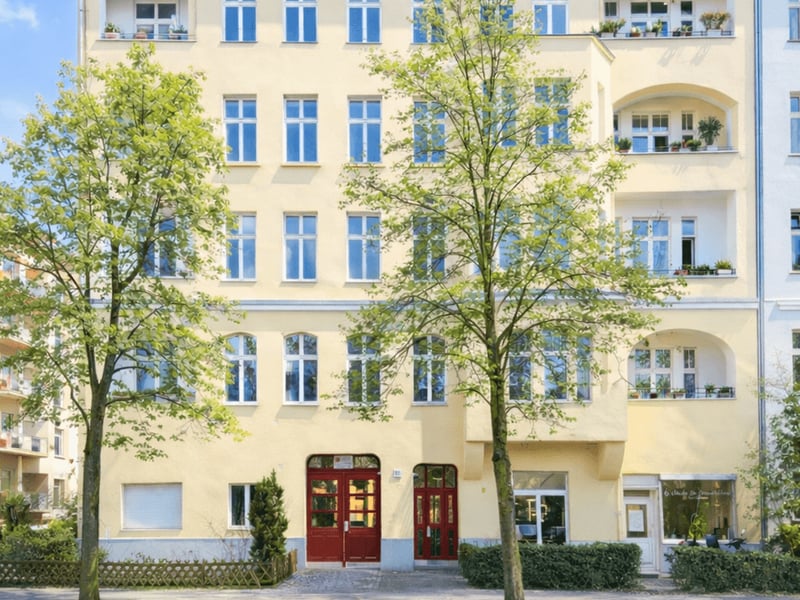
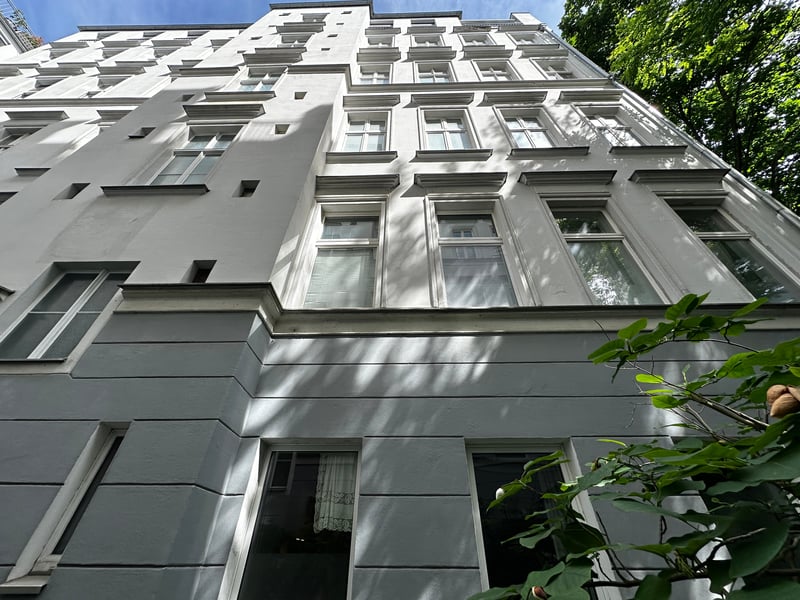
Architecturally, the Gründerzeit squares define the picture above all. The Viktoria-Luise-Platz, with its hexagonal layout and stately period buildings, ranks among the most elegant addresses in the city, and the Bayerischer Platz forms the centre of the quarter of the same name. The Heinrich-von-Kleist-Park holds the Königskolonnaden and the building of the Kammergericht, which served as the seat of the Volksgerichtshof during the Nazi era and the Allied Control Council after 1945.
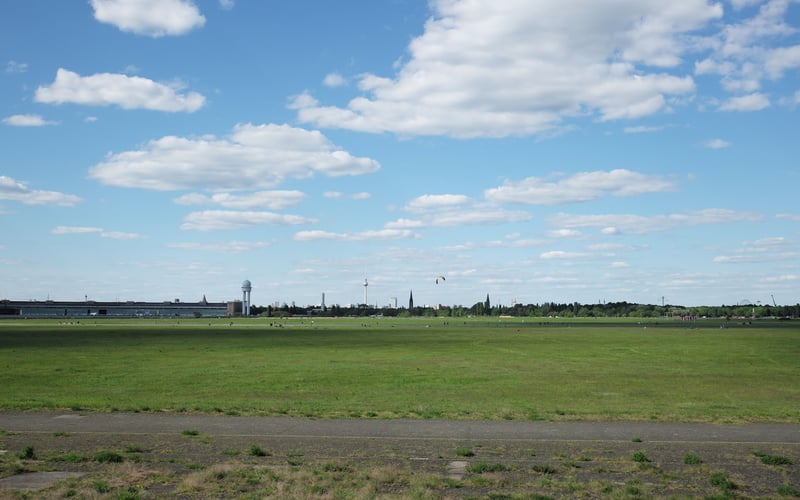
Industrial and technological history is most visible on the Rote Insel. The Gasometer Schöneberg, visible from afar, is today the landmark of the EUREF Campus, a location for energy and mobility companies. In the south of the district lie the Natur-Park Schöneberger Südgelände, a former railway depot that became a natural landscape, and the Insulaner, a hill raised from wartime rubble with a planetarium and observatory. At the Wittenbergplatz, finally, the KaDeWe is the largest department store in continental Europe, an address counted as part of Berlin's west but belonging structurally to Schöneberg.
Popular Kieze in Schöneberg
- Bavarian Quarter (Bayerisches Viertel): An upper-middle-class residential area south of the town hall, with streets named after Bavarian towns. Shaped by Gründerzeit and 1920s architecture, the Bayerischer Platz and a quiet, family atmosphere.
- Nollendorfkiez / Regenbogenkiez: Around Nollendorfplatz, Motzstraße and Fuggerstraße lies the centre of Berlin's queer scene, with bars, clubs and a history reaching back to the 1920s. A dense, lively quarter at the transition to the City West.
- Rote Insel: A former working-class quarter enclosed by three railway lines around the Crellestraße, birthplace of Marlene Dietrich. Today a mix of period buildings, small-scale business and the EUREF Campus at the Gasometer.
- Akazienkiez: Around the Akazienstraße and the Apostel-Paulus-Kirche, with a weekly market, cafés and owner-run shops. It stands for everyday living in Schöneberg.
- Winterfeldtkiez / Maaßenkiez: Set around the Winterfeldtplatz and the Goltzstraße, with the largest weekly market in the inner city and dense dining between Nollendorfplatz and Akazienstraße.
Scene and everyday life
The weekly market on the Winterfeldtplatz is the gastronomic centre of northern Schöneberg. On Wednesdays and Saturdays it supplies the surrounding Kieze, and the Saturday market is one of the largest in the city. From here the Goltzstraße, the Akazienstraße and the Maaßenstraße run through the quarter as axes of cafés, bars, bookshops and small shops.
Around the Motzstraße and the Fuggerstraße, Berlin's queer life is concentrated. From the scene of the 1920s, a neighbourhood has grown across the division that today carries its own major events with the lesbian and gay street festival and the Folsom Europe weekend. At the Nollendorfplatz U-Bahn station, a plaque commemorates the homosexual victims of National Socialism.
Alongside this, a middle-class cultural scene marks the district. Galleries, arthouse cinemas and small stages are spread across the northern Kieze, while the Bavarian Quarter and the area around the Viktoria-Luise-Platz live more on residential calm and neighbourhood dining. This simultaneity of loud nightlife and quiet residential quarter in a small space is one of Schöneberg's hallmarks.
Who lives in Schöneberg
Schöneberg is shaped by small households. The following breakdown shows how the resident population is distributed across household sizes.
| Household size | Count | Share |
|---|---|---|
| 1 person | 43,701 | 63 % |
| 2 people | 12,936 | 19 % |
| 3 people | 6,144 | 9 % |
| 4 people | 3,853 | 6 % |
| 5 people | 1,275 | 2 % |
| 6+ people | 1,041 | 2 % |
The high share of single-person households fits the location and the housing structure of the district, where small and mid-sized apartments dominate. The age structure is correspondingly shaped by working people of middle age groups, complemented by an older population in the quieter residential areas to the south.
| Age group | Count | Share |
|---|---|---|
| under 6 | 6,142 | 5 % |
| 6–15 | 9,131 | 7 % |
| 15–18 | 2,833 | 2 % |
| 18–27 | 13,294 | 10 % |
| 27–45 | 39,782 | 31 % |
| 45–55 | 15,638 | 12 % |
| 55–65 | 18,428 | 14 % |
| 65+ | 23,454 | 18 % |
Schöneberg is one of Berlin's internationally shaped districts. The composition of the resident population by region of origin shows how strongly inflows from abroad carry the population.
| Region of origin | Count | Share |
|---|---|---|
| EU | 16,329 | 34 % |
| Turkey | 10,235 | 22 % |
| unassigned | 4,116 | 9 % |
| Ukraine | 3,355 | 7 % |
| Russia | 2,097 | 4 % |
| USA | 1,949 | 4 % |
| Syria | 1,850 | 4 % |
| India | 1,693 | 4 % |
| United Kingdom | 1,326 | 3 % |
| Lebanon | 1,289 | 3 % |
| Iran | 1,028 | 2 % |
| China | 702 | 1 % |
| Vietnam | 502 | 1 % |
| Afghanistan | 476 | 1 % |
| Iraq | 325 | <1 % |
| Kazakhstan | 254 | <1 % |
Who is drawn to Schöneberg
Schöneberg renews its population strongly through inflows from outside Berlin. The following table shows which countries carry the international influx and how arrivals and departures compare by country.
| # | Country | Inflow | Outflow | Net |
|---|---|---|---|---|
| 1 | Indien | 445 | 156 | 289 |
| 2 | Ukraine | 379 | 193 | 186 |
| 3 | Türkei | 264 | 156 | 108 |
| 4 | Rumänien | 213 | 142 | 71 |
| 5 | Italien | 173 | 209 | -36 |
| 6 | Vereinigte Staaten | 149 | 129 | 20 |
| 7 | Polen | 143 | 185 | -42 |
| – | Deutschland | 2,275 | 2,704 | -429 |
Within Berlin, the exchange is mainly small-scale. Most people who move to Schöneberg come from the neighbouring districts, above all from Wilmersdorf, Friedenau, Tempelhof and Kreuzberg.
| # | District | People |
|---|---|---|
| 1 | Kreuzberg | 580 |
| 2 | Charlottenburg | 499 |
| 3 | Wilmersdorf | 467 |
| 4 | Neukölln | 445 |
| 5 | Friedrichshain | 316 |
In the other direction the movement runs similarly. Those who leave Schöneberg often stay nearby and move into the adjacent districts of Berlin's south-west, from Friedenau and Wilmersdorf to Steglitz and Tempelhof.
| # | District | People |
|---|---|---|
| 1 | Wilmersdorf | 573 |
| 2 | Kreuzberg | 507 |
| 3 | Charlottenburg | 502 |
| 4 | Neukölln | 444 |
| 5 | Steglitz | 359 |
Buildings and apartments
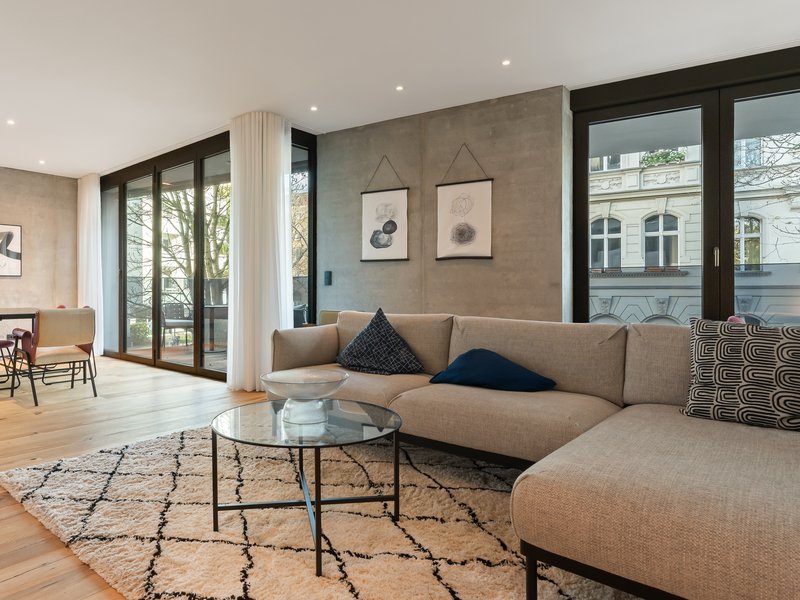
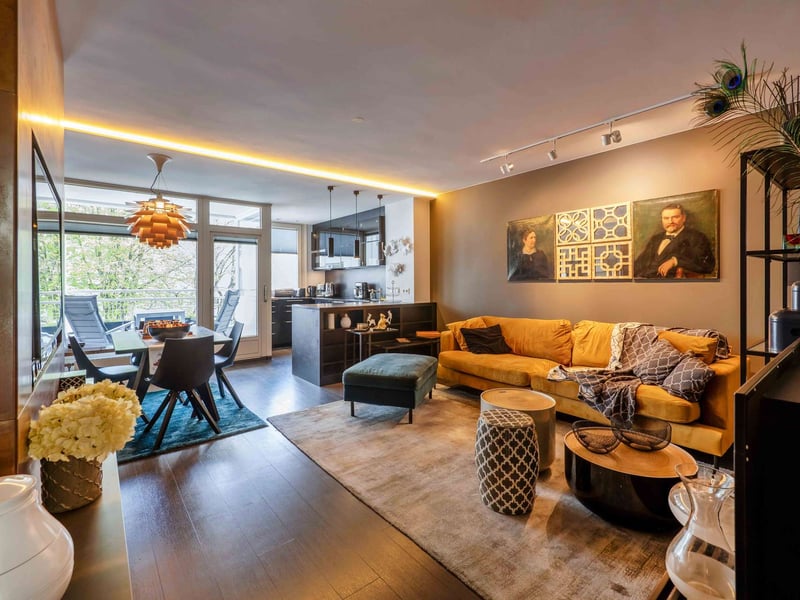
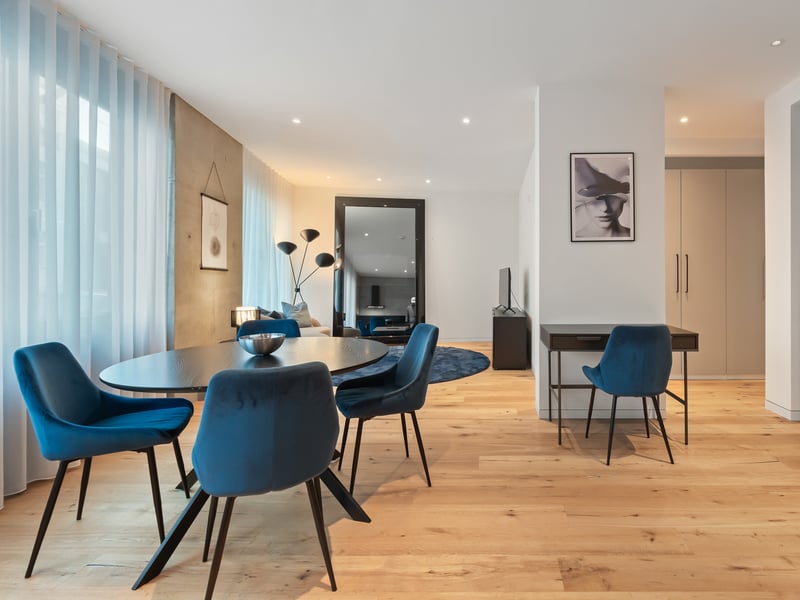
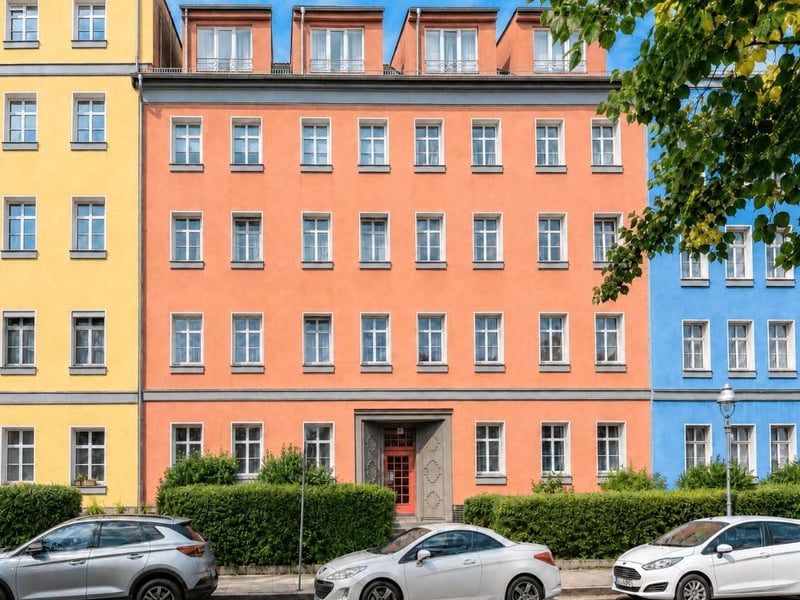
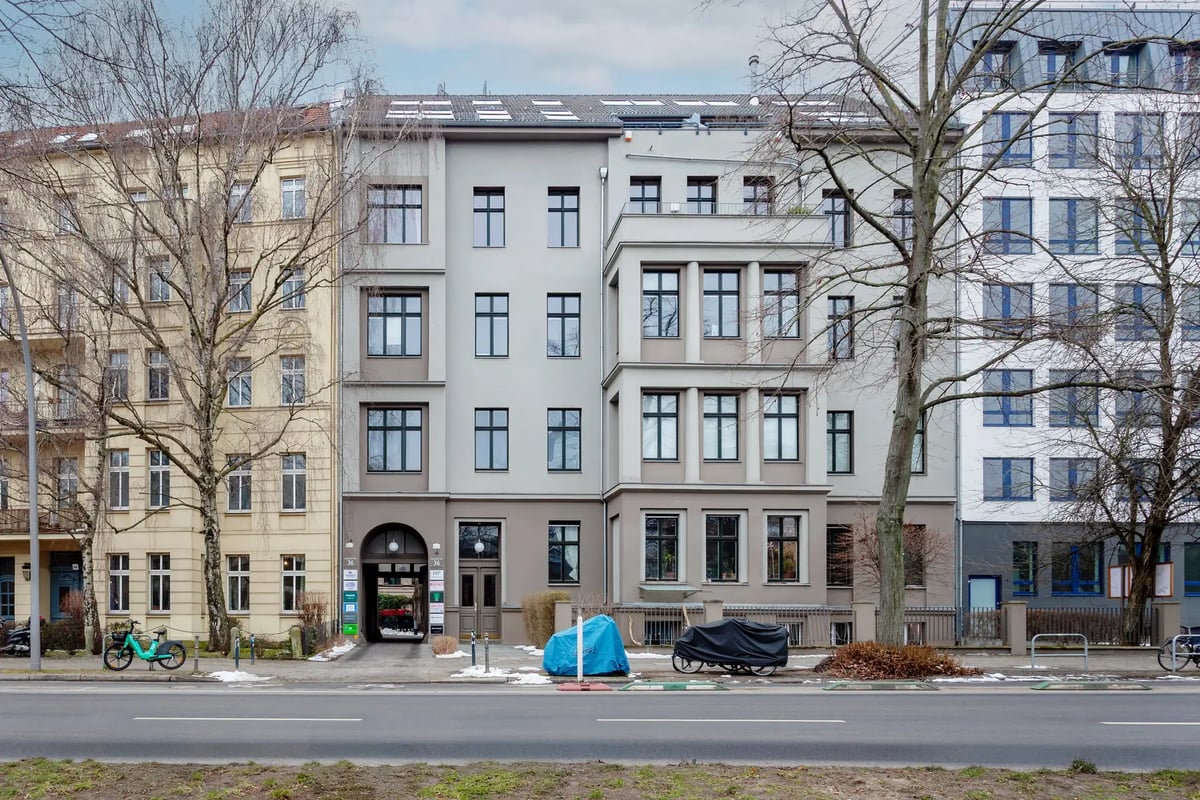
The building stock comprises 5,145 buildings and is structurally very mixed. At its core are Gründerzeit period buildings from the boom around 1900, which mainly shape the quarters around the Viktoria-Luise-Platz, the Bavarian Quarter and the Akazienkiez. The war gaps were closed in the 1950s and 1960s with plain multi-storey apartment buildings, which today, despite their often weak energy performance, form a sought-after segment with compact floor plans. No dedicated chart data source for construction periods is available; this assessment is based on the Guthmann market report.
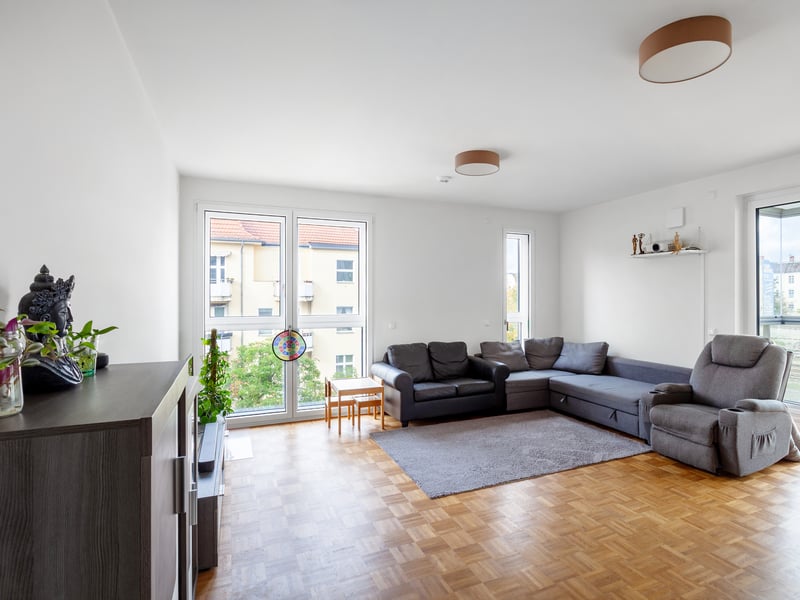
The following overview shows how the stock is distributed across the size classes. The emphasis on small and mid-sized apartments explains the high single share in the district.
| Size class | Count | Share |
|---|---|---|
| Unter 40 m² | 9,689 | 14 % |
| 40-59 m² | 20,141 | 29 % |
| 60-79 m² | 19,044 | 27 % |
| 80-99 m² | 10,337 | 15 % |
| 100-119 m² | 5,261 | 7 % |
| 120-139 m² | 2,680 | 4 % |
| 140-159 m² | 1,644 | 2 % |
| 160-179 m² | 870 | 1 % |
| 180-199 m² | 392 | <1 % |
| 200+ m² | 465 | <1 % |
How the stock is used is also revealing for the social mix, for instance in the ratio of owner-occupied to rented housing.
| Type of use | Count | Share |
|---|---|---|
| Rented | 60,651 | 84 % |
| Owner-occupied | 8,508 | 12 % |
| Vacant | 1,224 | 2 % |
| Commercial | 1,890 | 3 % |
In this densely built district, new construction arises mainly on the former railway land. Around the Südkreuz, a new quarter has grown with the Schöneberger Linse, and the EUREF Campus at the Gasometer. The following illustration shows how construction activity has developed over time.
| Period | Apartment balance |
|---|---|
| 2021 | 857 apartments |
| 2022 | 141 apartments |
| 2023 | 608 apartments |
| 2024 | 304 apartments |
Large parts of Schöneberg are under milieu protection. Since 2014 several conservation areas under Section 172 of the Building Code (BauGB) have been in place, covering a substantial share of the living area and regulating the conversion of rental apartments into condominiums as well as extensive modernisations.
Transport and infrastructure
Schöneberg is densely connected to the U-Bahn network. At the Nollendorfplatz four lines meet at once, the U1, U2, U3 and U4; the U4, Berlin's shortest line, runs entirely within the district from the Nollendorfplatz to the Innsbrucker Platz and dates back to the time of the independent city of Schöneberg. The U7 links the Bayerischer Platz, Eisenacher Straße and Kleistpark with Neukölln and Spandau, and the U2 crosses the north on the historic elevated railway at the Bülowstraße.
At the southern edge, the Ringbahn provides a fast connection to the city ring with the stations Schöneberg, Innsbrucker Platz and Südkreuz. The Bahnhof Südkreuz is the district's most important transport hub and connects the S-Bahn with regional and long-distance services.
With the Bahnhof Südkreuz, opened in 2006, Schöneberg has its own ICE and regional station. It connects the district directly to the long-distance network and is at the same time the trigger of the quarter development at the Schöneberger Linse.
Main axes such as the Hauptstraße and the Potsdamer Straße carry a large share of through traffic, while the side streets of the residential Kieze are quiet. The Natur-Park Schöneberger Südgelände and the accompanying green links along the railway lines offer routes for cyclists and pedestrians away from the main roads.
Schools and day-care centres are spread across the residential Kieze, with focal points in the Bavarian Quarter and the Akazienkiez. With the planetarium and the Wilhelm-Foerster-Sternwarte at the Insulaner, a learning site known beyond the region lies in the south of the district.
Local supply rests on the lively shopping streets. The Winterfeldtmarkt, the Akazienstraße and the Hauptstraße cover everyday needs, while the KaDeWe and the Tauentzienstraße at the northern edge form the transition to the large-scale retail of the City West.
Despite the dense development, Schöneberg has several green anchors. The Rudolph-Wilde-Park and the Stadtpark Schöneberg run through the middle of the district, the Heinrich-von-Kleist-Park offers a historic layout with the Königskolonnaden, and in the south the Natur-Park Schöneberger Südgelände and the Insulaner add larger open spaces.
Who Schöneberg suits
- International singles and couples: The high share of small households, the predominantly compact supply of apartments and the central location between the City West and the inner city appeal to people who want urban life and short distances. The supply is mostly for rent.
- Families with a taste for period buildings: The Bavarian Quarter and the quiet residential streets in the south offer generous period apartments, parks and an established school environment away from the loud nightlife Kieze.
- Commuters with long-distance needs: Those who travel regularly benefit from the ICE and regional stop at Südkreuz and the dense U-Bahn and Ringbahn connections to all parts of the city.
- Investors in period stock: The high share of Gründerzeit and post-war apartments in small-scale ownership meets consistently high demand; the extensive milieu protection areas shape the framework for conversion and modernisation.