

Character and Identity
Weißensee lies in the northeast of Berlin and belongs to the borough of Pankow. The district stretches from the dense period quarters around its namesake lake to the more open edges in the north and east. The district is home to 58,297 residents; the housing stock is spread across 31,392 apartments and 30,739 households (source: Statistical Office Berlin-Brandenburg).
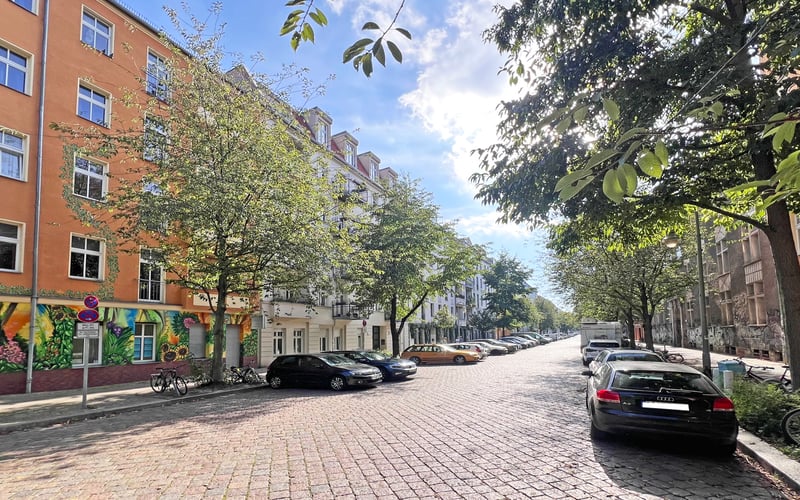
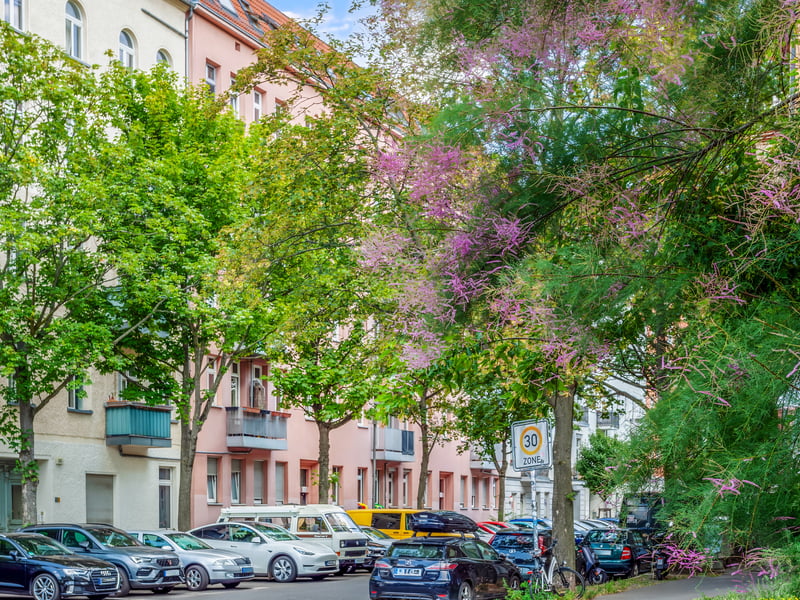
The Weiße See, a glacial pool with a lido and a park, gives the district its name and its character. Around it stand three- to four-storey stucco buildings, small-scale commercial courtyards and coach houses, interspersed with housing estates from the 1920s. Walk through Weißensee and you quickly notice that there is more room to breathe here than in neighbouring Prenzlauer Berg. The streets are wider, the courtyards greener, the pace calmer.
For a long time, Weißensee was the place you moved to when Prenzlberg became too expensive and too crowded. That role has shifted. The district has grown more self-sufficient, with its own centre at Antonplatz, its own art college, and a milieu that is no longer just the overflow of the neighbourhood next door. At the same time, it remains more affordable and more relaxed than the more central inner-city locations.
A point of distinction: this portrait deals with the district of Weißensee. The historic old borough of Weißensee, which was independent until the administrative reform of 2001, additionally encompassed Blankenburg, Heinersdorf, Karow, and Stadtrandsiedlung Malchow. These districts now also belong to Pankow, but are only touched on here in passing.
History and Change
Weißensee grew out of an old village green settlement, first documented in the 13th century. For centuries, agriculture shaped the lake and the surrounding estate, until the growing city of Berlin drew closer in the 19th century. With industrialisation, the village turned into a suburb. From the 1870s onward, entrepreneurs such as Gustav Adolf Schön laid out entire streets and marketed Weißensee as a place to live just outside the gates of the metropolis.
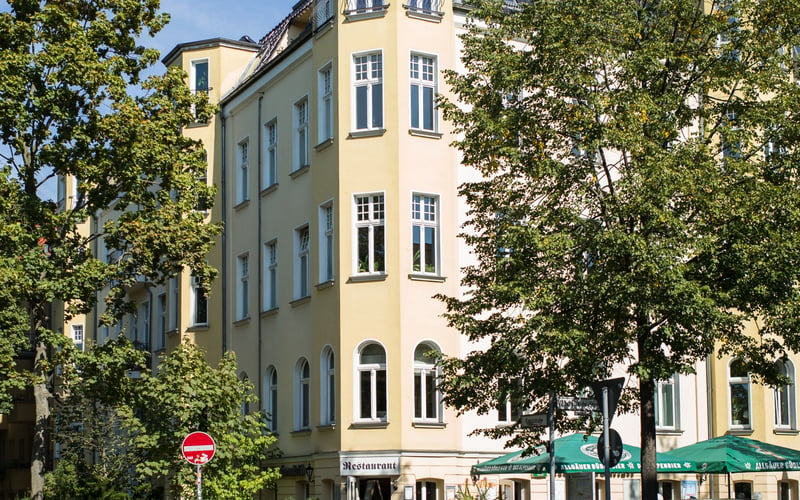
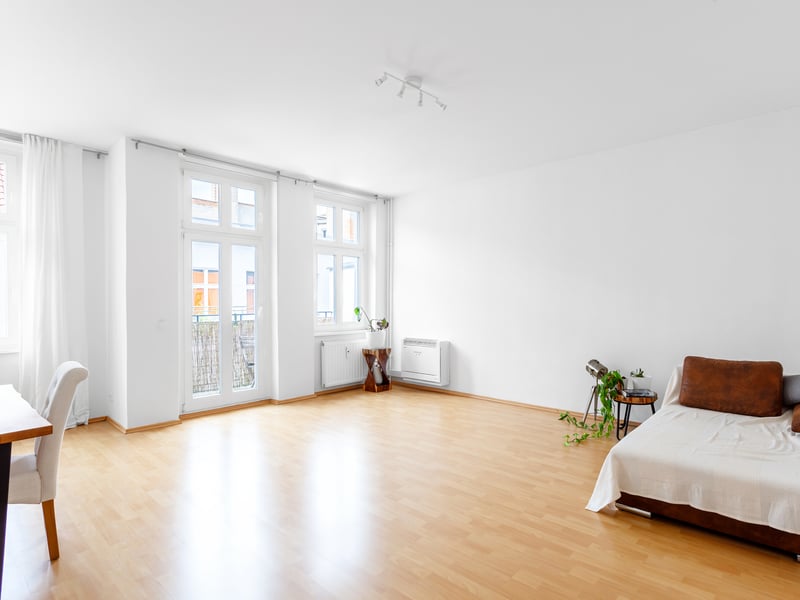
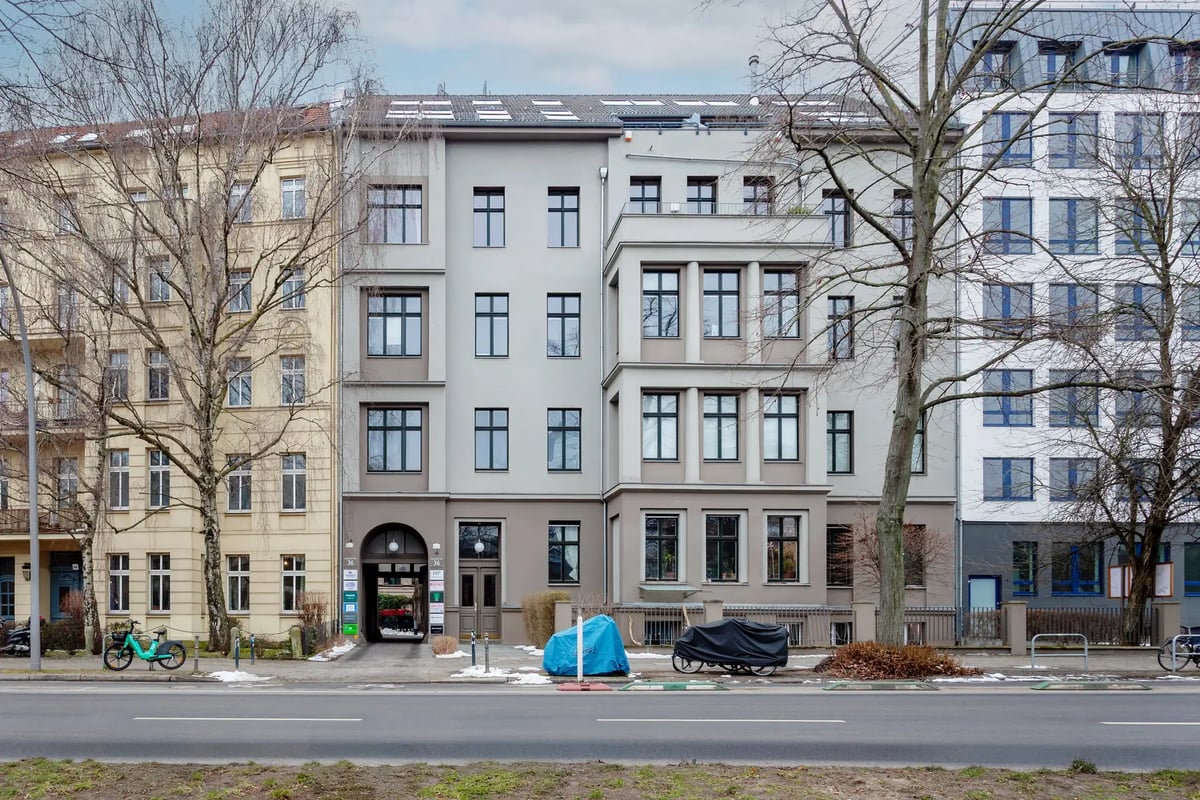
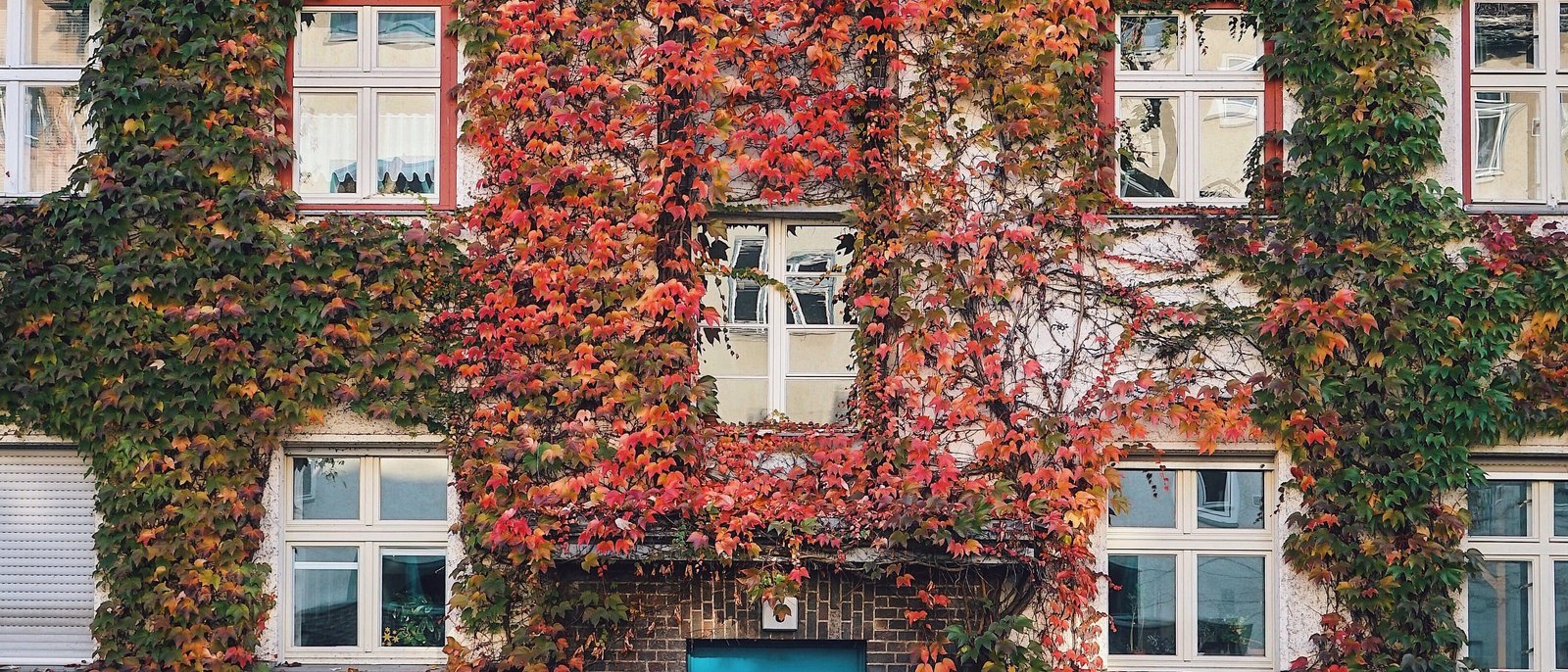
Around the turn of the century, the area densified into a Gründerzeit quarter. Three- to four-storey apartment buildings with stucco façades, a front building and the occasional commercial use in the courtyard still shape the southern and central parts today. In the 1920s, cooperative and municipal housing estates were added, which made Weißensee well known in architectural history. Bruno Taut designed the housing complex on Buschallee, one of the great reform estates of the Weimar era. In 1920, Weißensee was incorporated under the Greater Berlin Act.
During the GDR period, Weißensee lay in East Berlin and was the seat of its own city district. The district also became known through filmmaking, as GDR cinema had its roots here. In the years after 1989, Weißensee initially remained in the shadow of the rapidly changing Prenzlauer Berg. Only since the 2010s has the district increasingly attracted newcomers from neighbouring quarters that have become more expensive. To safeguard the building stock and the established resident structure, the borough designated two conservation areas under Section 172 of the German Building Code in 2017 (source: Pankow District Office).
Sights
The Weiße See with its park and lido is the central anchor of the district. The Strandbad Weißensee is one of the oldest lidos in Berlin and lies right within the residential development, a rarity for an inland body of water in such a location. A park with old trees, lawns for sunbathing, and an open-air stage runs around the lake.
The Jewish Cemetery Weißensee on Herbert-Baum-Straße is the district's most significant sight. Opened in 1880, it is regarded as one of the largest surviving Jewish cemeteries in Europe. With its expansive fields, its mourning hall, and its historic gravestones, it is a monument of European stature and a quiet counterpoint to everyday life in the residential quarters.
The weißensee kunsthochschule berlin shapes the cultural profile of the district. The college of art and design, with its roughly 900 students, brings a younger crowd, studios, and a network of workshops and galleries into the district. Other cultural anchors are the Brotfabrik on Caligariplatz, a venue for cinema, stage and visual arts, as well as smaller venues and off-spaces that have set up in the commercial courtyards.
Popular Kieze in Weißensee
- Komponistenviertel: A residential quarter east of Berliner Allee with streets named after composers. Defined by Gründerzeit period buildings and quiet residential streets, popular with families.
- Am Weißen See: The locations right by the lake and the park, with the lido and grounds on your doorstep. A sought-after living environment with a mix of period buildings and individual new developments.
- Antonplatz: The functional centre of the district, with local amenities, a tram hub, and the long-established Kino Toni cinema. This is where everyday life in Weißensee comes together.
- Buschallee / Taut-Siedlung: In the northeast, shaped by the reform housing estates of the 1920s around Bruno Taut's residential complex. Generous green spaces and cooperative building stock.
- Berliner Allee: The central traffic and commercial axis, lined with retail, restaurants, and apartment buildings. Louder and more urban than the side streets.
Scene and Everyday Life
Weißensee is not a nightlife quarter in the inner-city sense, but thrives on a fine-grained neighbourhood scene. Cafés, workshops, studios, and small shops have established themselves in the commercial courtyards and along the main streets, many of them around the art college. The Brotfabrik on Caligariplatz is the most important cultural meeting point, with an arthouse cinema, theatre, and exhibitions under one roof.
In summer, the Weiße See sets the rhythm of the district. The lido, the lawns, and the open-air stage draw residents and visitors alike. Antonplatz and Berliner Allee cover everyday needs with a weekly market, supermarkets, and the Kino Toni. This mix of water, greenery, and established local amenities defines the character: less tourism, more neighbourhood.
Who Lives in Weißensee
Weißensee mixes families, working people, and a growing share of newcomers from neighbouring quarters that have become more expensive. The following breakdown shows how households are distributed by size.
| Household size | Count | Share |
|---|---|---|
| 1 person | 17,859 | 58 % |
| 2 people | 7,125 | 23 % |
| 3 people | 3,171 | 10 % |
| 4 people | 1,930 | 6 % |
| 5 people | 440 | 1 % |
| 6+ people | 214 | <1 % |
The age structure is more broadly spread than in the pure single-household quarters of the inner city, with a noticeable share of families and middle-aged cohorts.
| Age group | Count | Share |
|---|---|---|
| under 6 | 2,989 | 5 % |
| 6–15 | 5,126 | 9 % |
| 15–18 | 1,638 | 3 % |
| 18–27 | 5,717 | 10 % |
| 27–45 | 18,245 | 31 % |
| 45–55 | 7,901 | 14 % |
| 55–65 | 7,577 | 13 % |
| 65+ | 9,104 | 16 % |
The composition of the resident population by area of origin also reflects the district's growing international profile.
| Region of origin | Count | Share |
|---|---|---|
| EU | 4,886 | 39 % |
| Russia | 1,224 | 10 % |
| Ukraine | 1,007 | 8 % |
| India | 903 | 7 % |
| Syria | 809 | 6 % |
| Turkey | 789 | 6 % |
| Vietnam | 652 | 5 % |
| Afghanistan | 496 | 4 % |
| USA | 397 | 3 % |
| United Kingdom | 318 | 3 % |
| unassigned | 316 | 3 % |
| Iran | 277 | 2 % |
| Kazakhstan | 153 | 1 % |
| China | 145 | 1 % |
| Iraq | 126 | 1 % |
| Lebanon | 87 | <1 % |
Who Is Drawn to Weißensee
The migration data show how the population renews itself. Weißensee has been growing steadily for years, driven by international arrivals from beyond the city limits and by internal exchange within Berlin; the district loses slightly to the surrounding region.
| # | Country | Inflow | Outflow | Net |
|---|---|---|---|---|
| 1 | Indien | 164 | 63 | 101 |
| 2 | Türkei | 131 | 79 | 52 |
| 3 | Ukraine | 114 | 60 | 54 |
| 4 | Bulgarien | 91 | 118 | -27 |
| 5 | Vietnam | 59 | 19 | 40 |
| 6 | Russische Föderation | 56 | 49 | 7 |
| 7 | Arabische Republik Syrien | 56 | 31 | 25 |
| – | Deutschland | 848 | 1,217 | -369 |
Within Berlin, the exchange is close with the adjoining districts, above all Prenzlauer Berg, Pankow, and the northern neighbours.
| # | District | People |
|---|---|---|
| 1 | Prenzlauer Berg | 552 |
| 2 | Friedrichshain | 249 |
| 3 | Mitte | 163 |
| 4 | Pankow | 154 |
| 5 | Neukölln | 138 |
In the opposite direction, the movement runs similarly on a small scale, primarily into the neighbouring districts and the nearby surrounding region.
| # | District | People |
|---|---|---|
| 1 | Prenzlauer Berg | 288 |
| 2 | Pankow | 188 |
| 3 | Alt-Hohenschönhausen | 166 |
| 4 | Friedrichshain | 143 |
| 5 | Marzahn | 126 |
Buildings and Apartments
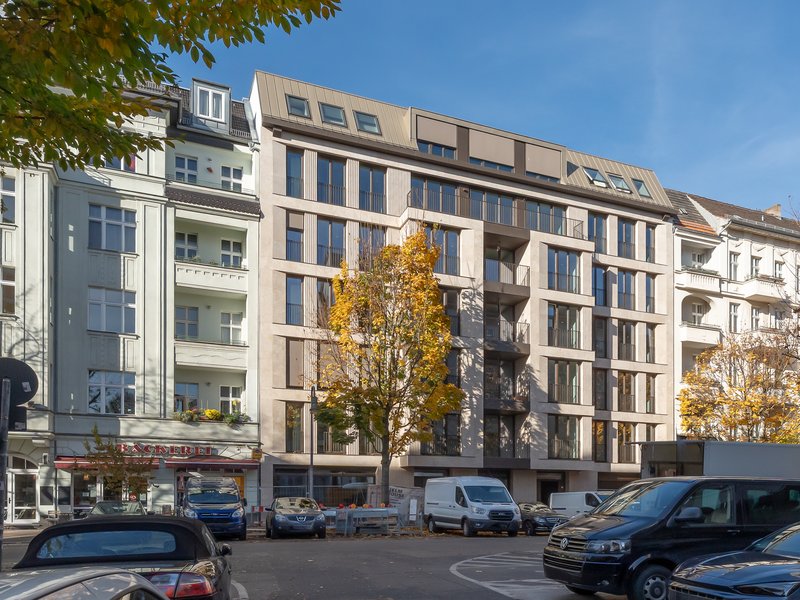
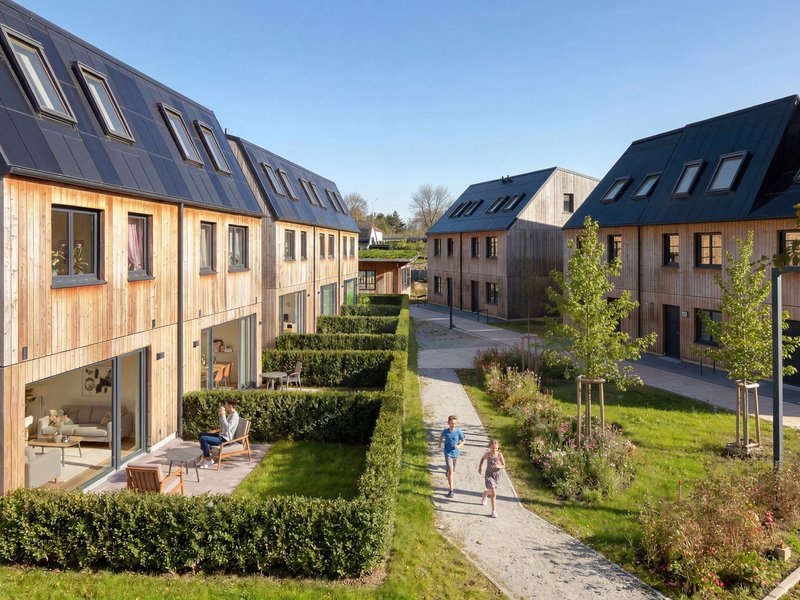
The building stock comprises 4,187 buildings. At its core are the three- to four-storey Gründerzeit apartment buildings in the south and centre, often with a stucco façade, a front building, and small-scale commercial use in the courtyards. Added to this are the cooperative and municipal housing estates of the 1920s, among them Bruno Taut's residential complex on Buschallee. Since 1990, new development has been added mainly through infill and on individual brownfield sites. No chart data source is available for construction periods; this assessment is based on the Guthmann market report.
The following overview shows how the stock is distributed across size classes. Compared with the central single-household quarters, Weißensee has a more balanced mix with a notable share of family-friendly apartments.
| Size class | Count | Share |
|---|---|---|
| Unter 40 m² | 2,526 | 8 % |
| 40-59 m² | 12,186 | 39 % |
| 60-79 m² | 9,282 | 30 % |
| 80-99 m² | 4,231 | 13 % |
| 100-119 m² | 1,671 | 5 % |
| 120-139 m² | 799 | 3 % |
| 140-159 m² | 355 | 1 % |
| 160-179 m² | 151 | <1 % |
| 180-199 m² | 95 | <1 % |
| 200+ m² | 109 | <1 % |
The way the stock is used is also revealing for the social mix of the district.
| Type of use | Count | Share |
|---|---|---|
| Rented | 28,191 | 89 % |
| Owner-occupied | 2,633 | 8 % |
| Vacant | 525 | 2 % |
| Commercial | 433 | 1 % |
New construction activity is relatively constant in relation to the stock, but modest in absolute numbers. In the densely built south, new development happens mainly through infill, while at the more open edges it takes place on individual sites.
| Period | Apartment balance |
|---|---|
| 2021 | 629 apartments |
| 2022 | 172 apartments |
| 2023 | 535 apartments |
| 2024 | 151 apartments |
Transport and Infrastructure
Weißensee is one of the few inner-city districts of Berlin without its own U-Bahn or S-Bahn station. Access runs via a dense tram and bus network. Several tram lines connect Antonplatz and Berliner Allee with Prenzlauer Berg, Alexanderplatz, and the rail hubs nearby. By tram, you reach the Ringbahn and the northern S-Bahn lines within a few minutes. As the central axis, Berliner Allee channels traffic towards the city centre and the city's edge.
The absence of a rapid-transit line is the district's most important locational factor. It keeps the price level more moderate than in comparable, rail-connected locations, but lengthens journeys into the centre compared with the tram. For cyclists, Weißensee is well served thanks to its wider streets and its proximity to the green corridors.
The weißensee kunsthochschule berlin shapes the educational profile and attracts a younger, design-oriented crowd. Several schools and daycare centres lie within the residential environment, which supports the family-friendly character of the residential streets. Local amenities are concentrated around Antonplatz and along Berliner Allee, with a weekly market, supermarkets, and small-scale retail; the side streets remain quiet and predominantly residential.
When it comes to greenery, Weißensee is well positioned. The Weiße See with its park and lido forms the green heart, complemented by allotment garden colonies, the expansive Jewish Cemetery as a heritage and green space, and the green corridors along the estate edges. Compared with the dense inner-city districts, Weißensee is considerably greener and more open.
Who Weißensee Suits
- Families: Balanced apartment sizes, quiet residential streets, the lake for local recreation, and an established school and daycare environment appeal to families who find the inner city too dense.
- Prenzlberg switchers: If you are looking for the period-building milieu of Prenzlauer Berg but find it too expensive or too crowded there, you will find comparable building stock in Weißensee at a more moderate price level.
- Creatives and those close to the college: The art college, studios in the commercial courtyards, and the Brotfabrik make the district attractive for residents working in design.
- Investors with a long horizon: Fine-grained period building stock, limited supply, and two conservation areas ensure value stability; development proceeds step by step rather than in leaps.