

Character and identity
Charlottenburg is the heart of Berlin's City West and one of the well-established residential districts in the west of the city. It belongs to the borough of Charlottenburg-Wilmersdorf and lies west of the Großer Tiergarten, covering around 10.6 km². The district is home to 130,581 residents; the stock comprises 75,017 apartments and 72,597 households (source: Amt für Statistik Berlin-Brandenburg).
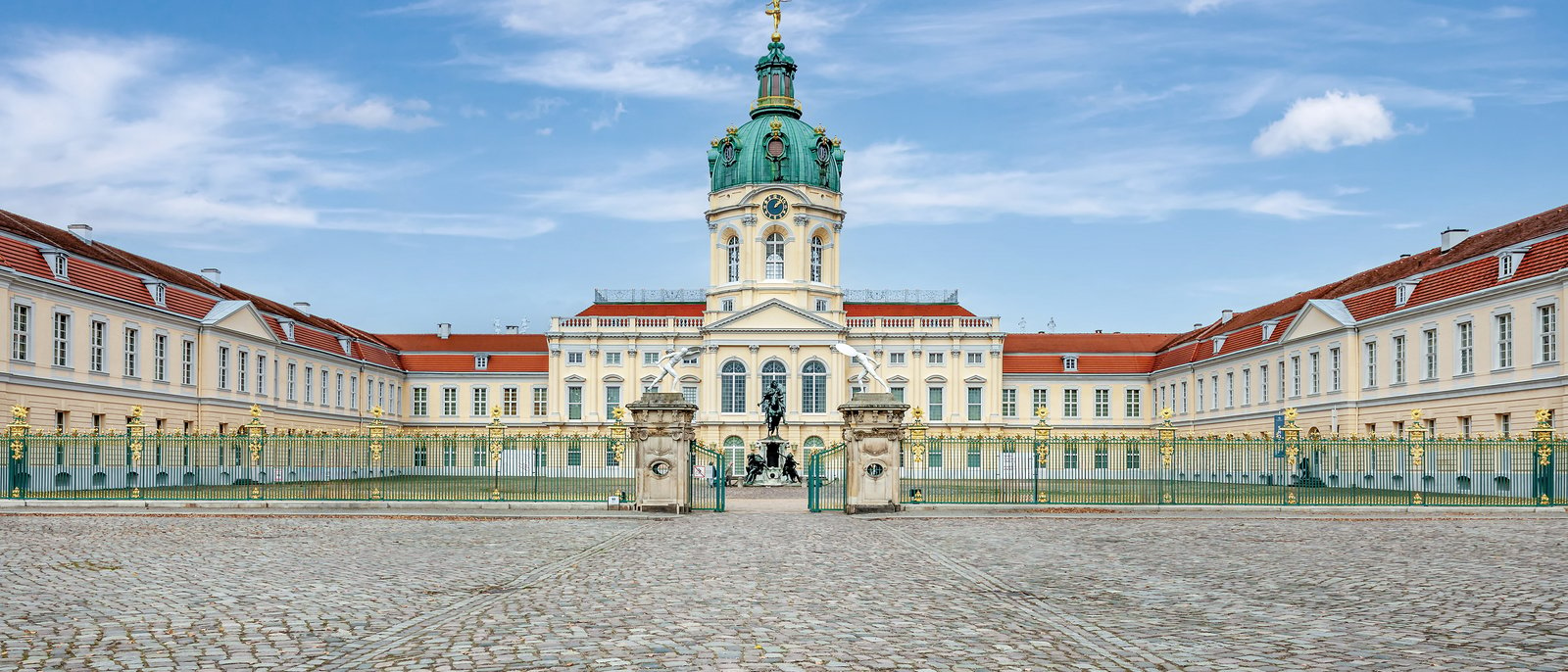
Two poles define the district. In the north-west stands Charlottenburg Palace with its baroque park, the largest palace complex in Berlin and the origin of the name. In the south-east, around the Kurfürstendamm and the Kaiser Wilhelm Memorial Church, lies the City West, the old centre of West Berlin. Between the two ends runs a fabric of Wilhelminian streets, retail addresses and quiet residential pockets.
From the outside, Charlottenburg reads mainly as the Ku'damm, with its shop windows, hotels, theatres and the bustle at Breitscheidplatz. Behind the main axes sits the actual residential quarter: the calm Klausenerplatz neighbourhood near the palace, the restaurant strip around Savignyplatz, the weekly-market atmosphere at Karl-August-Platz and the water-ringed Mierendorff Island. Stage set and home life sit close together here.
The district has long been seen as settled and international. Unlike the young creative quarters in the east, Charlottenburg lives off grown, middle-class substance, from long-standing Berlin families to a cosmopolitan clientele that values the City West flair. Elegance and everyday life blend, from the premium frontage on the Kurfürstendamm to the corner pub at Stuttgarter Platz.
This portrait covers the Charlottenburg district itself, not the larger borough of Charlottenburg-Wilmersdorf, which also includes Wilmersdorf, Westend, Charlottenburg-Nord, Schmargendorf, Grunewald and Halensee. The large single-family-home estates often associated with the name Charlottenburg lie mostly in the neighbouring districts of Westend and Charlottenburg-Nord.
History and change
Charlottenburg begins with a village and a palace. Medieval Lietzow stood on the Spree, where Gierkeplatz and the Luisenkirche are today. In 1695 Elector Friedrich III had a summer palace built for his wife Sophie Charlotte outside the gates of Berlin, first called Lietzenburg. After her early death in 1705, both the palace and the town founded the same year were renamed Charlottenburg in her honour.
Over two centuries the independent town of Charlottenburg grew, and around 1900 it was considered the wealthiest municipality in Prussia. Villa quarters, grand buildings and the Kurfürstendamm, laid out from the 1880s, shaped its image. In 1920 the Greater Berlin Act incorporated Charlottenburg, ending its independence. In the 1920s the Ku'damm, with its cinemas, cafés and the legendary Romanisches Café, was the pulsing centre of a cosmopolitan western Berlin. So many Russian émigrés settled around the Kurfürstendamm in those years that the area earned the nickname “Charlottengrad”.
The Second World War destroyed large parts of the district. The ruined tower of the Kaiser Wilhelm Memorial Church was left standing as a memorial; beside it, Egon Eiermann's new building went up between 1959 and 1961. With the division of the city, Charlottenburg became the showcase of West Berlin. The Kurfürstendamm was its promenade, and Bahnhof Zoologischer Garten its long-distance station and gateway.
After reunification, the City West lost ground. The east around Mitte drew attention, investors and a younger crowd, while Charlottenburg was seen as a touch dated. Apartments and offices stood empty in the side streets off the Kurfürstendamm and Kantstraße. That changed from 2009 and 2010 onwards. The Neues Kranzler Eck started a wave of major projects that continued at Breitscheidplatz with the Zoofenster, Upper West and Bikini Berlin, reshaping the City West skyline. Listed buildings such as the Kant-Garagen, a 1930 multi-storey car park, were given new uses in the same phase. Since then the City West has reinvented itself without losing its middle-class core.
Sights
Charlottenburg carries its landmarks at two ends. In the north-west lies Charlottenburg Palace, the largest and oldest surviving palace complex in the city, with its baroque court of honour, sprawling palace garden, the Belvedere, the Mausoleum and the New Pavilion. Across from the palace, a small museum quarter gathers on Schlossstraße with the Museum Berggruen, the Scharf-Gerstenberg Collection and the Bröhan Museum.
In the south-east, the Kaiser Wilhelm Memorial Church on Breitscheidplatz marks the centre of the City West. The burned-out tower of the old church, locally nicknamed the “hollow tooth”, stands next to Eiermann's blue glass structure. Around the square sit the Zoo Palast cinema, Bikini Berlin and the high-rise ensemble of Zoofenster and Upper West. Since the attack of 2016, a memorial at Breitscheidplatz commemorates the victims.
Kantstraße and Savignyplatz link the two poles. The Kurfürstendamm and its side streets form Berlin's second most important retail location, running from Tauentzienstraße past Olivaer Platz to Adenauerplatz. At the western edge of the historic town, the baroque Luisenkirche on Gierkeplatz recalls Charlottenburg's village origins, and on Krumme Straße the Stadtbad Charlottenburg is one of the oldest surviving public swimming halls in Berlin.
The district carries cultural weight as well. The Deutsche Oper Berlin on Bismarckstraße, the Theater des Westens on Kantstraße, the Renaissance-Theater and the Berlin University of the Arts shape the programme; the Ku'damm also keeps a long tradition as a theatre and cinema address. Near Bahnhof Zoo, C/O Berlin shows international photography in the former Amerika Haus.
Popular Kieze in Charlottenburg
- Klausenerplatz neighbourhood: A quiet Wilhelminian quarter west of the palace, between Spandauer Damm and Sophie-Charlotte-Platz. Dense period housing, small shops and a strong local community with a village feel.
- Savignyplatz: The gastronomic centre of the City West, with restaurants and bars under the S-Bahn arches, bookshops and Kantstraße as the axis between west and east.
- Stuttgarter Platz: “Stutti” around the square near Bahnhof Charlottenburg, with a café and pub scene and a mix of long-time residents and newcomers.
- Mierendorff Island: A residential island in the north enclosed by the Spree and the Westhafen Canal, quiet and green, with its own U-Bahn station Mierendorffplatz.
- Gierkeplatz / Alt-Lietzow: Charlottenburg's historic origin on the Spree, near the Luisenkirche and the Charlottenburg town hall.
- Karl-August-Platz: A residential quarter around the Deutsche Oper, with the weekly market on the square and the Wilmersdorfer Straße pedestrian zone as its supply axis.
Scene and everyday life
Charlottenburg's daily life plays out away from the tourist streams, in its neighbourhoods. Kantstraße has grown into one of Berlin's most important Asian dining axes, from Vietnamese spots to Chinese restaurants. Around Savignyplatz, classic restaurants, wine bars and cafés line up under the railway arches, among them institutions such as the Paris Bar. Stuttgarter Platz and the side streets around Olivaer Platz hold a grown pub and bar scene.
The district is supplied by several weekly markets, above all the one at Karl-August-Platz in front of the Deutsche Oper. Wilmersdorfer Straße is the largest pedestrian zone in the west and covers everyday needs, while the Kurfürstendamm and Tauentzienstraße concentrate upmarket retail. On Kantstraße, the Stilwerk design centre rounds out the offer. This mix of local supply and premium location in a tight space is typical of Charlottenburg.
Culturally, the big houses set the calendar, from the seasons of the Deutsche Oper and the Theater des Westens to exhibitions at C/O Berlin and the museums on Schlossstraße. In the run-up to Christmas, the market at Breitscheidplatz draws large crowds, and the palace garden hosts concerts and events through the year.
Who lives in Charlottenburg
Charlottenburg is shaped by small households, with a high share of single and two-person households, as is typical for the inner-city locations in the west. The breakdown below shows how households are distributed by size.
| Household size | Count | Share |
|---|---|---|
| 1 person | 48,161 | 66 % |
| 2 people | 13,356 | 18 % |
| 3 people | 5,724 | 8 % |
| 4 people | 3,441 | 5 % |
| 5 people | 1,034 | 1 % |
| 6+ people | 881 | 1 % |
The age structure is more broadly mixed than in the young creative quarters of the east. Alongside working-age residents, the district holds a noticeable share of older, long-settled people, in keeping with its middle-class character.
| Age group | Count | Share |
|---|---|---|
| under 6 | 6,038 | 5 % |
| 6–15 | 8,115 | 6 % |
| 15–18 | 2,638 | 2 % |
| 18–27 | 14,505 | 11 % |
| 27–45 | 40,331 | 31 % |
| 45–55 | 14,665 | 11 % |
| 55–65 | 17,435 | 13 % |
| 65+ | 26,854 | 21 % |
Charlottenburg has always been international. The West Berlin reputation of the City West drew a cosmopolitan public, and the setting around universities, embassies and corporate headquarters keeps that diversity today. The chart below shows how the resident population breaks down by region of origin.
| Region of origin | Count | Share |
|---|---|---|
| EU | 16,741 | 34 % |
| Turkey | 6,279 | 13 % |
| Ukraine | 4,530 | 9 % |
| Russia | 3,381 | 7 % |
| unassigned | 3,306 | 7 % |
| India | 2,477 | 5 % |
| Iran | 2,074 | 4 % |
| USA | 1,996 | 4 % |
| Syria | 1,775 | 4 % |
| China | 1,649 | 3 % |
| United Kingdom | 1,098 | 2 % |
| Lebanon | 1,040 | 2 % |
| Vietnam | 980 | 2 % |
| Afghanistan | 626 | 1 % |
| Kazakhstan | 486 | <1 % |
| Iraq | 472 | <1 % |
Who is drawn to Charlottenburg
Migration data shows how the population renews itself. Charlottenburg's demand draws less on young creative arrivals than on its international pull and its position in the City West. The table below shows which countries carry the inflow across the city boundary.
| # | Country | Inflow | Outflow | Net |
|---|---|---|---|---|
| 1 | Indien | 692 | 263 | 429 |
| 2 | Ukraine | 580 | 332 | 248 |
| 3 | Türkei | 270 | 181 | 89 |
| 4 | China | 224 | 131 | 93 |
| 5 | Russische Föderation | 218 | 113 | 105 |
| 6 | Arabische Republik Syrien | 210 | 59 | 151 |
| 7 | Rumänien | 192 | 227 | -35 |
| – | Deutschland | 2,513 | 2,896 | -383 |
Within Berlin, the exchange runs on a small scale, mainly with the adjacent districts such as Wilmersdorf, Westend and neighbouring Moabit across the Spree. The table below shows which quarters supply the most arrivals.
| # | District | People |
|---|---|---|
| 1 | Wilmersdorf | 743 |
| 2 | Wittenau | 527 |
| 3 | Moabit | 519 |
| 4 | Schöneberg | 502 |
| 5 | Prenzlauer Berg | 413 |
In the other direction, moves run on a similarly small scale, mostly into the neighbouring districts of the borough and the adjacent inner-city areas.
| # | District | People |
|---|---|---|
| 1 | Wilmersdorf | 713 |
| 2 | Schöneberg | 499 |
| 3 | Westend | 438 |
| 4 | Moabit | 413 |
| 5 | Kreuzberg | 385 |
Buildings and apartments
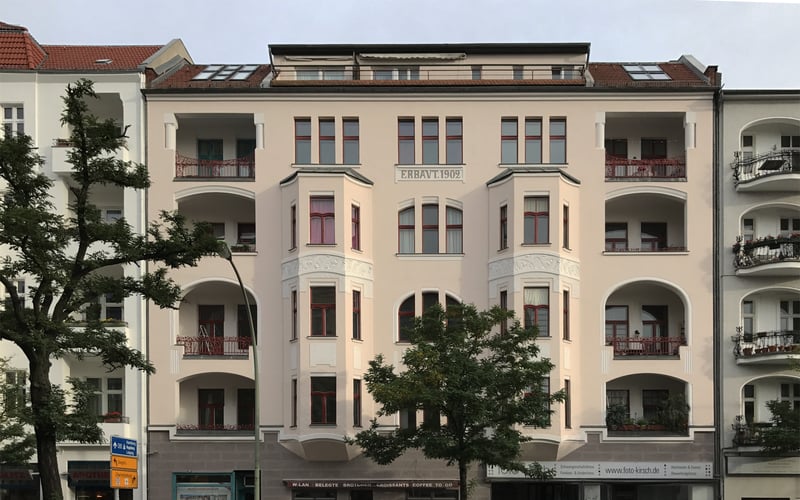
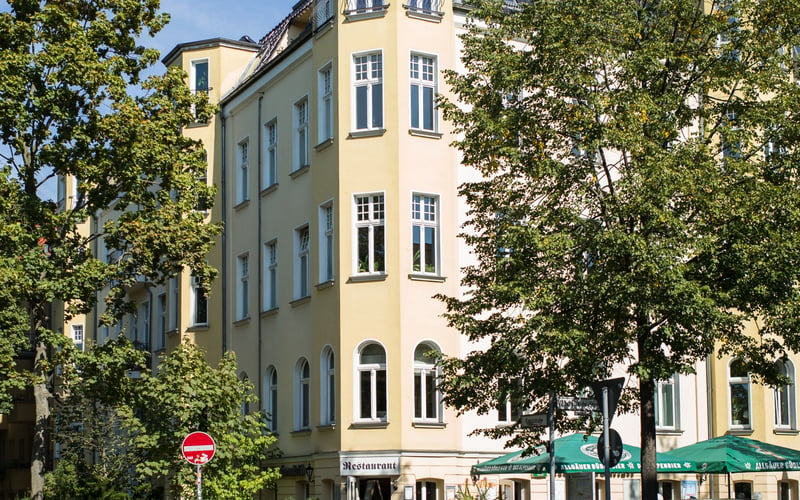
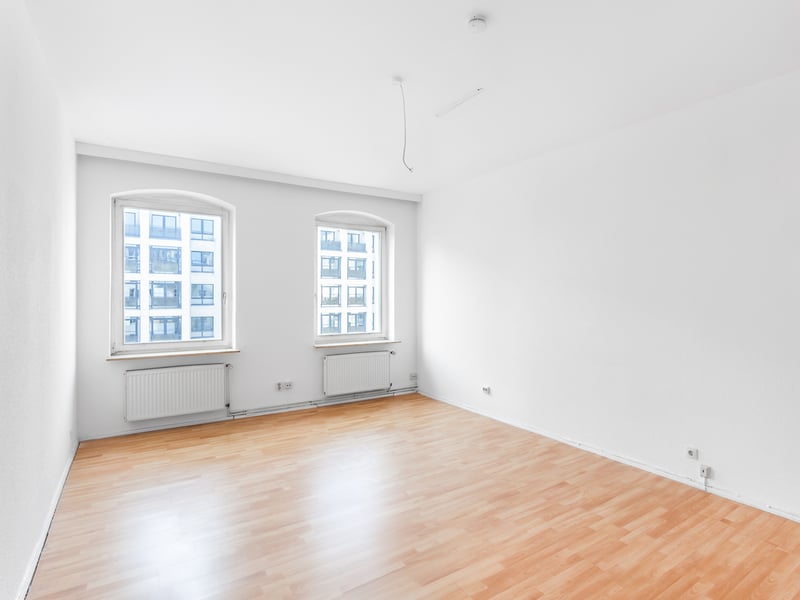
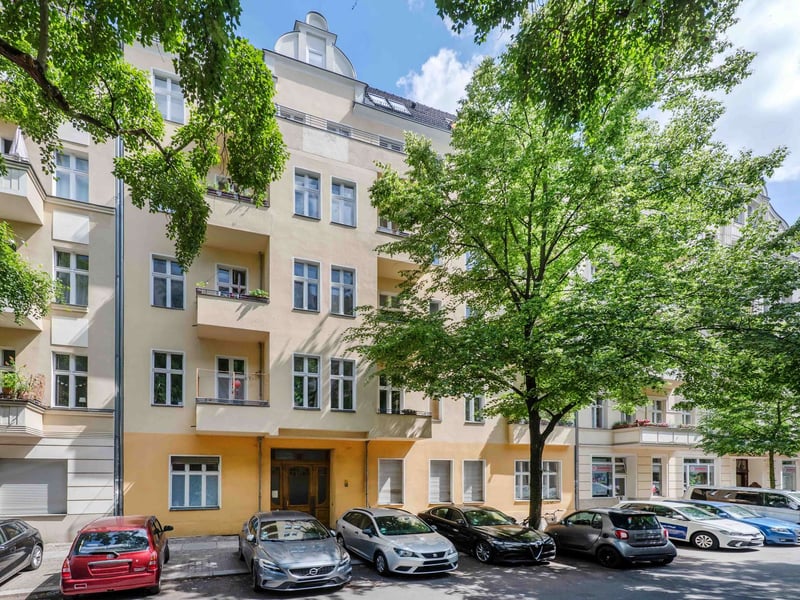
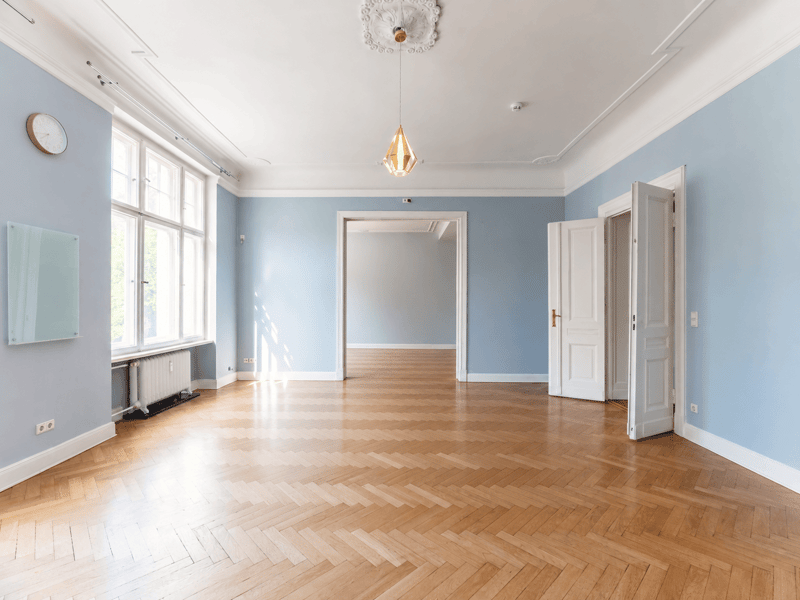
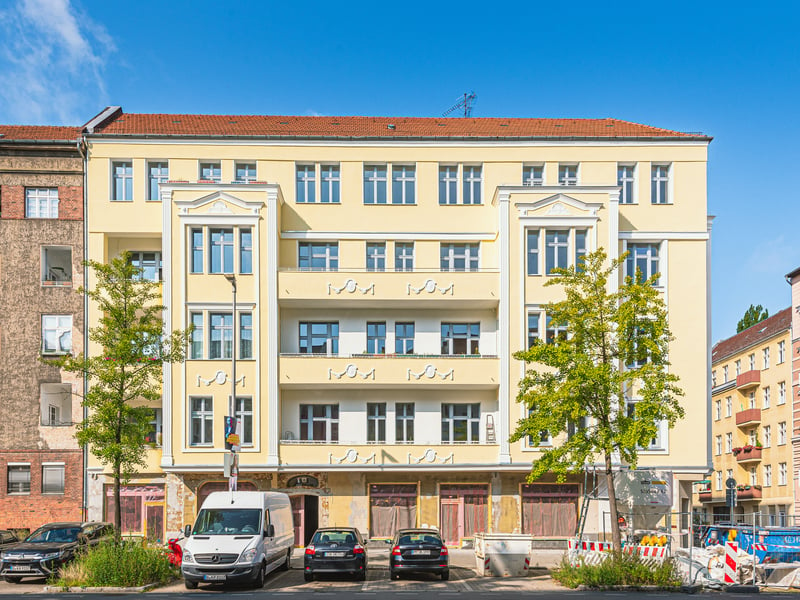
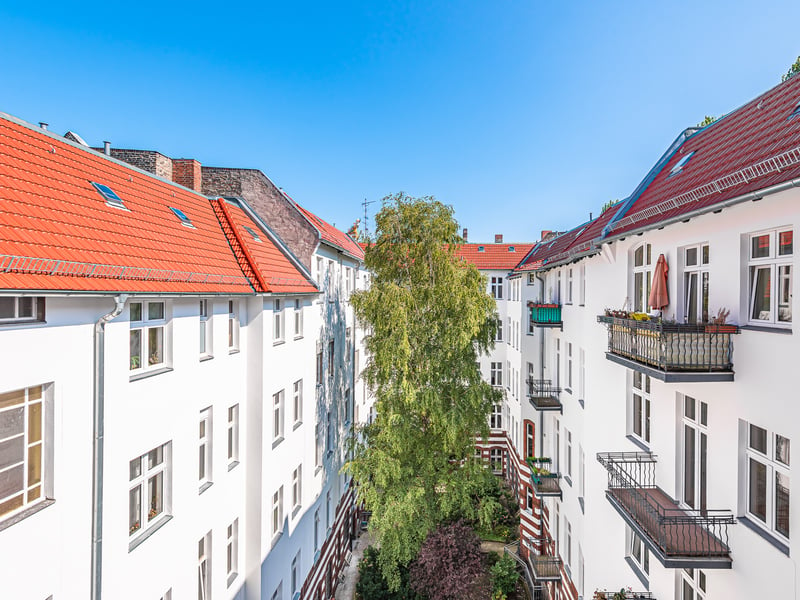
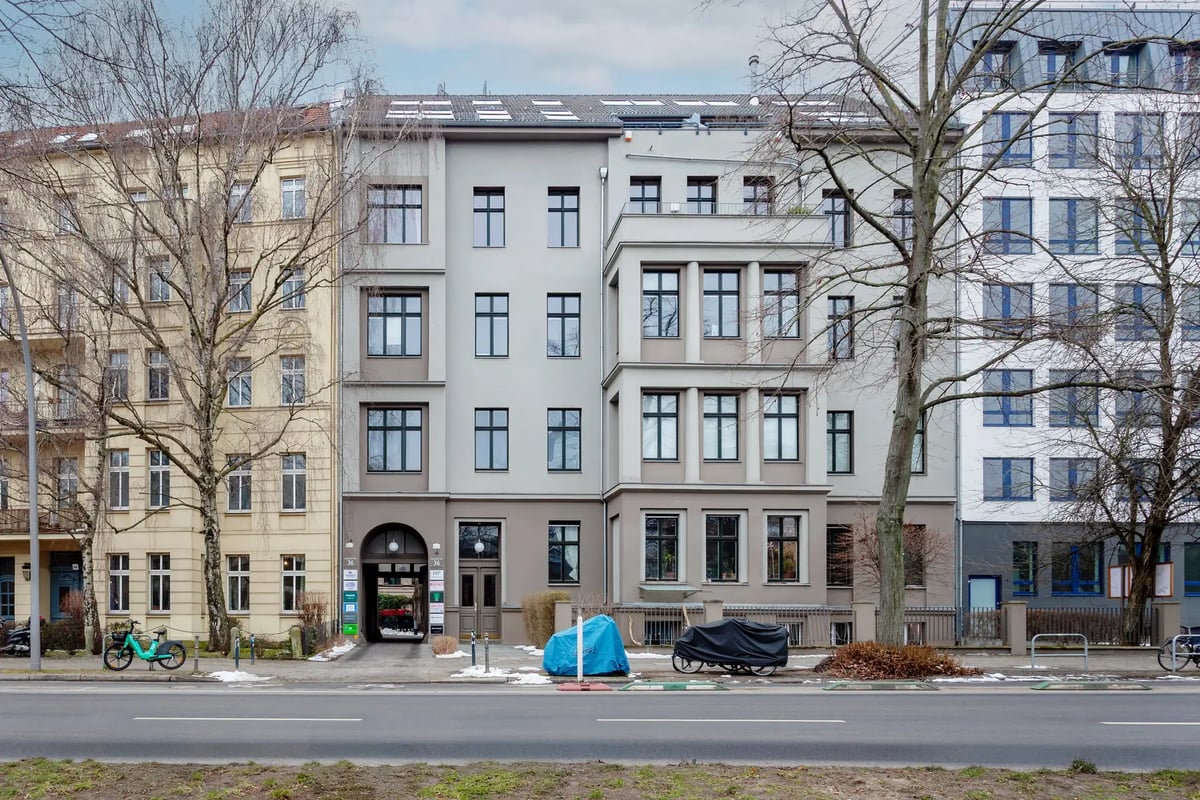
The building stock comprises 5,340 buildings. Charlottenburg is predominantly Wilhelminian in character: block and tenement housing from before the First World War dominates the inner-city locations. War gaps were filled with post-war buildings in the 1950s to 1970s, and since 2010 high-quality new developments have been added, mainly along the Kurfürstendamm and at Breitscheidplatz. No chart data source is available for construction periods; this assessment is based on the Guthmann market report.
The breakdown below shows how the stock is distributed across size classes. The high share of small and mid-sized apartments matches the district's household structure.
| Size class | Count | Share |
|---|---|---|
| Unter 40 m² | 9,196 | 12 % |
| 40-59 m² | 21,562 | 29 % |
| 60-79 m² | 19,372 | 26 % |
| 80-99 m² | 11,386 | 15 % |
| 100-119 m² | 5,771 | 8 % |
| 120-139 m² | 3,465 | 5 % |
| 140-159 m² | 1,648 | 2 % |
| 160-179 m² | 1,153 | 2 % |
| 180-199 m² | 609 | <1 % |
| 200+ m² | 879 | 1 % |
How the stock is used is also telling for the social mix, for instance the ratio of owner-occupied homes to rentals.
| Type of use | Count | Share |
|---|---|---|
| Rented | 63,332 | 81 % |
| Owner-occupied | 9,711 | 12 % |
| Vacant | 1,805 | 2 % |
| Commercial | 3,156 | 4 % |
By building type, urban multi-storey housing clearly dominates; detached houses, terraced and semi-detached homes play only a minor role in the Charlottenburg district and cluster on the northern edges. The energy performance of the pre-war and post-war stock is moving up the agenda for owners.
In this densely built district, new construction comes mostly through infill, added storeys and the conversion of former office and commercial buildings rather than greenfield sites.
| Period | Apartment balance |
|---|---|
| 2021 | 378 apartments |
| 2022 | 565 apartments |
| 2023 | 623 apartments |
| 2024 | 108 apartments |
For owners of apartment buildings, milieu protection plays a growing role. Since 2018 Charlottenburg has designated conservation areas under Section 172 of the Building Code in several quarters, regulating conversion and structural changes.
Transport and infrastructure
Charlottenburg is exceptionally well connected. The U2 crosses the district from east to west with stops at Ernst-Reuter-Platz, Deutsche Oper, Bismarckstraße, Sophie-Charlotte-Platz and Kaiserdamm. The U7 serves the southern retail addresses at Adenauerplatz and Wilmersdorfer Straße and stops at Mierendorffplatz in the north, the U1 terminates at Uhlandstraße, and the U9 links the Kurfürstendamm and Zoologischer Garten with the rest of the city.
Via the elevated Stadtbahn, Charlottenburg connects to the network at the S-Bahn stations Zoologischer Garten, Savignyplatz, Charlottenburg and Westkreuz; the Ringbahn frames the district to the west. Bahnhof Zoologischer Garten was for decades the central long-distance station of West Berlin and remains an important regional and long-distance hub. There are no trams in former West Berlin and therefore none in Charlottenburg; surface transport runs on bus lines. Ernst-Reuter-Platz, a traffic hub, is at the same time a preserved ensemble of post-war modernism.
With the Technical University of Berlin at Ernst-Reuter-Platz and the neighbouring Berlin University of the Arts, one of the city's largest higher-education clusters sits in the district. Numerous schools serve the residential quarters. Supply ranges from the Wilmersdorfer Straße pedestrian zone and the weekly markets to upmarket retail on the Kurfürstendamm; doctors, law firms and service providers are spread across the district.
For all its building density, Charlottenburg is well supplied with green space. The Charlottenburg palace garden is the largest, joined by Lietzenseepark around its namesake lake, the Schustehruspark in Alt-Lietzow and the planted Spree banks of Mierendorff Island.
Who Charlottenburg suits
- International and established professionals: If you want a representative address in the west with quick access to the City West, universities and business locations, you will find Wilhelminian period stock and upmarket new builds in close quarters. The price level is among the higher in the city.
- Owner-occupiers in the premium segment: The new developments on the Kurfürstendamm and at Breitscheidplatz appeal to buyers for whom address and location matter more than pure square metres.
- Those seeking calm near the palace: Quarters such as the Klausenerplatz neighbourhood or Mierendorff Island offer quiet, green living with a village feel and full inner-city access.
- Investors with a focus on existing stock: The Wilhelminian apartment-building stock is sought after, but milieu protection regulates conversion and modernisation in several quarters and belongs in the calculation.