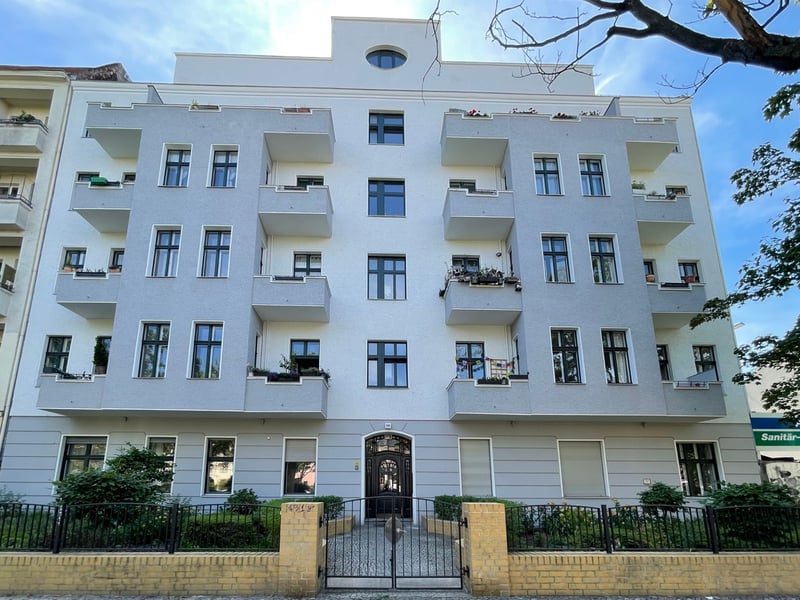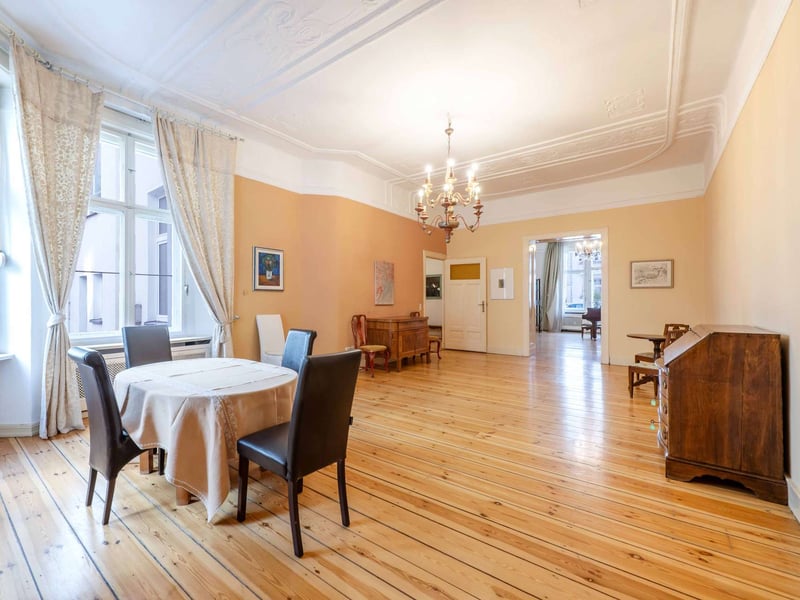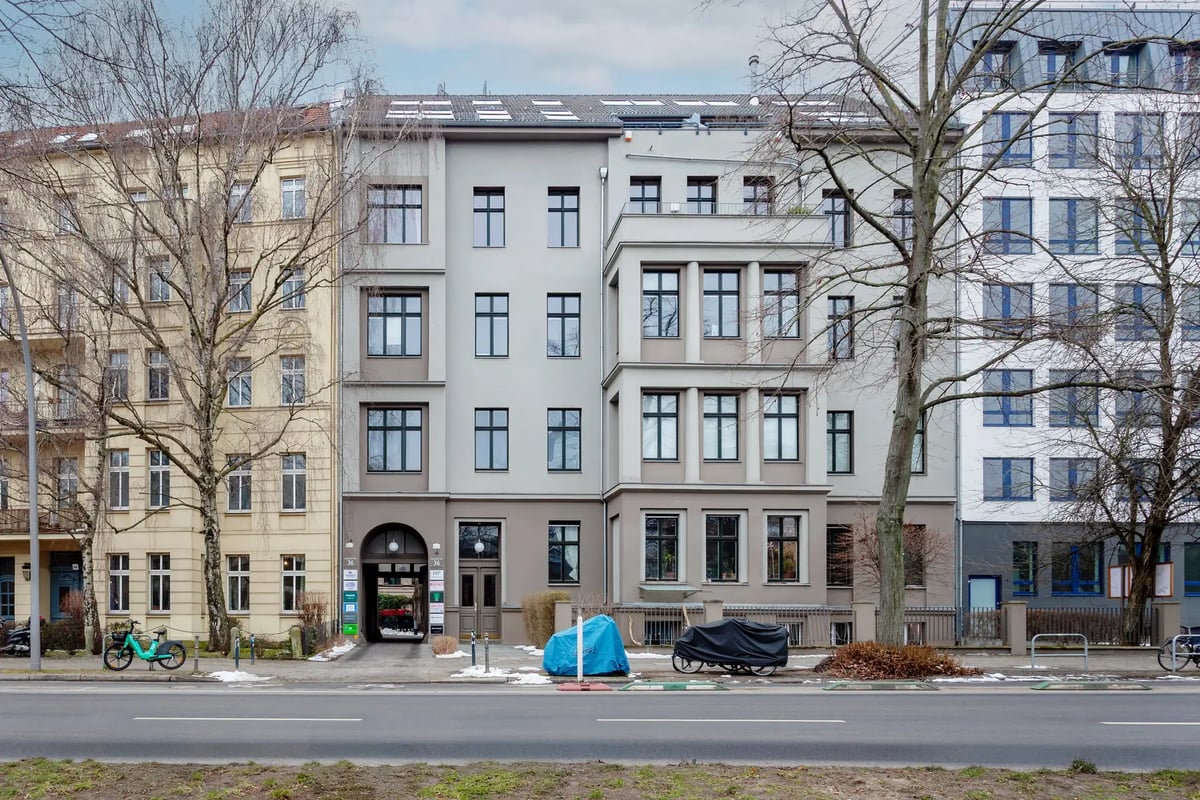


The conversion ban under Section 250 BauGB remains in force – and as of 30 October 2025 it was not only extended but also amended in substance. What owners of apartment buildings in Berlin now need to know, and what options the new law opens up.
The key points in brief
Anyone who owns an apartment building in Berlin and wishes to convert the individual flats into condominiums requires official approval to do so. This so-called conversion ban under Section 250 BauGB was introduced in 2021 and was initially limited to five years. With the BauGB amendment of 30 October 2025 – better known by the term "Bau-Turbo" – the rule has been extended by a further five years until 31 December 2030. The associated Berlin Conversion Ordinance was likewise adjusted.
For owners, converters and investors this means: the topic remains relevant for the foreseeable future. At the same time, the amendment brings an important relief that has so far not been sufficiently well known.
New exception: additional housing is exempt from approval
The decisive substantive innovation: anyone who creates additional living space through conversion or new construction may establish condominium ownership of the residential units thereby created without approval. The district office is then obliged to issue a so-called negative clearance certificate – a confirmation that the conversion ban does not apply in this case.
Concrete examples of measures that benefit:
- Loft conversion: a previously unused attic is converted into flats.
- Extension or new construction on the same plot that creates new residential units.
- Change of use: commercially used units in a residential building are reassigned as flats.
The last variant – commercial becomes residential – is not expressly regulated by law, but it corresponds to the meaning and purpose of the provision. For a change of use, too, de facto creates new living space.
Important: the approval-free division applies only to the newly created units. Existing resale apartments in the same building remain subject to the conversion ban and may not be sold separately.
Land register: implementation is complex
Especially when a plot is still undivided and only part of the units is to be divided without approval, the implementation in the land register poses a particular challenge. For legally a plot can only be divided as a whole under the Condominium Act (WEG).
The solution: the existing apartments are combined into a "collective unit" – all are assigned to a single co-ownership share and recorded together on a single land register sheet. Only the newly created units – such as the new loft apartments – receive their own land register sheets and thereby become marketable and sellable.
The Berlin Senate Department confirmed this approach in principle in a circular dated 21 January 2026. However, the implementation is not yet uniform across the districts.
Right to approval: when the division can still be enforced
For existing apartments, too, there are situations in which a right to approval of the division exists. The most important exemption grounds at a glance:
- Inherited properties (Section 250 (3) no. 1 BauGB)
If the property formed part of an estate, the division can be approved if condominium ownership is to be established in favour of co-heirs or legatees. The district offices regularly tie the approval to a sale restriction in the land register. It is disputed whether this restriction covers only the first transfer to co-heirs or also all subsequent sales. According to the convincing view – and the wording of the legislative reasoning – it concerns only the first sale step from the community of heirs to the heirs. A restriction going beyond this, permanent in nature, would have no sound legal basis. The practice of the district offices, however, does not follow this view.
- Family members (Section 250 (3) no. 2 BauGB)
If a flat is to be transferred to family members, there is likewise a right to approval. It is irrelevant whether the relatives occupy the flat themselves or let it. The group of eligible persons should be determined in accordance with the Fiscal Code (Section 15 AO) – this is both practical and legally certain.
- Sale to tenants (Section 250 (3) no. 3 BauGB)
If at least two thirds of the tenants are to acquire their flats, the division is eligible for approval. However, in a ruling of 7 September 2023 the Berlin Administrative Court held that notarised purchase contracts with the required tenant quorum must already exist before the division. A mere declaration of intent by the owner is not sufficient. These high requirements make this exception almost inapplicable in practice.
- Catch-all clause
If none of these grounds applies, the approval may nevertheless have to be granted – namely where the refusal is not necessary to secure an adequate supply of rental housing for the population (Section 250 (4) BauGB). To this extent the wording of the law speaks in favour of a binding right to approval where no threat to the rental housing market is to be feared. A practical example: anyone who, in a mixed-use residential and commercial building, merely separates out the commercial units and leaves the flats undivided does not impair the rental housing supply – and has good arguments for a right to approval.
What does this mean for owners and investors?
The conversion ban has noticeably changed the market for Berlin apartment buildings in recent years. Anyone who buys an apartment building cannot readily sell the flats individually – this restricts return expectations and exit strategies.
The new exception for additional housing, however, creates an interesting scope for structuring: projects involving loft conversions or extensions can be economically attractive, because the newly created units may be sold freely. This opens up options for developers and converters who are willing to actually create new housing – entirely in line with the legislator's objective.
The author, Dr. Cornelius Pfisterer, is a lawyer and notary at the law firm Seldeneck und Partner, Berlin. The article reflects his personal opinion.
Disclaimer
This article is for general information only and does not constitute tax or legal advice. The content does not replace individual consultation with a tax advisor or attorney. No liability is assumed for accuracy or completeness.