

Character and identity
Mitte is the historic core of Berlin and at the same time its political, cultural and tourist centre. The district belongs to the borough of the same name, Mitte, and lies east of the Großer Tiergarten across roughly 10.7 km². The district is home to 108,953 residents; the housing stock is spread across 61,107 apartments and 59,354 households (source: Amt für Statistik Berlin-Brandenburg).
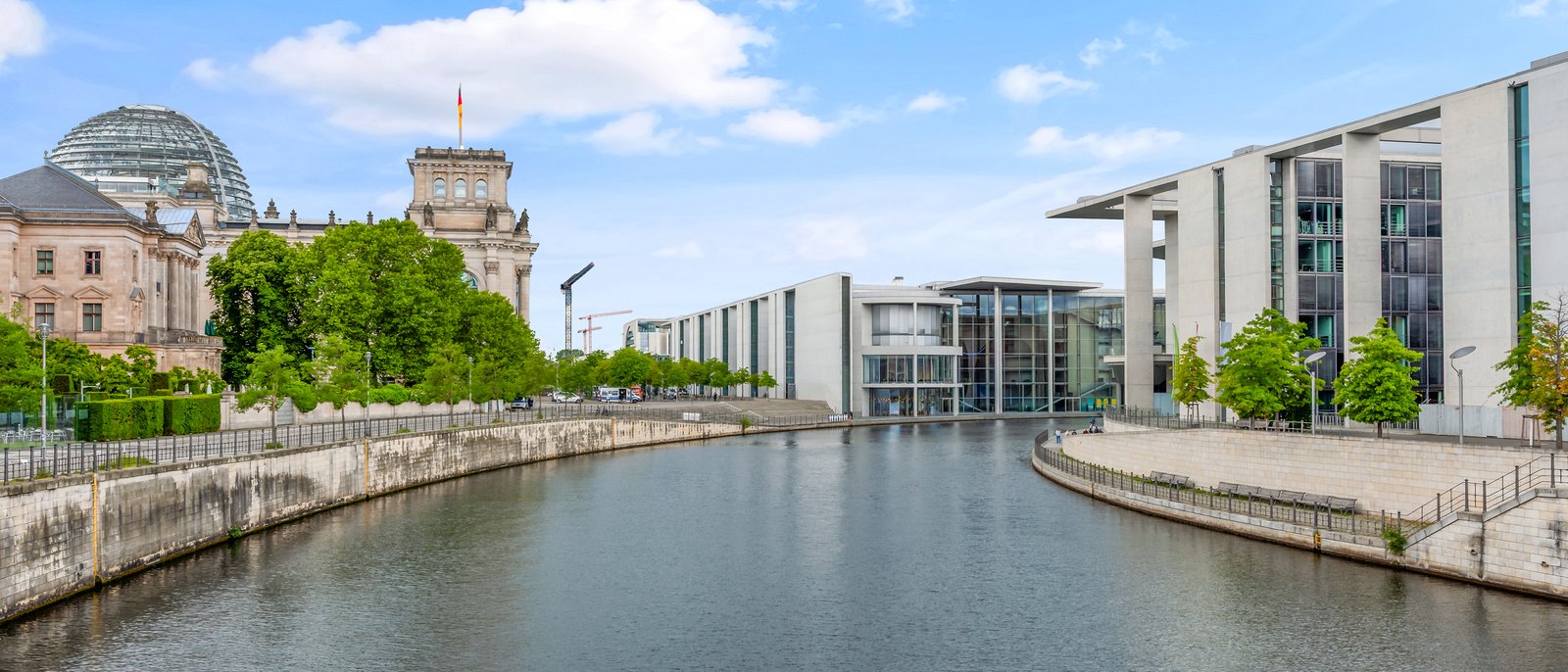
From the Brandenburger Tor along Unter den Linden, the Museumsinsel and the Alexanderplatz to the Fernsehturm, the landmarks that represent Berlin internationally stand side by side in a small area. Visitors to Mitte first see the official addresses: Reichstag, Bundeskanzleramt, ministries, embassies, Humboldt-Universität.
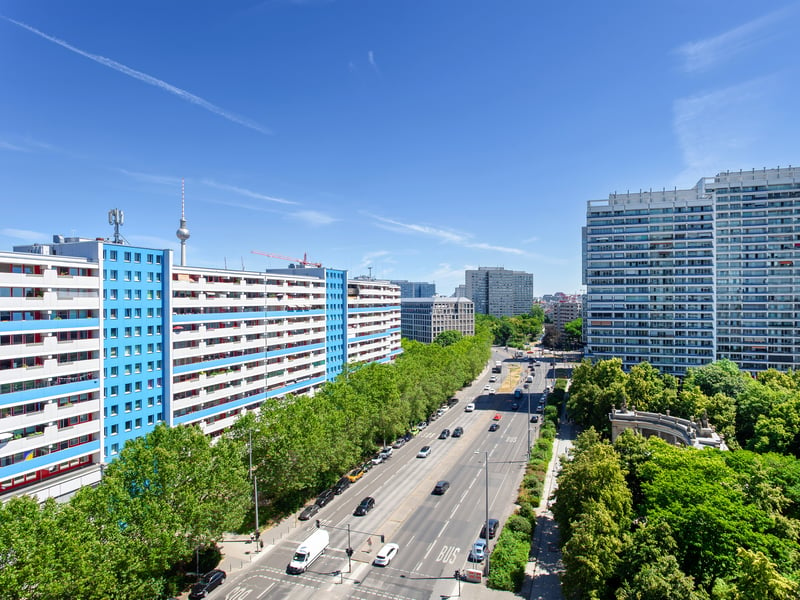
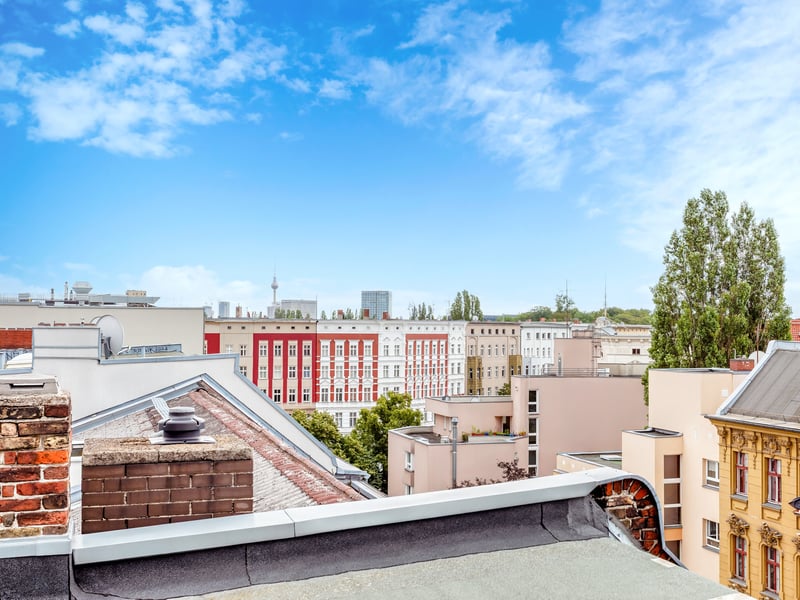
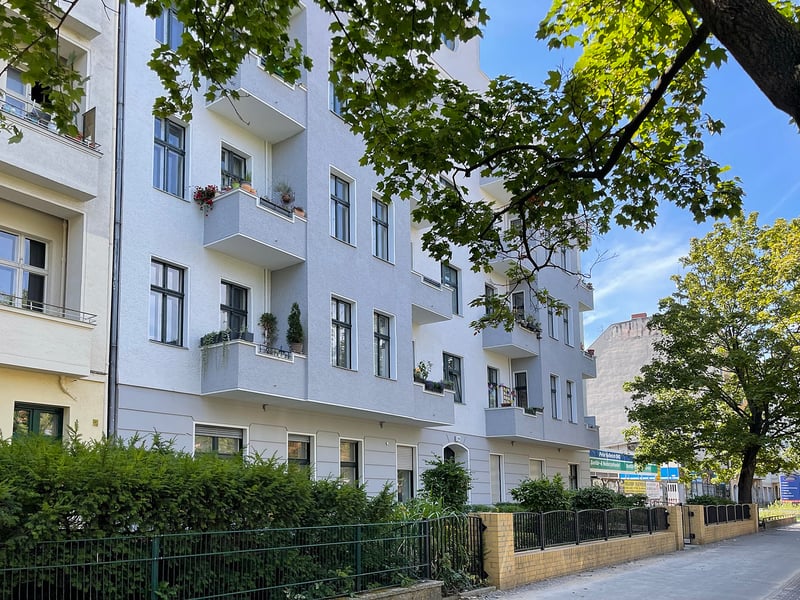
Those who live in Mitte know the other side. Between Hackescher Markt and Oranienburger Straße lies the Scheunenviertel with its galleries and bars, the Rosenthaler Vorstadt holds Gründerzeit buildings with a family-Kiez character, the GDR high-rises rise along Leipziger Straße, and the WBM new developments of the Fischerinsel stand at the Mühlendamm. This mix of representation and everyday life shapes the district.
For clarity, this portrait covers the district of Mitte, the historic city core. The borough of the same name, Mitte, additionally includes Tiergarten, Wedding, Gesundbrunnen, Moabit and the Hansaviertel.
History and change
Mitte is the seed of Berlin. The twin city of Berlin-Cölln emerged in the 13th century on the Spree, roughly where the reconstructed Nikolaiviertel and the Molkenmarkt lie today. Over the centuries the district grew into the seat of government of the Kingdom of Prussia and later into the centre of the German capital. Frederick the Great had Unter den Linden developed into a grand boulevard. Karl Friedrich Schinkel shaped the cityscape with classicist buildings such as the Neue Wache, the Schauspielhaus at the Gendarmenmarkt and the Altes Museum.
With the building of the Wall in 1961, Mitte lay at the centre of East Berlin, the capital of the GDR. The Alexanderplatz received its socialist redesign, the Fernsehturm opened in 1969, and the Palast der Republik opened in 1976. On the western side of the Wall, Friedrichstadt and the Friedrichstraße lay as fallow border zones. After 1989 the district experienced a second founding era. The Pariser Platz, the Friedrichstraße, the diplomatic quarter around the Tiergarten and the government quarter around the Spreebogen were all rebuilt in less than two decades.
The 2000s and 2010s brought a phase of intense densification. New quarters emerged above all along the Invalidenstraße, the Oranienburger Straße and at the Alexanderplatz. In the borough of Mitte, a milieu protection area under § 172 BauGB was designated for the Alexanderplatzviertel in 2019.
Sights
The density of iconic addresses is higher in no other Berlin district. The Brandenburger Tor marks the western entrance to Unter den Linden, the two-kilometre axis that runs through the Forum Fridericianum to the Spree island. The Museumsinsel holds five world-class buildings (Altes Museum, Neues Museum, Alte Nationalgalerie, Bode-Museum and Pergamonmuseum), a UNESCO World Heritage Site since 1999.
To the east lies the rebuilt Humboldt Forum in the reconstructed Berliner Schloss. The Nikolaiviertel offers an impression of medieval Berlin, largely reconstructed under GDR direction in the 1980s. The Deutscher Dom and the Französischer Dom stand at the Gendarmenmarkt, with the Konzerthaus between them.
Politically and administratively, Mitte gathers at the Pariser Platz with the embassies of the USA and France, at the Platz der Republik with the Reichstag and Bundeskanzleramt, and along the Wilhelmstraße and Wallstraße with numerous ministries. The Alexanderplatz with the Fernsehturm, the Weltzeituhr and the Rotes Rathaus remains the largest urban square in Germany.
Culture is highly concentrated in Mitte. The Staatsoper Unter den Linden, the Maxim-Gorki-Theater, the Deutsches Theater, the Volksbühne at the Rosa-Luxemburg-Platz, the Berliner Ensemble and the Friedrichstadt-Palast all lie within the district. The Neue Synagoge on the Oranienburger Straße recalls the Jewish history of the Scheunenviertel.
Popular Kieze in Mitte
- Scheunenviertel / Spandauer Vorstadt: Historic Jewish quarter with the Hackesche Höfe, the Neue Synagoge and a dense scene of bars, galleries and restaurants. A tourism focus and at the same time a residential quarter with high-priced period buildings.
- Rosenthaler Vorstadt: North of the Torstraße up to the Bernauer Straße, with Brunnenstraße, Ackerstraße and Schwedter Straße. A family Kiez with plenty of Gründerzeit substance and the Arkonaplatz as its centre of gravity.
- Friedrichstadt: South of Unter den Linden, around the Gendarmenmarkt, the Friedrichstraße and the Mohrenstraße. A mix of housing, hotels, office buildings and premium retail.
- Alexanderplatzviertel: A GDR-shaped quarter between the Karl-Marx-Allee and the Spree, with residential high-rises along the Karl-Liebknecht-Straße and the Otto-Braun-Straße.
- Heiliggeist- and Marienviertel: South of the Alexanderplatz, shaped by the Rotes Rathaus, the Marienkirche and the reconstructed Nikolaiviertel. Frequented by tourists and heterogeneous in its housing structure.
- Friedrichswerder: South of the Museumsinsel, with Schinkel buildings and the Auswärtiges Amt. A small, quiet quarter with new-development shares.
Scene and everyday life
Mitte has the highest density of restaurants and bars in the city. The focal points are the Scheunenviertel with the Oranienburger Straße and the Hackesche Höfe, the Torstraße as a gastronomic axis between the Rosenthaler Platz and the Schönhauser Allee, and the area around the Hackescher Markt with the Auguststraße and the Sophienstraße. Weekly markets at the Arkonaplatz and the Hackescher Markt supply the residential quarters.
The gallery focus is the Auguststraße with its many contemporary art galleries. Event anchors are the Lange Nacht der Museen on the Museumsinsel, the Festival of Lights with installations at the central buildings, and the Christopher Street Day with stops at the Brandenburger Tor.
Who lives in Mitte
Mitte is a pronounced single-person quarter with a high international share. The following breakdown shows how the households are distributed by size.
| Household size | Count | Share |
|---|---|---|
| 1 person | 39,017 | 66 % |
| 2 people | 11,023 | 19 % |
| 3 people | 4,976 | 8 % |
| 4 people | 2,850 | 5 % |
| 5 people | 810 | 1 % |
| 6+ people | 678 | 1 % |
The age structure is strongly shaped by working people of middle age groups, typical for a central quarter dominated by small households.
| Age group | Count | Share |
|---|---|---|
| under 6 | 5,453 | 5 % |
| 6–15 | 7,484 | 7 % |
| 15–18 | 2,261 | 2 % |
| 18–27 | 11,556 | 11 % |
| 27–45 | 40,928 | 38 % |
| 45–55 | 14,553 | 13 % |
| 55–65 | 12,658 | 12 % |
| 65+ | 14,060 | 13 % |
The international character shows in the composition of the resident population by region of origin.
| Region of origin | Count | Share |
|---|---|---|
| EU | 15,651 | 37 % |
| Russia | 3,566 | 9 % |
| Turkey | 3,424 | 8 % |
| USA | 2,845 | 7 % |
| Ukraine | 2,712 | 6 % |
| Vietnam | 2,312 | 6 % |
| India | 2,266 | 5 % |
| Syria | 1,804 | 4 % |
| unassigned | 1,734 | 4 % |
| United Kingdom | 1,687 | 4 % |
| China | 1,234 | 3 % |
| Iran | 872 | 2 % |
| Afghanistan | 514 | 1 % |
| Lebanon | 449 | 1 % |
| Iraq | 393 | <1 % |
| Kazakhstan | 378 | <1 % |
Who is drawn to Mitte
The migration data show how the population renews itself. Mitte is internationally shaped; the influx across the city border carries the growth, while in the exchange with the surrounding region it loses people on balance.
| # | Country | Inflow | Outflow | Net |
|---|---|---|---|---|
| 1 | Indien | 538 | 217 | 321 |
| 2 | Vereinigte Staaten | 435 | 343 | 92 |
| 3 | Ukraine | 328 | 347 | -19 |
| 4 | Italien | 293 | 239 | 54 |
| 5 | Russische Föderation | 249 | 168 | 81 |
| 6 | Türkei | 249 | 131 | 118 |
| 7 | Frankreich | 175 | 168 | 7 |
| – | Deutschland | 2,210 | 2,683 | -473 |
Within Berlin, the exchange is close with the neighbouring inner-city districts.
| # | District | People |
|---|---|---|
| 1 | Prenzlauer Berg | 810 |
| 2 | Friedrichshain | 618 |
| 3 | Kreuzberg | 585 |
| 4 | Neukölln | 343 |
| 5 | Moabit | 316 |
In the opposite direction the movement runs similarly small-scale, above all into the neighbouring districts.
| # | District | People |
|---|---|---|
| 1 | Prenzlauer Berg | 980 |
| 2 | Friedrichshain | 648 |
| 3 | Kreuzberg | 415 |
| 4 | Moabit | 396 |
| 5 | Charlottenburg | 342 |
Buildings and apartments
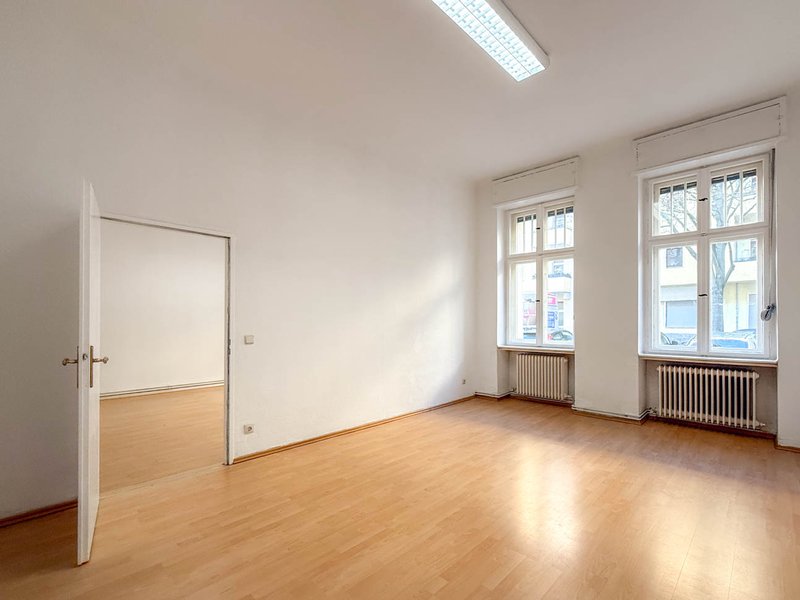
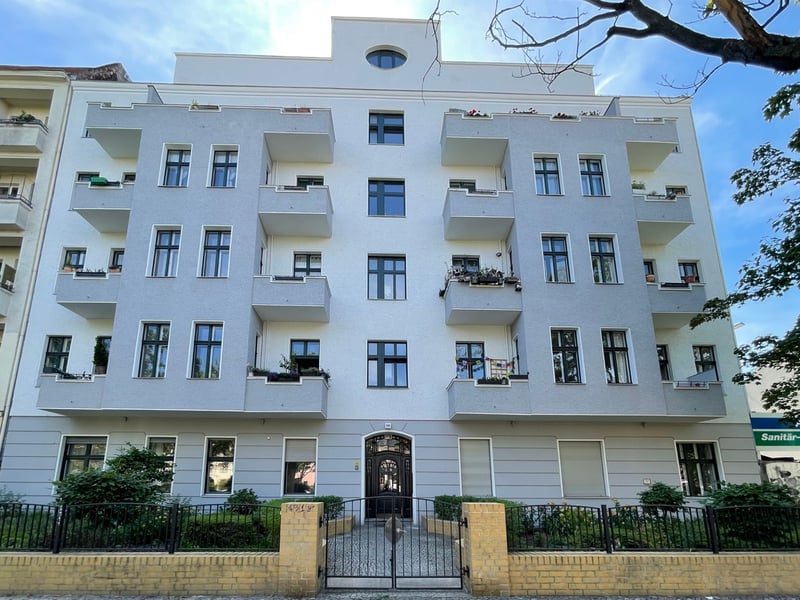
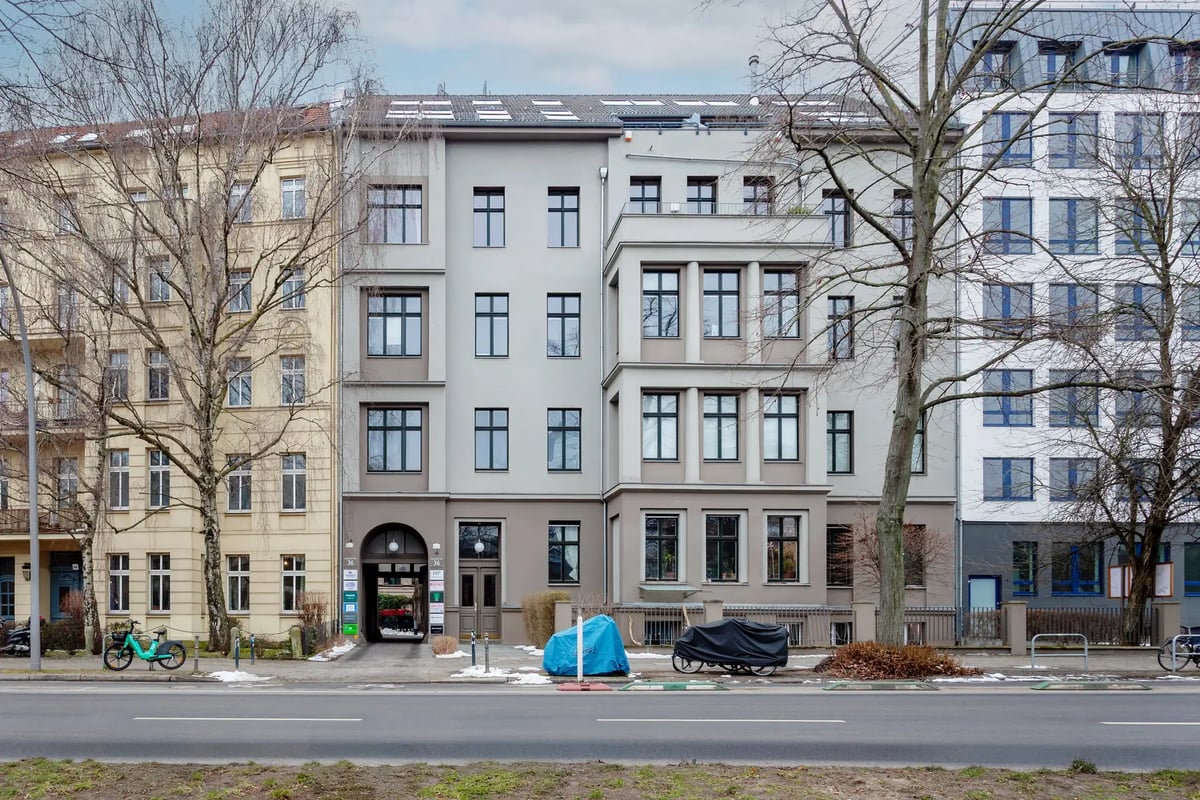
The building stock comprises 4,306 buildings. The largest share is made up of period buildings, with more than 3,600 residential buildings from the Gründerzeit or older. Around 780 prefab buildings were built between 1961 and 1989, above all along the Karl-Marx-Allee, the Leipziger Straße and at the Alexanderplatz. After 1990 new developments were added, from townhouses at the Friedrichswerder to high-rise projects such as "The Wilhelm" on the Wilhelmstraße. No chart data source for construction periods is available; this assessment is based on the Guthmann market report.
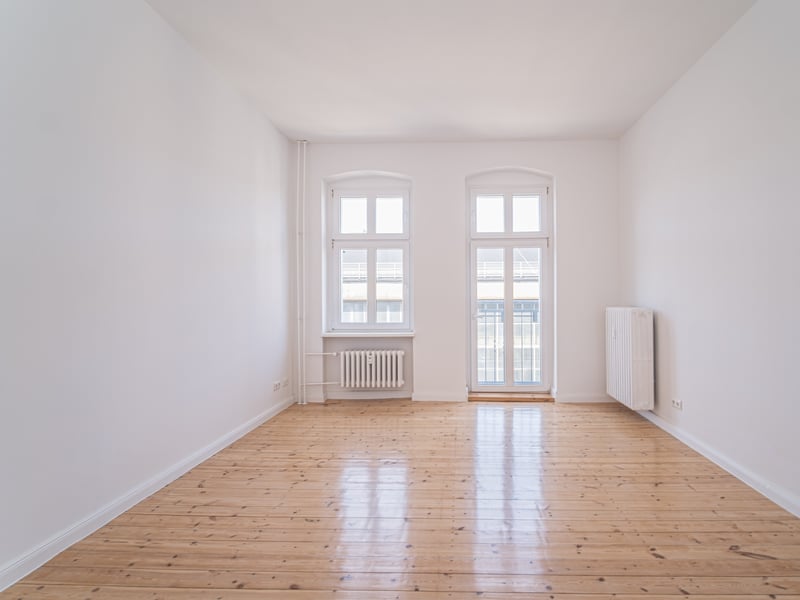
Mitte has a disproportionately large number of small apartments, fitting the high single share. The following overview shows how the stock is distributed across the size classes.
| Size class | Count | Share |
|---|---|---|
| Unter 40 m² | 7,370 | 12 % |
| 40-59 m² | 17,568 | 29 % |
| 60-79 m² | 17,956 | 29 % |
| 80-99 m² | 8,910 | 15 % |
| 100-119 m² | 4,595 | 8 % |
| 120-139 m² | 2,011 | 3 % |
| 140-159 m² | 1,194 | 2 % |
| 160-179 m² | 529 | <1 % |
| 180-199 m² | 320 | <1 % |
| 200+ m² | 661 | 1 % |
The use of the stock is also revealing for the social mix of the district.
| Type of use | Count | Share |
|---|---|---|
| Rented | 52,052 | 82 % |
| Owner-occupied | 7,493 | 12 % |
| Vacant | 1,210 | 2 % |
| Commercial | 2,372 | 4 % |
In the densely built city core, new development arises mainly through infill and adding storeys rather than on open land.
| Period | Apartment balance |
|---|---|
| 2021 | 757 apartments |
| 2022 | 627 apartments |
| 2023 | 459 apartments |
| 2024 | 277 apartments |
Transport and infrastructure
Mitte has one of the densest U-Bahn and S-Bahn networks in Berlin. The U5 connects the Hauptbahnhof, Bundestag, Brandenburger Tor, Unter den Linden, Museumsinsel and Alexanderplatz with Hönow in the east. The U2 runs via Mohrenstraße, Stadtmitte, Spittelmarkt, Klosterstraße and Alexanderplatz towards Pankow. The U6 crosses the Spree at the Bahnhof Friedrichstraße and runs via Stadtmitte and Kochstraße to Tempelhof. The U8 connects Heinrich-Heine-Straße, Jannowitzbrücke, Alexanderplatz, Weinmeisterstraße and Rosenthaler Platz with Wedding and Neukölln.
The S-Bahn Stadtbahn crosses the district with the hubs Friedrichstraße, Hackescher Markt and Alexanderplatz.
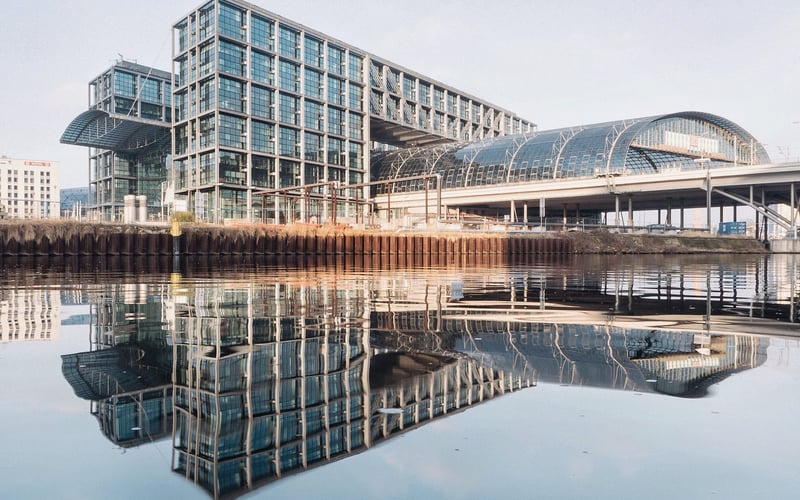
The Hauptbahnhof Berlin lies on the western edge of the district and connects Mitte directly to the ICE, IC and regional rail network. The Bahnhof Friedrichstraße is an important regional and S-Bahn hub, the Bahnhof Alexanderplatz another important regional and S-Bahn hub.
The Torstraße will be redesigned over the coming years. Traffic lanes will give way to cycle paths, and public transport will be prioritised (source: Senatsverwaltung für Mobilität, Verkehr, Klimaschutz und Umwelt). The Spreeradweg runs along the north bank through Mitte from the Reichstag to the Jannowitzbrücke.
The Humboldt-Universität zu Berlin has its main campus on Unter den Linden and has shaped the academic character of the district since 1810. Several schools lie in the residential surroundings of the Rosenthaler Vorstadt and the Scheunenviertel, among them the Grundschule am Koppenplatz.
Local supply is dense. Weekly markets take place at the Arkonaplatz and the Hackescher Markt, the restaurant and café scene is tightly knit, and international retail shapes the Friedrichstraße and the Hackesche Höfe. Supermarkets sit along the main axes close to home.
The Großer Tiergarten borders directly to the west, the Spreepromenade between the Hauptbahnhof and the Jannowitzbrücke offers a waterfront, and the Monbijoupark opposite the Museumsinsel and the Weinbergsweg park on the border with Prenzlauer Berg are smaller green anchors. Compared with other Berlin districts, Mitte is short on green space, a result of its dense city-core location.
Who Mitte suits
- International professionals: The highest single share of the central districts and predominantly small apartments, plus short distances to ministries, law firms and corporate headquarters. The price level is high, and the supply is mostly rental.
- Owner-occupiers and pied-à-terre buyers in the premium segment: Exclusive new developments at the Pariser Platz, Friedrichswerder and Am Tacheles appeal to buyers for whom location and address matter more than the square metres.
- Investors in the centre: Berlin's highest location rating, a scarce apartment-building stock and rare transactions; the Alexanderplatzviertel milieu protection area regulates conversion and modernisation.