

Character and Identity
Wedding is a district in the north of Berlin and has belonged to the Mitte borough since the 2001 administrative reform. The district borders the historic city center to the south and Reinickendorf to the north and west. The district is home to 87,263 residents; the housing stock is distributed across 47,121 apartments and 45,523 households (source: Amt für Statistik Berlin-Brandenburg).
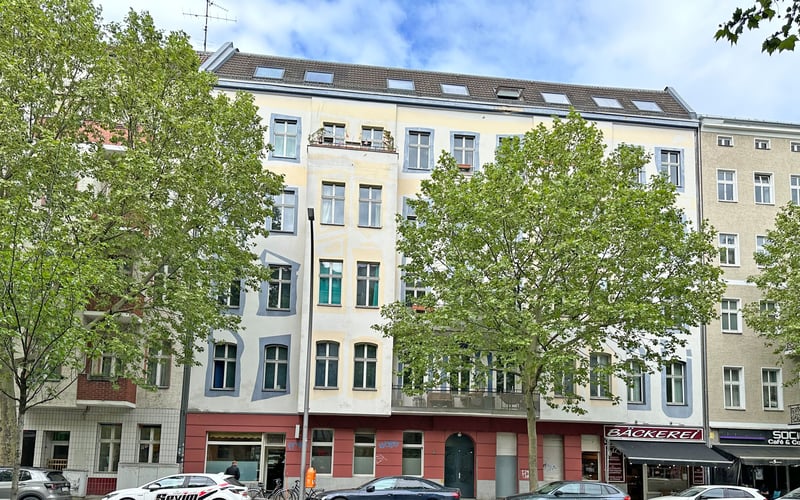
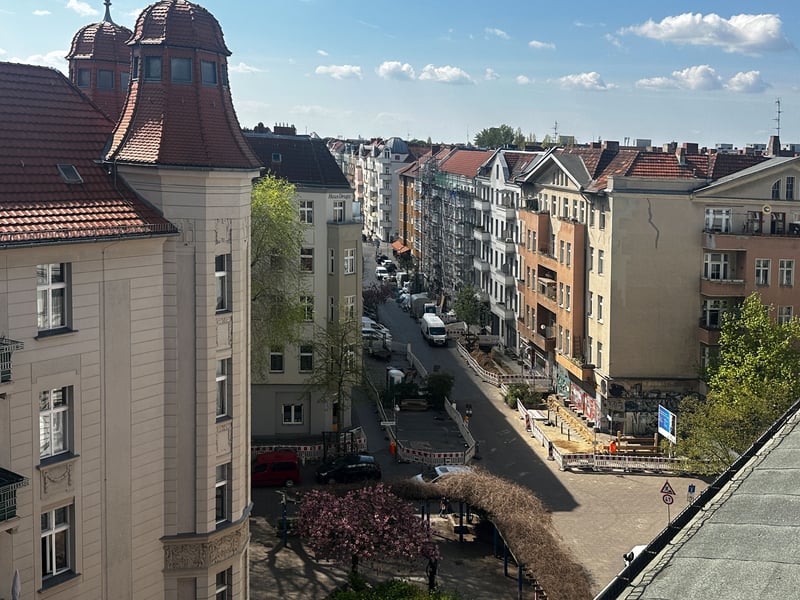
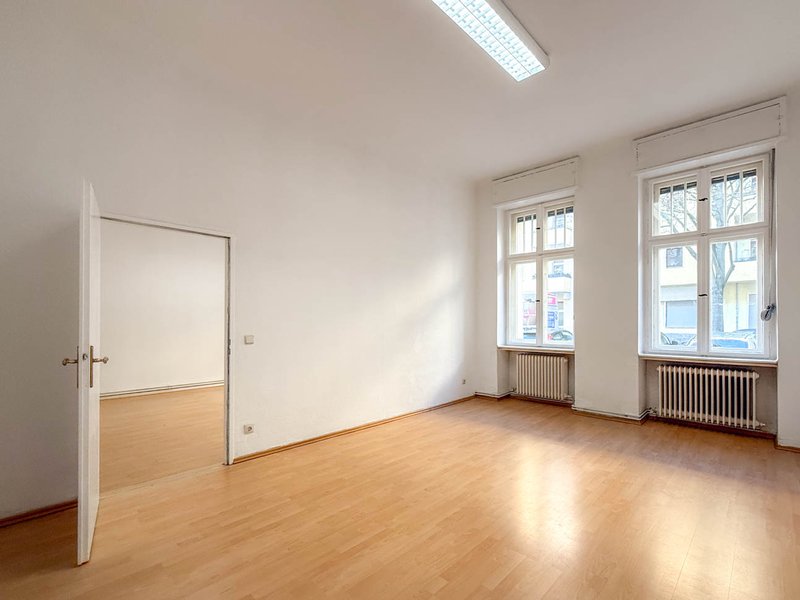
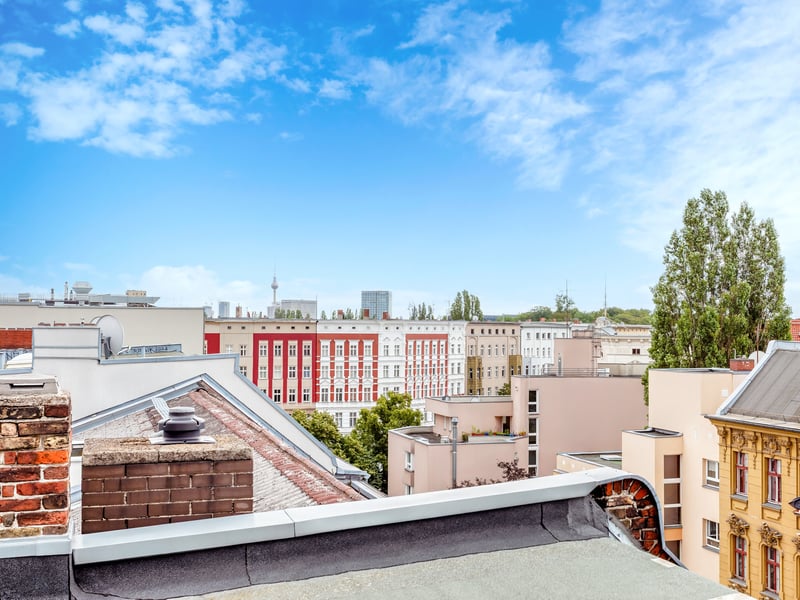
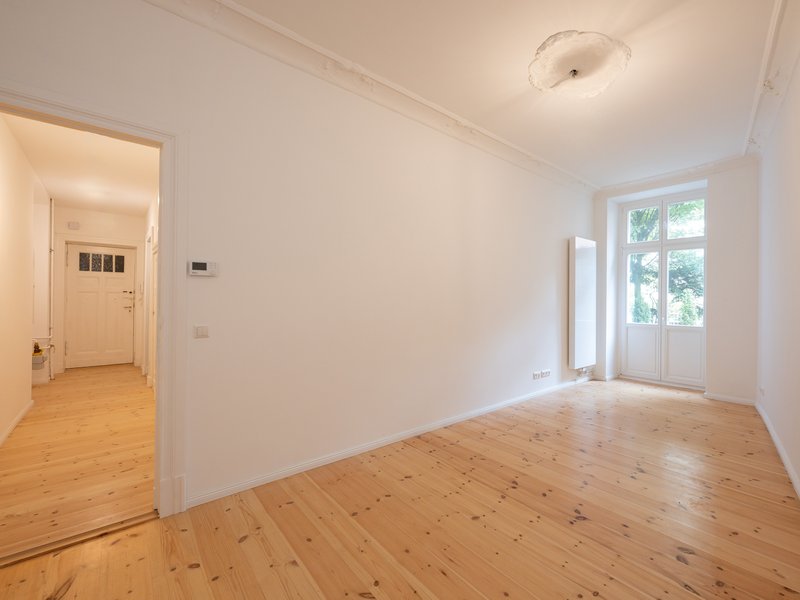
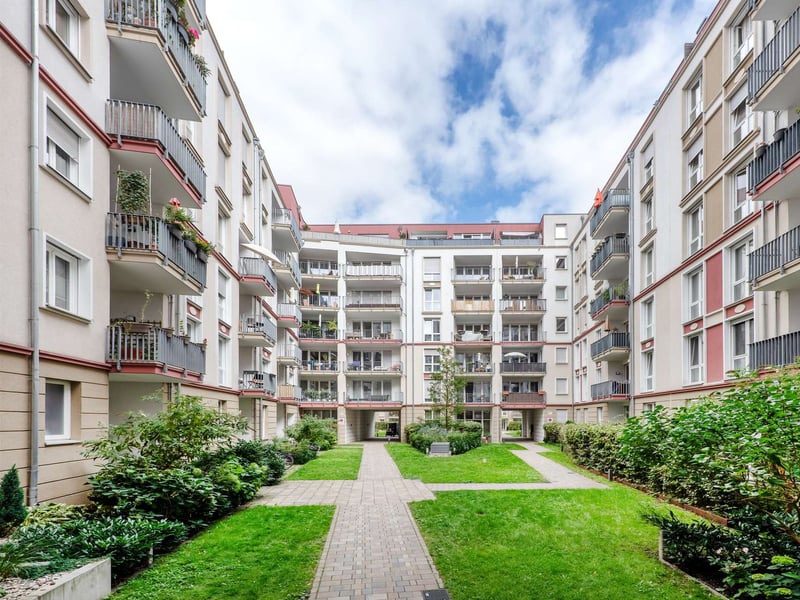
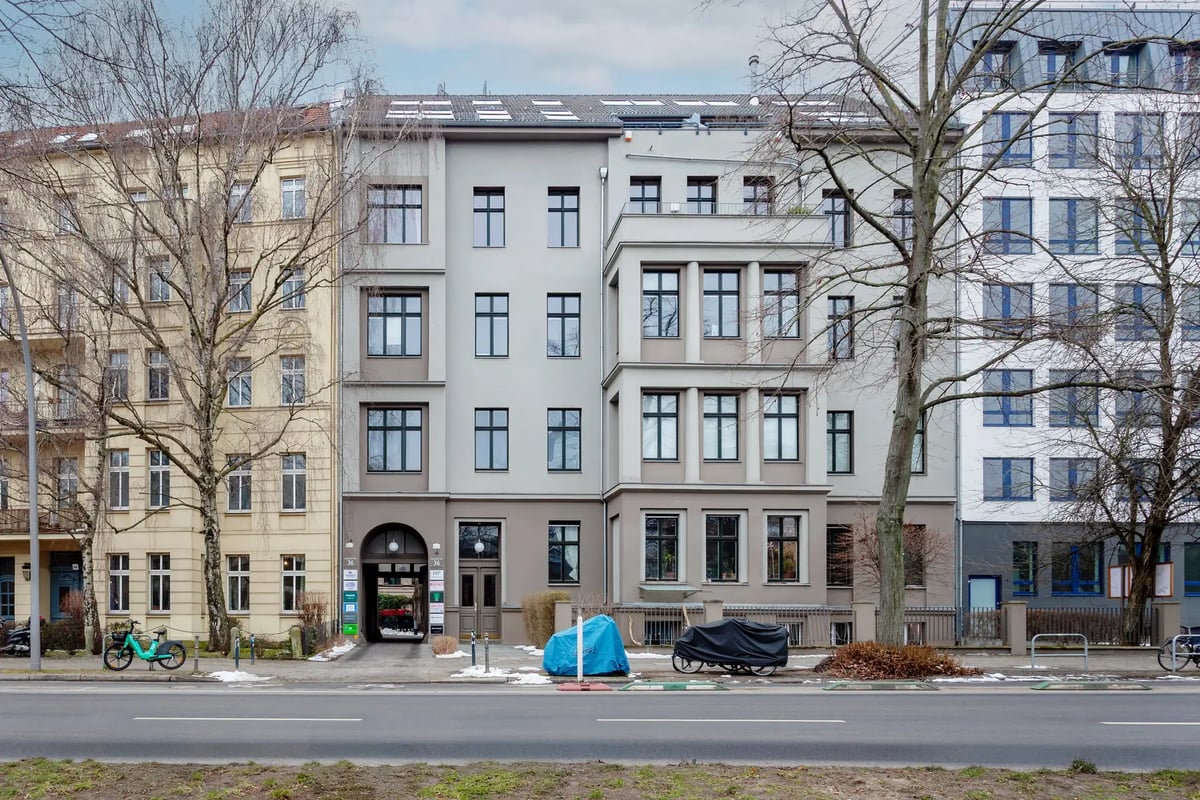
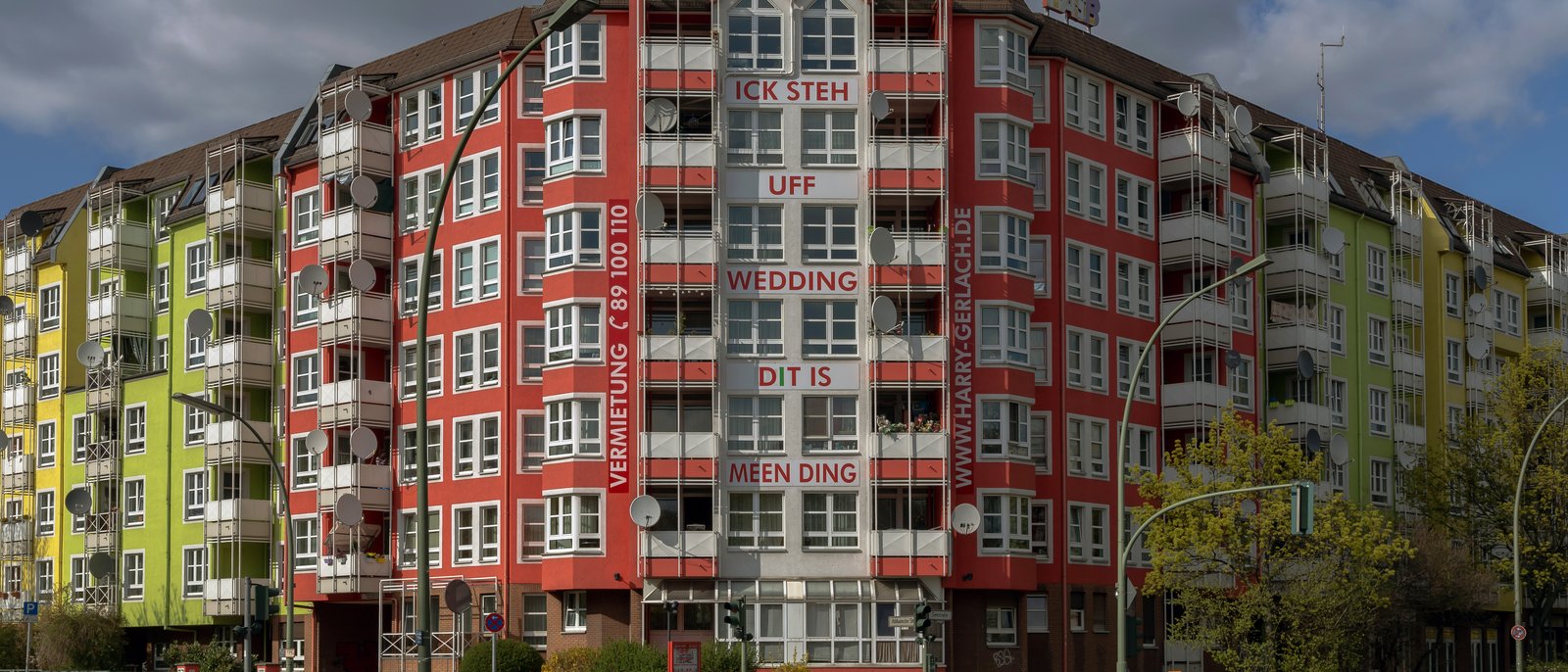
Wedding long had the reputation of a working-class district, shaped by the electrical industry and a population that largely worked in the factories. This character still resonates today: in the dense Gründerzeit blocks along the Nordufer, in the large housing estates of the 1920s and 1930s, and in Müllerstraße, the continuous commercial axis that runs through the district from south to northwest.
Since the 1980s, the district has changed profoundly. The industrial sites gave way to small-scale commercial locations, science and research institutions moved in, and with the closure of Tegel Airport a large development area came to lie directly on the northwestern edge. Wedding is young and international, with a high share of students and a population from many countries of origin.
For clarity: this district is called Wedding and should not be confused with neighboring Gesundbrunnen, which until 2001 belonged as a district to the same Wedding administrative borough. Together with Mitte, Tiergarten, Moabit, and the Hansaviertel, the two now form the Mitte borough.
History and Transformation
Wedding grew during the 19th century with industrialization. The Allgemeine Elektricitäts-Gesellschaft, or AEG, established itself across large areas of the district from 1887, primarily along Brunnen-, Volta-, and Ackerstraße. Around the plants, dense apartment-building quarters for the workforce sprang up in a short space of time. The district was regarded as a stronghold of the labor movement and earned the nickname "Red Wedding."
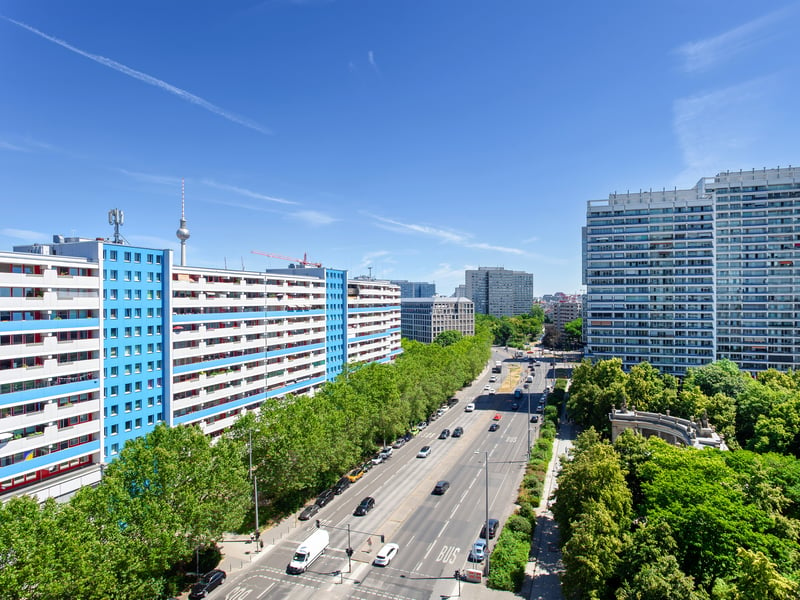
The Weimar Republic brought a second defining construction phase. In the 1920s and 1930s, the large housing estates of the Modernist era arose in the west and north, with low-density development, green spaces, and a floor plan progressive for its time. These estates differ markedly from the Gründerzeit blocks of the period-architecture core and shape the look of the district toward Reinickendorf.
After 1945, Wedding lay in the French sector and thus in West Berlin, directly on the border with the eastern part of the city. Bernauer Straße marked the division for decades, with buildings whose façades stood in the West and whose entrances lay in the East. Today the Berlin Wall Memorial commemorates this stretch of the border. With the fall of the Wall in 1989, Wedding moved out of West Berlin's peripheral position and back into the geographic center of the city.
Since the 1980s, the district has undergone a structural shift from industry to science, research, and services. Large factory grounds were repurposed, and university and clinic locations were expanded. In the Mitte borough, conservation areas under Section 172 of the Building Code (Milieuschutzgebiete) were designated for several quarters in Wedding, regulating conversion and modernization of the existing stock (source: Bezirksamt Mitte).
Points of Interest
The iconic landmarks lie in the neighboring city center, yet Wedding has its own anchors. Leopoldplatz, with the Alte Nazarethkirche designed by Karl Friedrich Schinkel, is the district's central square and a hub of Müllerstraße. The Berlin Wall Memorial on Bernauer Straße documents the city's division along the former border line and ranks among Berlin's most visited memorial sites.
Industrial history is evident in the listed AEG buildings on Brunnen- and Voltastraße, among them works by Peter Behrens that count as early examples of modern industrial architecture. Volkspark Humboldthain in the southeast of the district combines recreational space with history: atop the artificial rubble hill stand the remains of a flak tower from the Second World War, from whose platform a wide view opens over the city.
Culturally, the Ballhaus Wedding is a fixture, a tradition-rich venue on Müllerstraße. Add to this smaller stages, off-theater venues, and a dense network of neighborhood culture that has grown in the district over the years.
Popular Kieze in Wedding
- Sprengelkiez: A quiet Gründerzeit quarter on the Nordufer, set between Plötzensee, the canal, and university locations. Dense period architecture, small-scale dining, and a pronounced neighborhood character.
- Brüsseler Kiez: A quarter around Brüsseler Platz and Sparrplatz, west of Müllerstraße. A residential location with Gründerzeit fabric and short distances to Leopoldplatz.
- Englisches Viertel / Afrikanisches Viertel: In the west of the district toward Rehberge, with low-density development and proximity to Volkspark Rehberge. A mix of period architecture and Modernist estate construction.
- Leopoldkiez / Müllerstraße: The bustling core around Leopoldplatz, with Müllerstraße as the continuous supply and traffic axis. Dense retail, high footfall, and good public transport connections.
- Nordufer / Plötzensee: A waterside location on the Berlin-Spandau Shipping Canal and at Plötzensee, with greenery, lidos, and quiet residential streets on the edge of the clinic and university grounds.
Scene and Everyday Life
Everyday life in Wedding plays out along Müllerstraße and at the quarter squares. Leopoldplatz is both market and meeting point, with a regular weekly market and the district's densest supply situation. The dining scene is international and small-scale, shaped by the mixed population: Turkish, Arab, West and East African, as well as Southern and Eastern European cuisine often stand side by side.
The scene is less geared toward display than in the adjoining city center. Cafés, Spätis, small bars, and project spaces carry the nightlife, frequently in former shop premises and rear courtyards. Cultural anchors are the Ballhaus Wedding, off-stages, and studios in repurposed commercial spaces. Green spaces such as Volkspark Humboldthain, Volkspark Rehberge, and the waterside paths at Plötzensee serve in summer as open space for the densely populated quarters.
Who Lives in Wedding
Wedding is a densely populated, internationally shaped district with many small households. The following breakdown shows how the households are distributed by size.
| Household size | Count | Share |
|---|---|---|
| 1 person | 29,423 | 65 % |
| 2 people | 8,564 | 19 % |
| 3 people | 3,469 | 8 % |
| 4 people | 2,267 | 5 % |
| 5 people | 934 | 2 % |
| 6+ people | 866 | 2 % |
The age structure is young. Students, young professionals, and young families shape the picture, supported by proximity to the university and clinics and by a rent level in the existing stock that, by Berlin standards, remains attainable.
| Age group | Count | Share |
|---|---|---|
| under 6 | 4,096 | 5 % |
| 6–15 | 5,706 | 7 % |
| 15–18 | 1,933 | 2 % |
| 18–27 | 11,562 | 13 % |
| 27–45 | 31,871 | 37 % |
| 45–55 | 9,719 | 11 % |
| 55–65 | 9,913 | 11 % |
| 65+ | 12,463 | 14 % |
The international character is one of the district's defining features. The following overview shows how the resident population is composed by region of origin.
| Region of origin | Count | Share |
|---|---|---|
| EU | 13,798 | 35 % |
| Turkey | 9,797 | 25 % |
| unassigned | 3,136 | 8 % |
| India | 2,127 | 5 % |
| Lebanon | 1,681 | 4 % |
| Syria | 1,646 | 4 % |
| Ukraine | 1,514 | 4 % |
| Russia | 1,056 | 3 % |
| China | 1,008 | 3 % |
| United Kingdom | 700 | 2 % |
| USA | 658 | 2 % |
| Afghanistan | 561 | 1 % |
| Iran | 554 | 1 % |
| Iraq | 475 | 1 % |
| Vietnam | 424 | 1 % |
| Kazakhstan | 147 | <1 % |
Who Moves to Wedding
The migration data shows how the population renews itself. Wedding grows above all through inflow from abroad; the international influx carries the population trend, while in the exchange with Berlin's surrounding area there is a net outflow of people.
| # | Country | Inflow | Outflow | Net |
|---|---|---|---|---|
| 1 | Indien | 616 | 228 | 388 |
| 2 | Türkei | 354 | 280 | 74 |
| 3 | Bulgarien | 344 | 436 | -92 |
| 4 | China | 257 | 134 | 123 |
| 5 | Ukraine | 194 | 159 | 35 |
| 6 | Italien | 127 | 107 | 20 |
| 7 | Polen | 126 | 165 | -39 |
| – | Deutschland | 1,509 | 1,760 | -251 |
Within Berlin, the exchange is closely tied to the adjacent districts and the northern quarters.
| # | District | People |
|---|---|---|
| 1 | Gesundbrunnen | 496 |
| 2 | Moabit | 383 |
| 3 | Neukölln | 305 |
| 4 | Reinickendorf | 295 |
| 5 | Prenzlauer Berg | 280 |
In the opposite direction, the movement runs similarly on a small scale, above all into the neighboring districts and the northern surrounding area.
| # | District | People |
|---|---|---|
| 1 | Reinickendorf | 495 |
| 2 | Gesundbrunnen | 490 |
| 3 | Prenzlauer Berg | 347 |
| 4 | Neukölln | 339 |
| 5 | Moabit | 311 |
Buildings and Apartments
The building stock comprises 3,423 buildings. Three construction eras shape the district: the Gründerzeit period architecture from industrialization, primarily in the south and along the Nordufer; the large housing estates of the Modernist era from the 1920s and 1930s in the west and north; and a smaller share of postwar and new construction. A dedicated chart data source for construction periods is not available; this assessment is based on the Guthmann market report.
In keeping with the young population shaped by small households, the district has many compact apartments. The following overview shows how the stock is distributed across the size classes.
| Size class | Count | Share |
|---|---|---|
| Unter 40 m² | 6,772 | 14 % |
| 40-59 m² | 18,052 | 38 % |
| 60-79 m² | 13,992 | 30 % |
| 80-99 m² | 5,498 | 12 % |
| 100-119 m² | 1,871 | 4 % |
| 120-139 m² | 624 | 1 % |
| 140-159 m² | 163 | <1 % |
| 160-179 m² | 91 | <1 % |
| 180-199 m² | 34 | <1 % |
| 200+ m² | 47 | <1 % |
The use of the stock is also revealing for the district's social mix.
| Type of use | Count | Share |
|---|---|---|
| Rented | 43,867 | 92 % |
| Owner-occupied | 2,160 | 5 % |
| Vacant | 1,106 | 2 % |
| Commercial | 571 | 1 % |
New construction activity is concentrated on individual development areas and densification within the existing stock. The following illustration shows how the housing balance is developing.
| Period | Apartment balance |
|---|---|
| 2021 | 17 apartments |
| 2022 | 210 apartments |
| 2023 | 391 apartments |
| 2024 | 68 apartments |
Transport and Infrastructure
Wedding is served by several U-Bahn lines. The U6 runs beneath Müller- and Reinickendorfer Straße and connects the Leopoldplatz, Seestraße, and Rehberge stations to the south with Friedrichstraße, Stadtmitte, and Tempelhof. The U9 links Leopoldplatz and Osloer Straße to the west of the city. At Wedding station and the Ringbahn station, U-Bahn and S-Bahn meet. The S-Bahn Ringbahn crosses the district with the Wedding and Humboldthain stations and provides the connection to the north and east.
Several university and clinic locations shape the district's infrastructure. The Berliner Hochschule für Technik maintains sites along Luxemburger and Amrumer Straße and offers a broad range of engineering degree programs. To the south lies the Campus Virchow-Klinikum, one of the major locations of the Charité and at the same time a significant employer in the district. Several schools are located in the residential surroundings of the quarters on the Nordufer and west of Müllerstraße.
On the northwestern edge of the district, a large development project is taking shape on the grounds of the former Tegel Airport. Plans call for a research and commercial campus for urban technologies as well as a new residential quarter (source: Senatsverwaltung für Stadtentwicklung, Bauen und Wohnen). The adjacent locations in Wedding benefit from this development through new jobs and improved access.
Local supply is dense and concentrated on Müllerstraße and the quarter squares. The weekly market at Leopoldplatz and small-scale retail cover daily needs, with supermarkets located along the main axes close to residential areas. In terms of green space, Volkspark Humboldthain, Volkspark Rehberge, and the waterside paths at Plötzensee and on the Berlin-Spandau Shipping Canal are available. Wedding is therefore comparatively well supplied with greenery by Berlin standards, particularly in the western locations toward Reinickendorf.
Who Wedding Suits
- Students and clinic staff: Proximity to the Berliner Hochschule für Technik and the Campus Virchow-Klinikum, together with a rent level in the existing stock that remains attainable, make the district attractive for the university and clinic environment. The offering is predominantly rental.
- Young households and young professionals: A young age structure, many compact apartments, and good public transport connections to the city center appeal to singles and couples for whom a central location matters more than display.
- Owner-occupiers in waterside and green locations: The quiet quarters on the Nordufer, at Plötzensee, and toward Rehberge offer period architecture and estate construction with plenty of greenery, away from the dense main axes.
- Investors with a long horizon: A scarce apartment-building stock, high rental demand, and the development at the former Tegel Airport shape the picture; the conservation areas regulate conversion and modernization.