

Character and Identity
Reinickendorf is the district that gives an entire borough its name, and yet it has never made much noise about it. Located in the north of Berlin, away from the major tourist flows, it stands for something that has become rare in the inner city: affordable living, manageable streets and a pace that runs a notch slower. Those who live here reside between brick estates and a village church, between lakeshore and arterial road.
The address carries no great prestige, and that is precisely part of its self-image. Reinickendorf presents itself as down to earth, more a place for workers and employees than a trendy quarter. Between the 1920s housing estates and the single-family-home areas on the fringes live people who have often been rooted here for decades, alongside young families who have moved out of the expensive inner-city Kieze.
In this way, Reinickendorf is a district that works inward rather than outward. For some it is too inconspicuous, too far out, too little hip. For others it is attractive for exactly that reason: a place to arrive in, not to show off.
History and Change
For centuries, Reinickendorf was a village outside the gates of Berlin. The first documented mentions reach back to the Middle Ages, when a small farming settlement lay here, far from the city on the Spree. The old village core with its church still forms a point of calm within the fabric of the district today and recalls this rural past.
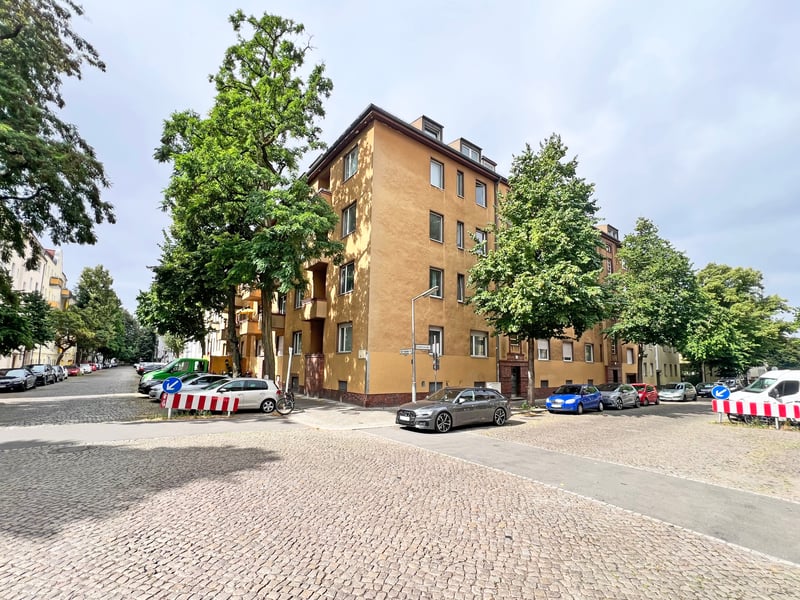
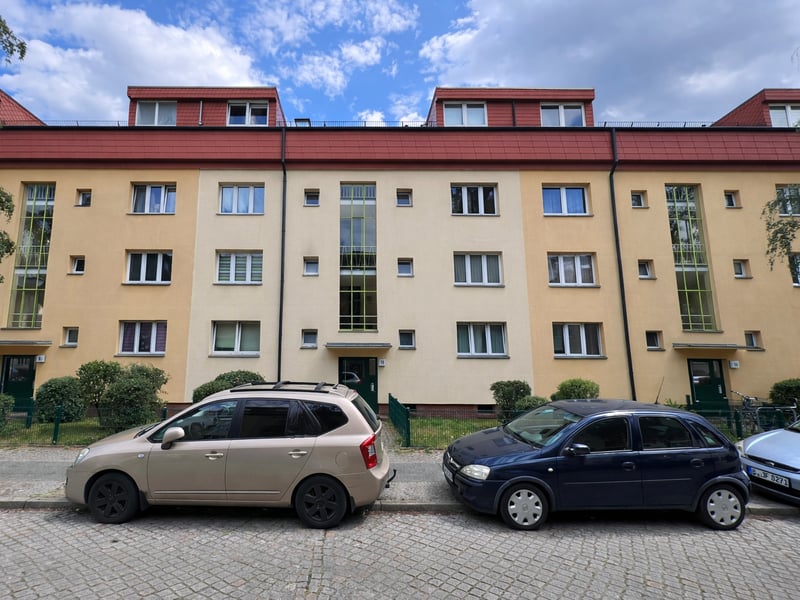
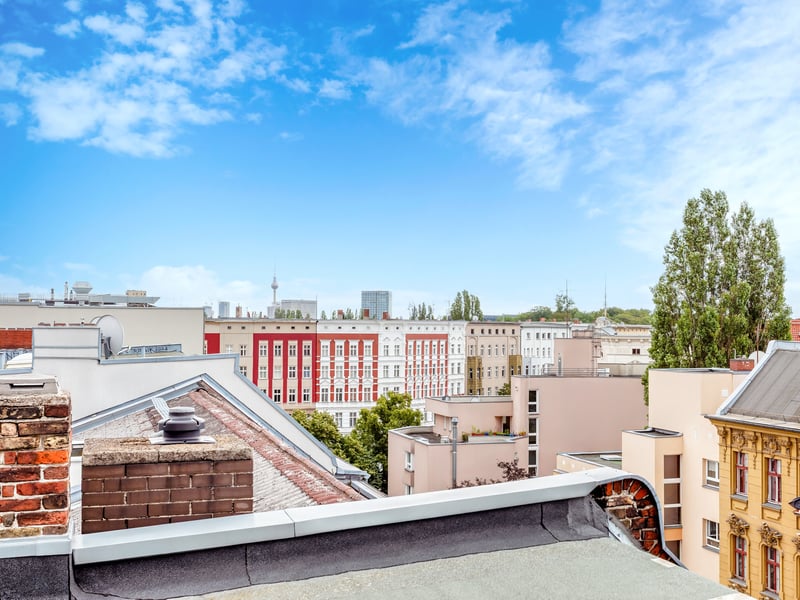
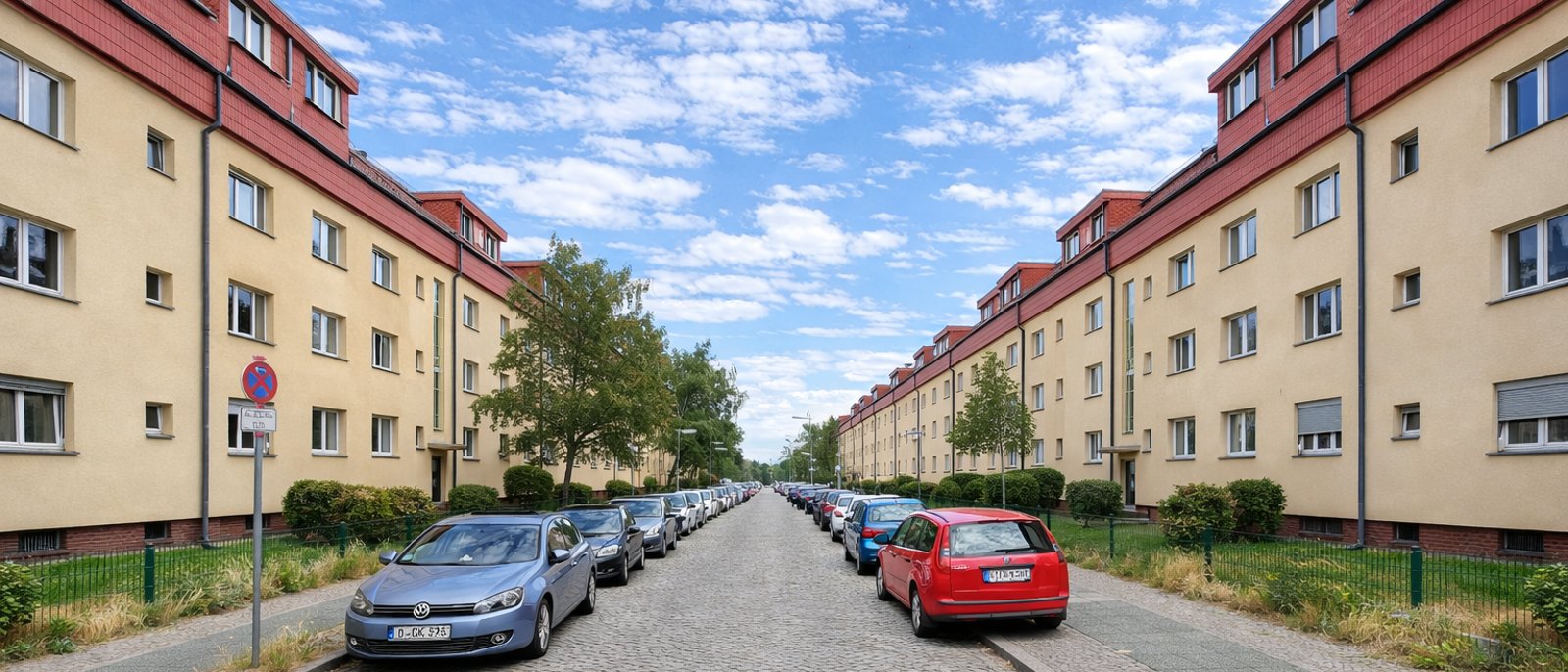
With Berlin's growth, everything changed. In 1920, Reinickendorf was incorporated under the Greater Berlin Act and gave the new borough its name. The 1920s saw the construction of large housing estates intended to ease the housing shortage of the growing industrial city. The brick expressionism of that era still shapes entire streetscapes today.
The division of the city made Reinickendorf a district in the West, on the edge of the walled-in half-city. While other boroughs lay directly on the Wall, Reinickendorf was more of a hinterland: quiet, residential, away from the political flashpoints. After the fall of the Wall, this character largely remained intact. The major change came only later, from outside: the growing pressure on the Berlin housing market brought the affordable north into the focus of families and investors who could no longer keep up elsewhere.
Landmarks and Points of Interest
Reinickendorf does not boast national landmarks, but rather places that carry everyday life. The Schäfersee in the middle of the residential area is probably the best known of them: a small lake with a park, playgrounds and shoreline paths that provides recreation right among the apartment buildings. On warm days it becomes a meeting point for the whole district.
The historic village core around the old village church tells of the rural past. Here stand some of the oldest buildings in the district, a contrast to the straight-lined estates all around. The Rathaus Reinickendorf, seat of the district administration, forms another fixed point of reference in the centre.
Green space is abundant in Reinickendorf. Alongside the Schäfersee, parks and allotment colonies run through the district, and the north of Berlin as a whole is shaped by water and forest. This proximity to greenery is one of the strongest arguments for living here.
Popular Kieze in Reinickendorf
Around the Schäfersee lies what is probably the most popular residential area: dense 1920s and 1930s development, plenty of brick, and the green space by the water right in the middle. Those seeking quiet together with short distances are in good hands here.
The old village core around the village church forms the historic heart. Here the development is finer-grained, the character more village-like, the atmosphere quieter than along the major roads.
Along the large arterial roads such as Residenzstraße runs the busy Reinickendorf: retail, traffic, supply. Here the everyday pulse of the district beats, with U-Bahn access and dense local amenities.
On the fringes, the housing estates give way to quieter areas with terraced and single-family homes. These locations attract families looking for a garden and space without leaving the city entirely.
Scene and Everyday Life
Everyday life in Reinickendorf is practical and unpretentious. Instead of galleries and clubs, bakeries, supermarkets, drugstores and snack bars shape the streetscape. The dining scene is down to earth: corner pubs, ice cream parlours, Turkish and Vietnamese restaurants, plus the usual chains at the traffic junctions.
Shopping happens mainly along the main streets and in the local supply centres. Weekly markets supply the district with fresh produce, and for the big shop, the borough's shopping centres are quickly reachable. Those seeking more choice take the U-Bahn towards the inner city.
Leisure life plays out outdoors. The Schäfersee, the parks and the allotments are the true social meeting points. Club life, sports facilities and neighbourhood initiatives carry everyday life. Reinickendorf is not a place for the night danced through until dawn, but for the quiet evening after work.
Who Lives in Reinickendorf
Reinickendorf counts 86,061 residents, making it a populous district in the north of Berlin. The population is mixed: long-established residents, many with a migration background, and increasingly families moving in from more expensive locations shape the picture.
The household structure is more varied than in the inner city. Alongside singles and couples, comparatively many families live here, which is reflected in the size of the households.
| Household size | Count | Share |
|---|---|---|
| 1 person | 25,918 | 60 % |
| 2 people | 8,825 | 21 % |
| 3 people | 3,958 | 9 % |
| 4 people | 2,425 | 6 % |
| 5 people | 1,052 | 2 % |
| 6+ people | 673 | 2 % |
The age structure is more balanced than in the young trendy Kieze. Reinickendorf has both a noticeable share of older residents who have lived here for a long time and younger families with children.
| Age group | Count | Share |
|---|---|---|
| under 6 | 4,788 | 6 % |
| 6–15 | 6,853 | 8 % |
| 15–18 | 2,102 | 2 % |
| 18–27 | 10,106 | 12 % |
| 27–45 | 26,262 | 31 % |
| 45–55 | 9,558 | 11 % |
| 55–65 | 11,139 | 13 % |
| 65+ | 15,253 | 18 % |
The origins of the residents show just how much the district has become a home for people from many countries over the decades.
| Region of origin | Count | Share |
|---|---|---|
| EU | 12,328 | 34 % |
| Turkey | 9,183 | 25 % |
| unassigned | 3,573 | 10 % |
| Ukraine | 1,917 | 5 % |
| Syria | 1,901 | 5 % |
| India | 1,655 | 5 % |
| Lebanon | 1,276 | 4 % |
| Russia | 1,246 | 3 % |
| Afghanistan | 577 | 2 % |
| Iran | 538 | 1 % |
| Vietnam | 531 | 1 % |
| Iraq | 498 | 1 % |
| Kazakhstan | 405 | 1 % |
| USA | 283 | <1 % |
| United Kingdom | 256 | <1 % |
| China | 230 | <1 % |
Who Is Drawn to Reinickendorf
The influx into Reinickendorf has changed. For a long time, the district was above all a place for those already rooted in the north. Today, more and more people are arriving from other Berlin boroughs, seeking affordable housing and no longer finding it in the inner city.
| # | District | People |
|---|---|---|
| 1 | Wedding | 495 |
| 2 | Gesundbrunnen | 433 |
| 3 | Moabit | 244 |
| 4 | Charlottenburg | 195 |
| 5 | Neukölln | 185 |
Among those moving in from abroad, various nations are represented, continuing to shape the international character of the district.
| # | Country | Inflow | Outflow | Net |
|---|---|---|---|---|
| 1 | Indien | 563 | 170 | 393 |
| 2 | Ukraine | 297 | 158 | 139 |
| 3 | Türkei | 262 | 132 | 130 |
| 4 | Bulgarien | 230 | 217 | 13 |
| 5 | Rumänien | 187 | 165 | 22 |
| 6 | Polen | 174 | 133 | 41 |
| 7 | Arabische Republik Syrien | 138 | 78 | 60 |
| – | Deutschland | 1,147 | 1,614 | -467 |
At the same time, people are leaving the district, some heading for the surrounding area with a house of their own, others for other parts of the city.
| # | District | People |
|---|---|---|
| 1 | Gesundbrunnen | 307 |
| 2 | Wedding | 295 |
| 3 | Märkisches Viertel | 225 |
| 4 | Wittenau | 189 |
| 5 | Tegel | 185 |
Buildings and Apartments
The building stock in Reinickendorf comprises 5,357 buildings. The building fabric is shaped by the housing estates of the 1920s and 1930s, by post-war buildings and by single- and multi-family homes on the fringes. High-rises and new developments are added to this, yet the overall picture remains more fine-grained than in the inner city.
44,055 apartments are spread across 42,851 households. The offering ranges from compact estate apartments to generous floor plans in the single-family-home areas.
| Size class | Count | Share |
|---|---|---|
| Unter 40 m² | 4,728 | 11 % |
| 40-59 m² | 16,971 | 39 % |
| 60-79 m² | 15,980 | 36 % |
| 80-99 m² | 4,219 | 10 % |
| 100-119 m² | 1,342 | 3 % |
| 120-139 m² | 459 | 1 % |
| 140-159 m² | 171 | <1 % |
| 160-179 m² | 76 | <1 % |
| 180-199 m² | 44 | <1 % |
| 200+ m² | 58 | <1 % |
Compared to the inner city, the share of owner-occupied housing is higher, especially in the terraced and single-family-home locations on the fringes.
| Type of use | Count | Share |
|---|---|---|
| Rented | 40,051 | 90 % |
| Owner-occupied | 3,037 | 7 % |
| Vacant | 922 | 2 % |
| Commercial | 349 | <1 % |
Construction activity concentrates on densification and individual new development projects, while the existing stock continues to define the character of the district.
| Period | Apartment balance |
|---|---|
| 2021 | 193 apartments |
| 2022 | 35 apartments |
| 2023 | 317 apartments |
| 2024 | 237 apartments |
Transport and Infrastructure
Reinickendorf is solidly connected to Berlin's local transport network. The U8 underground line runs from the north right across the city to Neukölln, complemented by S-Bahn connections and a dense bus network. Those living in most parts of the district reach the inner city in a manageable time without constant changes.
For car traffic, Reinickendorf is well served. Major arterial roads and the proximity to the motorway ring make the north attractive for commuters. Parking space is less scarce than in the central boroughs, which many residents appreciate.
The provision of schools, daycare centres, doctors and shops for everyday needs is good. Sports facilities, libraries and the green spaces by the water round off the picture. Reinickendorf offers the infrastructure a place to live needs, without the pressure and density of the inner city.
Who Reinickendorf Suits
Reinickendorf suits people who place quiet and affordable living above centrality. Families find more space for their money here, green spaces on the doorstep and a quiet neighbourhood. Those seeking a garden or a house of their own will find locations on the fringes of the district that would hardly be affordable in the inner city.
For investors, Reinickendorf is of interest because the entry point is cheaper than in the central boroughs and demand is rising through the pressure on the overall market. Those betting on long-term letting and solid building fabric will find a stable market with catch-up potential here.
Reinickendorf is less suited to those seeking pulsating nightlife and short distances to culture and the scene. Reaching the centre takes time, and the dining offering remains down to earth. Reinickendorf is the district for those who want to arrive in the evening, with a lake, brickwork and a little more room to breathe.