

Character and Identity
Westend lies in the west of the borough of Charlottenburg-Wilmersdorf, beyond the trade fair grounds and the radio tower, and ranks among the greenest and quietest residential areas of the western inner city. The district is home to 41,420 residents; the housing stock is spread across 23,088 apartments and 21,928 households (source: Berlin-Brandenburg Statistical Office).
When you first hear the name Westend, you often think of the trade fair grounds with the radio tower or of the International Congress Centrum on the city motorway. That is the loud, representative edge of the district. Behind it, a different character begins: broad avenues lined with old trees, detached and semi-detached villas set behind front gardens, quiet residential streets and large green spaces. Westend is one of Berlin's oldest and best-known villa colonies and has kept its well-heeled layout for more than a century.
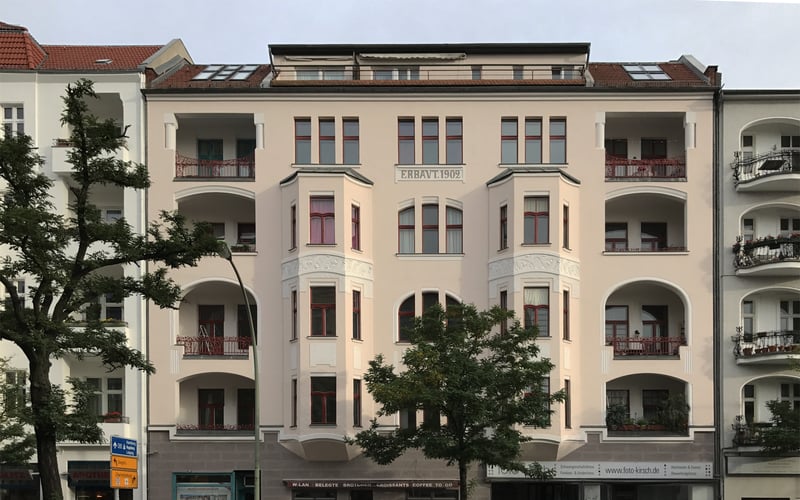
The district arranges itself around the central Theodor-Heuss-Platz, from which Reichsstrasse runs west as a residential and commercial axis. Around this axis you find a mix of Gründerzeit villas, turn-of-the-century country houses, individual apartment buildings and 1920s housing estates. Proximity to the Grunewald, the Olympic grounds and the Havel shapes the way of life here as much as the radio tower that stands above the quarter.
In local reporting, Westend has long carried the reputation of a well-heeled, partly prominent residential quarter (source: Berliner Morgenpost). That reading falls short, but it captures the core: a district defined less by landmarks than by residential quality, quiet and greenery.
History and Change
Westend is a planned suburban foundation. From 1866, a villa colony modelled on the English example took shape west of Charlottenburg, its name referring to London's West End. It ranks among the earliest villa colonies on the outskirts of Berlin and was conceived from the start as a spacious residential settlement for the affluent middle class, with large plots, wide streets and tree planting that still defines the look of the many avenues today.
As Charlottenburg grew, Westend grew into the city. In the early 20th century, apartment buildings and mixed quarters were added, and in the 1920s came housing estates at the edge of the district. In 1920, Charlottenburg, Westend included, was incorporated with the formation of Greater Berlin.
The district took on a second character through the trade fair and exhibition buildings along its eastern flank. The radio tower opened in 1926 and quickly became a landmark of western Berlin. The trade fair grounds continued to grow in the following decades, and the International Congress Centrum was added in the 1970s. In divided Berlin, Westend lay in the western part of the city and remained a sought-after residential area. After 1990, the urban layout of the district changed only slightly; the villa character was largely preserved, while individual plots were developed more densely.
Sights
The district's best-known addresses lie along its eastern edge. The radio tower above the trade fair grounds is visible from large parts of the city and remains Westend's most striking structure. The adjoining trade fair grounds with their historic halls and the International Congress Centrum shape the skyline towards the city motorway.
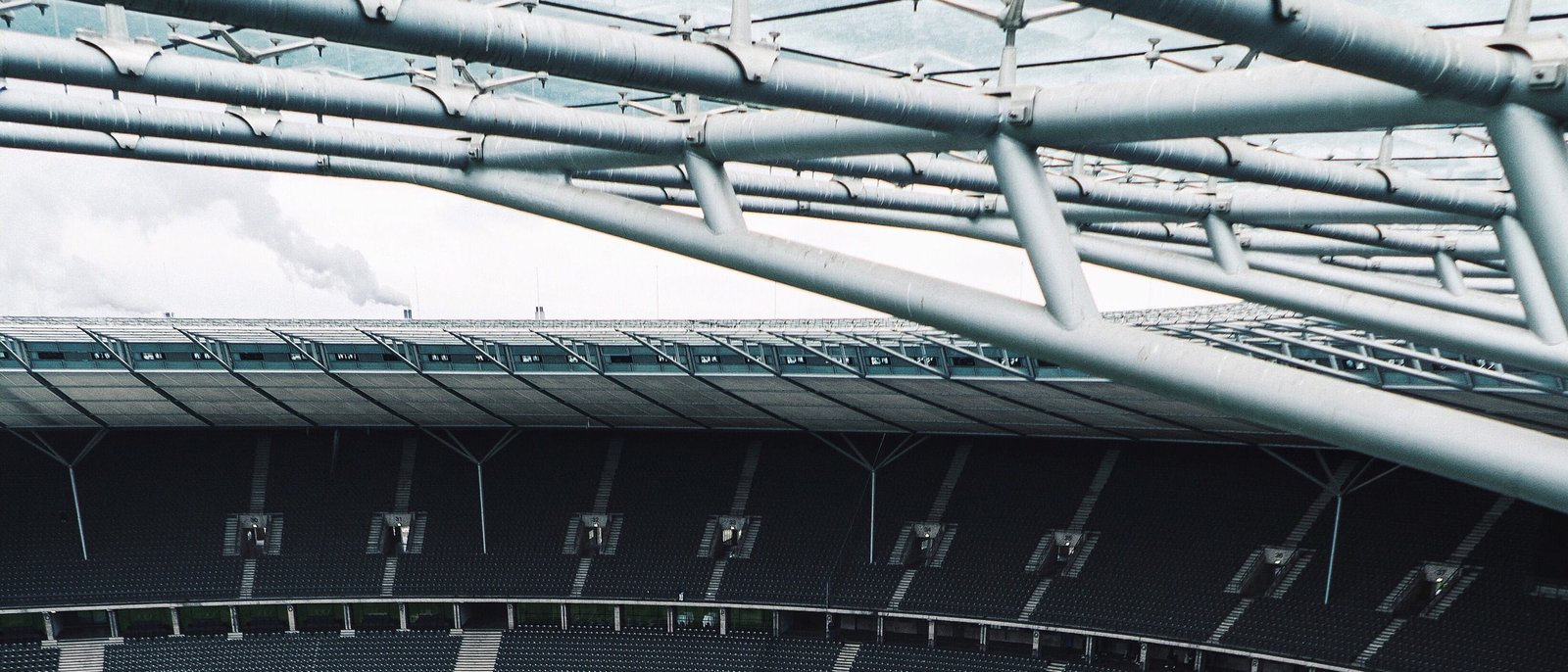
Inside the district, quieter anchors dominate. The Georg-Kolbe-Museum, set in the former sculptor's studio with a sculpture garden, is devoted to the sculpture of classical modernism. Theodor-Heuss-Platz, known as Reichskanzlerplatz before its renaming, is the district's central square and traffic hub. To the west, the Olympic grounds with the Olympic Stadium adjoin Westend directly and serve as a local recreation area for many residents.
If you want to get to know Westend, you do so less through individual buildings than through the avenues themselves. The broad, tree-lined streets are considered a characteristic feature of the district and are the subject of dedicated city walks (source: Charlottenburg-Wilmersdorf district office). They connect the residential quarters with the green spaces at the edge and account for much of the area's appeal.
Popular Kieze in Westend
- Villa Colony Westend: The historic core around Ahornallee and the adjoining streets, with detached and semi-detached villas from the Gründerzeit and the turn of the century. A quiet, green residential area with large plots.
- Reichsstrasse and Theodor-Heuss-Platz: The district's central axis with local amenities, dining and a mix of apartment buildings and commercial premises. In terms of transport, the best-connected part of Westend.
- Neu-Westend: A residential quarter west of the centre around the underground station of the same name, shaped by residential buildings from the first half of the 20th century and a quiet residential setting.
- Eichkamp: A 1920s garden city settlement at the southern edge of the district, in the immediate vicinity of the Grunewald, with small-scale development and a pronounced settlement character.
- Ruhwald: A northern quarter beside the park of the same name, quiet and green, transitioning to the adjoining districts to the north.
Scene and Everyday Life
Westend is not a nightlife quarter and does not see itself as one. Dining and commercial life concentrate on Reichsstrasse and Theodor-Heuss-Platz, where bakeries, cafés, restaurants and everyday retail provide local amenities. Away from this axis, purely residential streets predominate.
The cultural anchors lie at the edge of the district. The trade fair grounds draw visitors to the west of the city throughout the year with trade fairs, conferences and events, while the adjoining Olympic grounds host sports and large-scale events. The Georg-Kolbe-Museum sets a quieter, art-focused counterpoint. For residents' everyday life, proximity to the green spaces counts above all: the Grunewald to the south, the parks at Ruhwald and the routes towards the Havel are within a short distance.
Who Lives in Westend
Westend is a well-heeled residential district with a household structure of its own. The following breakdown shows how households are distributed by size.
| Household size | Count | Share |
|---|---|---|
| 1 person | 13,320 | 61 % |
| 2 people | 4,838 | 22 % |
| 3 people | 1,805 | 8 % |
| 4 people | 1,299 | 6 % |
| 5 people | 389 | 2 % |
| 6+ people | 277 | 1 % |
The age structure differs from the young inner-city districts. Established residential areas with a high share of owner-occupancy and large apartments bind residents over long periods, which is reflected in the distribution of age groups.
| Age group | Count | Share |
|---|---|---|
| under 6 | 1,797 | 4 % |
| 6–15 | 2,895 | 7 % |
| 15–18 | 1,006 | 2 % |
| 18–27 | 4,751 | 11 % |
| 27–45 | 9,702 | 23 % |
| 45–55 | 4,298 | 10 % |
| 55–65 | 5,826 | 14 % |
| 65+ | 11,145 | 27 % |
The composition of the resident population by region of origin is also part of the district's profile and shows how international Westend is.
| Region of origin | Count | Share |
|---|---|---|
| EU | 3,949 | 34 % |
| Ukraine | 1,376 | 12 % |
| Turkey | 1,231 | 11 % |
| India | 855 | 7 % |
| unassigned | 733 | 6 % |
| Russia | 634 | 5 % |
| Iran | 597 | 5 % |
| China | 474 | 4 % |
| Syria | 399 | 3 % |
| USA | 392 | 3 % |
| United Kingdom | 297 | 3 % |
| Vietnam | 210 | 2 % |
| Afghanistan | 201 | 2 % |
| Lebanon | 113 | <1 % |
| Iraq | 102 | <1 % |
| Kazakhstan | 96 | <1 % |
Who Is Drawn to Westend
The migration data shows how the population renews itself. It reveals which countries people move to Westend from across the city border and how the exchange within Berlin unfolds.
| # | Country | Inflow | Outflow | Net |
|---|---|---|---|---|
| 1 | Indien | 243 | 93 | 150 |
| 2 | Ukraine | 210 | 80 | 130 |
| 3 | Türkei | 102 | 56 | 46 |
| 4 | China | 73 | 51 | 22 |
| 5 | Arabische Republik Syrien | 60 | 35 | 25 |
| 6 | Islamische Republik Iran | 49 | 12 | 37 |
| 7 | Russische Föderation | 48 | 28 | 20 |
| – | Deutschland | 631 | 868 | -237 |
Within Berlin, the exchange is closely tied to the adjoining western districts, above all Charlottenburg.
| # | District | People |
|---|---|---|
| 1 | Charlottenburg | 438 |
| 2 | Wilmersdorf | 272 |
| 3 | Schöneberg | 95 |
| 4 | Moabit | 85 |
| 5 | Kreuzberg | 83 |
In the opposite direction, the movement runs similarly on a small scale, mainly to the neighbouring districts and the western surroundings.
| # | District | People |
|---|---|---|
| 1 | Charlottenburg | 306 |
| 2 | Wilmersdorf | 147 |
| 3 | Schöneberg | 116 |
| 4 | Wedding | 98 |
| 5 | Wilhelmstadt | 87 |
Buildings and Apartments
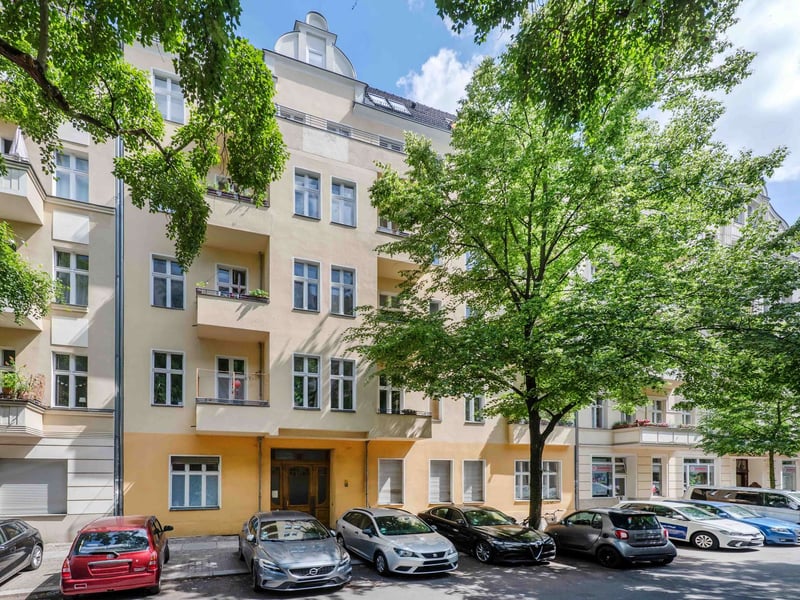
The building stock comprises 4,027 buildings. More than in most inner-city areas, the district's character is shaped by detached, semi-detached and terraced houses, alongside apartment buildings along Reichsstrasse and in Neu-Westend as well as 1920s housing estates in Eichkamp and at Ruhwald. No chart data source is available for construction periods; this assessment is based on the Guthmann market report.
The apartment structure is correspondingly more generous than in the single-person quarters of the inner city. The following overview shows how the stock is distributed across the size classes.
| Size class | Count | Share |
|---|---|---|
| Unter 40 m² | 2,670 | 12 % |
| 40-59 m² | 4,951 | 21 % |
| 60-79 m² | 5,763 | 25 % |
| 80-99 m² | 3,718 | 16 % |
| 100-119 m² | 1,857 | 8 % |
| 120-139 m² | 1,341 | 6 % |
| 140-159 m² | 813 | 4 % |
| 160-179 m² | 586 | 3 % |
| 180-199 m² | 433 | 2 % |
| 200+ m² | 948 | 4 % |
The use of the stock is also revealing for the social mix of the district and the share of owner-occupied property.
| Type of use | Count | Share |
|---|---|---|
| Rented | 16,846 | 72 % |
| Owner-occupied | 5,299 | 23 % |
| Vacant | 795 | 3 % |
| Commercial | 417 | 2 % |
In a largely mature villa and residential quarter, new development arises mainly through the denser development of individual plots rather than on large open spaces.
| Period | Apartment balance |
|---|---|
| 2021 | 24 apartments |
| 2022 | 170 apartments |
| 2023 | 18 apartments |
| 2024 | 48 apartments |
Overall, the high share of larger apartments and houses shifts the profile clearly towards families and long-term owner-occupancy, a contrast to the finely parcelled stock of the central districts.
Transport and Infrastructure
Westend is served by the U2 underground line, which connects the district to City West and the eastern inner city via the Theodor-Heuss-Platz, Neu-Westend, Olympia-Stadion and Kaiserdamm stations. To the north and east, the Ringbahn complements the network: the Messe Nord/ICC and Westend S-Bahn stations link the district to the S-Bahn ring. Bus connections to the adjoining quarters run via Theodor-Heuss-Platz and Heerstrasse.
For supra-regional transport, the location on the city motorway is decisive. The A100 and the historic AVUS run along the eastern and southern edge of the district and connect Westend to the city ring and the trunk road network. This connection makes the district easy to reach in transport terms, but it also brings noise along the routes, from which the quiet residential streets inside are largely shielded.
The supply infrastructure is solid. Reichsstrasse and Theodor-Heuss-Platz bundle retail and local amenities, with supermarkets and shops close to home. With the DRK Kliniken Berlin Westend, the district has a large hospital of supra-regional importance that is also a major employer in the quarter. Schools and daycare centres are spread across the district within the residential setting.
When it comes to greenery, Westend fares better than most inner-city districts. The Grunewald adjoins to the south, the Volkspark at Ruhwald lies to the north, and the many avenues draw the greenery right into the residential streets. Via the Olympic grounds and Heerstrasse, the routes towards the Havel and into the western recreation areas are short. This combination of urban proximity and greenery is among the defining locational features of the district.
Who Westend Suits
- Families seeking ownership: Generous apartments and houses, quiet residential streets and proximity to the Grunewald and green spaces appeal to families who want to stay in the west for the long term. The offering ranges from villas to apartments along Reichsstrasse.
- Established owner-occupiers: The age structure and the high share of larger apartments suit residents looking for a quiet, well-heeled location with good transport connections and a long stay.
- Commuters needing a western connection: The U2, the Ringbahn and the city motorway make Westend attractive for working people who need quick routes to City West, the trade fair grounds or across the city ring.
- Owners of villas and apartment buildings: The mature stock of villas, country houses and apartment buildings and its rare availability make Westend a location where existing properties are held over long periods.