

Nearly 170,000 people moved to Berlin in 2014. An analysis by the Office for Statistics Berlin-Brandenburg showed that the influx would continue in the years ahead. For the housing market, this meant demand continued to outstrip supply.
The ring as a dividing line
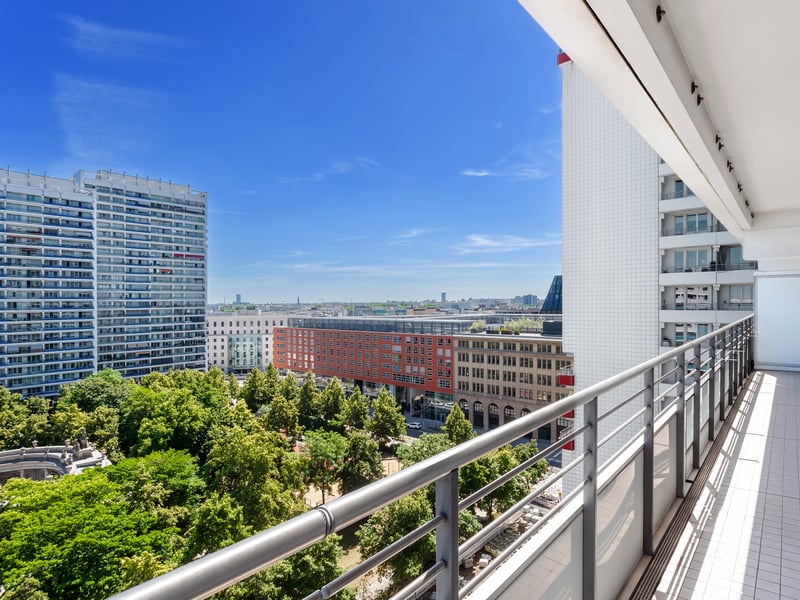
The statistics made it clear: most newcomers settled in central locations within the S-Bahn ring. Infrastructure, culture and jobs were all more concentrated there. In neighbourhoods such as "Noerdlicher Landwehrkanal" in Kreuzberg or "Unter den Linden Sued" in Mitte, people who had moved to Berlin already made up more than 80 percent of the population.
Within the ring, native Berliners only held a narrow majority in "Neu-Tempelhof" and "Thaelmannpark" in Prenzlauer Berg. Outside the ring, the picture was reversed: long-term residents dominated.
Historical patterns in demographics
The share of Turkish-origin residents in 2014 still traced the old course of the Wall. Since the 1960s, they had settled primarily in West Berlin boroughs, often along the border with the eastern part. Their share in the western half stood at 7.8 percent, compared to just 0.6 percent in the east. These established structures continued to shape the social composition of individual neighbourhoods.
Pressure spreading to outer boroughs
The influx into the city centre radiated outward. Areas beyond the S-Bahn ring that had previously been considered secondary locations increasingly attracted tenants and buyers. Boroughs such as Lichtenberg or parts of Treptow-Koepenick benefited from displacement out of the centre.
What this meant for investors
Population growth was the central driver behind the market development. For owners, strong demand meant stable values and reliable letting prospects for their apartments in Berlin. In the longer term, outer boroughs stood to gain in attractiveness as price pressure from the centre spread to surrounding areas. Closely tracking migration patterns was therefore a useful tool for identifying future high-potential locations.