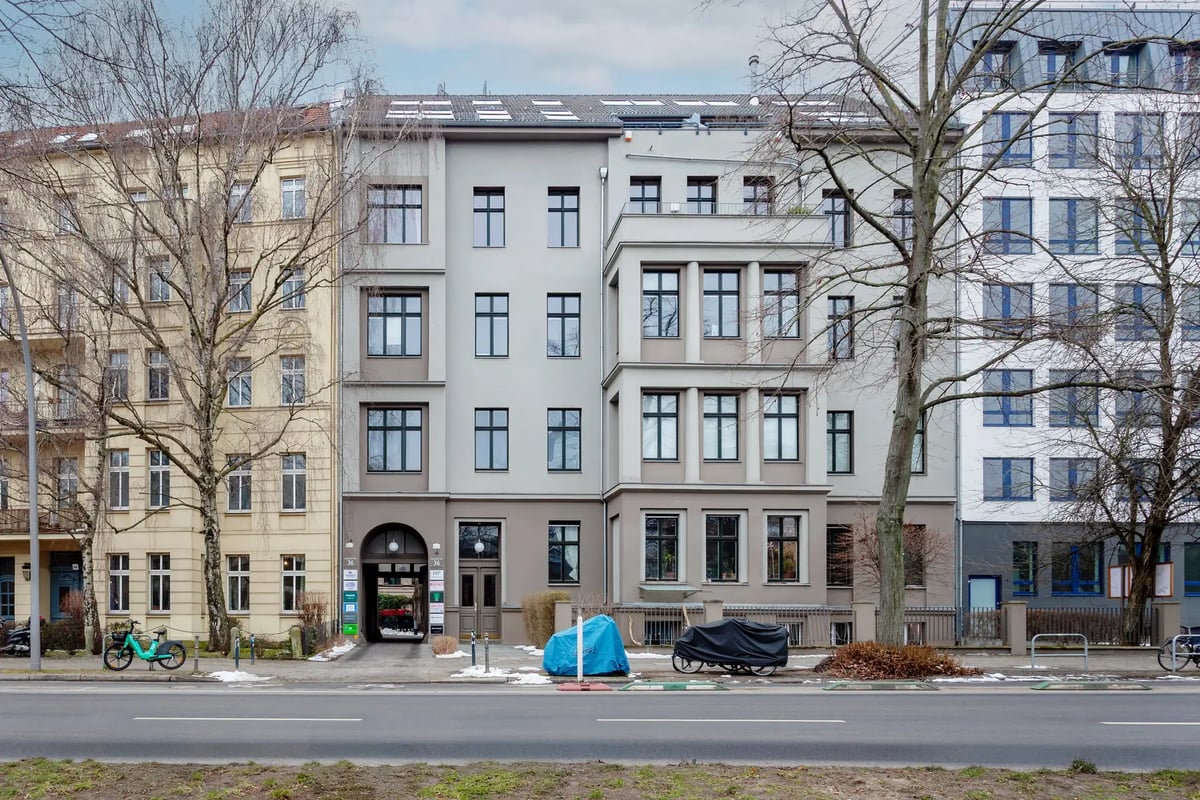


Stabilisation after two difficult years
In early 2025, Berlin's property market is calming down after the interest rate turnaround and the economic uncertainties of recent years. Price corrections appear to have run their course. Several segments are showing moderate price increases. The drivers are the same as they have been for years: population growth and high demand against limited supply.
Apartments: Listing prices slightly up
Average listing prices for apartments in Berlin are 0.80 percent above last year's level. After two years of declines, that signals consolidation. Prices are rising in 12 of 21 historical boroughs.
The spread between locations remains wide. In Mitte, resale apartments cost a median of 8,170 EUR per sqm, new developments 12,710 EUR per sqm. In Friedrichshain-Kreuzberg, the resale median is 6,230 EUR per sqm. More affordable entry points exist in Neukoelln (4,720 EUR per sqm) and Lichtenberg (around 4,400 EUR per sqm).
Apartment buildings: investors returning
The market for apartment buildings is turning. After pronounced caution since 2022, investment appetite has been rising since the third quarter of 2024. Transaction volumes in euro terms are increasing, even though floor space turnover is still declining. In other words, higher value properties are being traded again.
In Friedrichshain, apartment buildings currently sell for an average of 2,030 EUR per sqm of living area, corresponding to a multiple of around 22.5 of annual net cold rent. In Lichtenberg, prices sit at about 2,300 EUR per sqm.
Rental market: listing rents up 17 percent
Berlin's rental market remains extremely tight. Listing rents have risen roughly 17 percent year on year. The average cold rent for a 70 sqm apartment is 963 EUR, exceeding Hamburg's level for the first time.
The reasons: continued population inflow, stagnant new construction, and a shrinking supply of open ended rental contracts. More than half of rental listings are now temporary, a consequence of years of regulatory practice. Central boroughs like Mitte, Friedrichshain, and Prenzlauer Berg are particularly affected.
Vacant units and apartment buildings reclaim the spotlight
With listing prices up 0.80 percent and rents climbing 17 percent, the consolidation phase looks short. Tenanted condominiums are still trading at a discount, while vacant units and apartment buildings, where investment volumes have been rising since Q3 2024, set the pace. The current window offers entry pricing before market development tightens again.