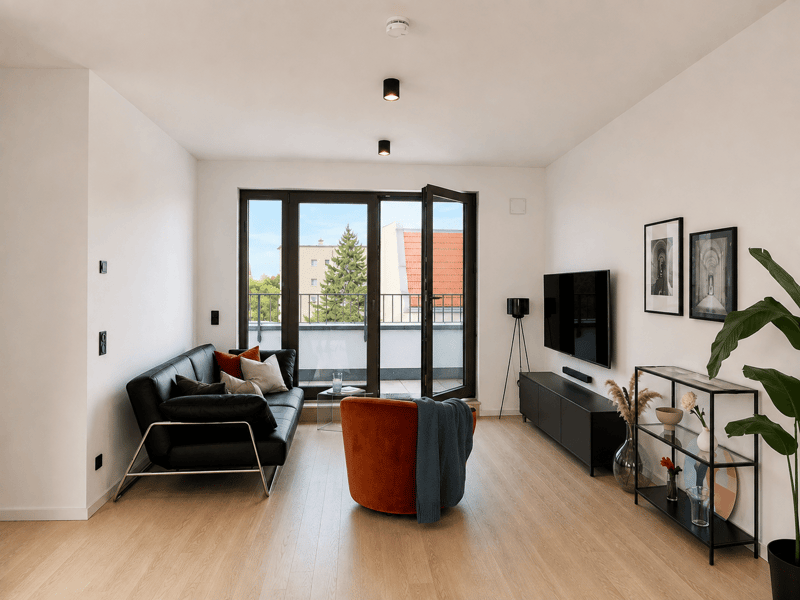


The Berlin Senate has published its social housing results for 2015: 1,014 subsidised new apartments, funded with roughly 67 million euros in interest-free construction loans and income-linked grants. According to Senator for Urban Development Andreas Geisel, the available funds were used "down to the last cent".
Net cold rent for these new apartments averages 6.50 euros per square metre. They are intended for low-income households.
Tripling planned by 2017
The 1,014 units were a first milestone. With the 2016/17 double budget, the Senate approved a phased increase: 2016 provides funding for 2,500 subsidised apartments, and from 2017 the target rises to 3,000 rent-controlled new units per year.
Geisel described this increase as a message to low-income households in the city.
Projects spread across the city
Subsidised projects are distributed across several boroughs. In central locations, apartments are created through infill development and densification. In outer boroughs such as Neukoelln, Lichtenberg and Pankow, larger neighbourhoods are being developed, often on former conversion sites.
What it means for the open market
The full take-up of subsidies shows that demand for new construction remains strong. Subsidised new builds increase the total housing supply, which according to Geisel should also ease pressure on the non-regulated market. The political focus on housing construction influences building permits and land allocation, changing the conditions for private investors in the coming years.