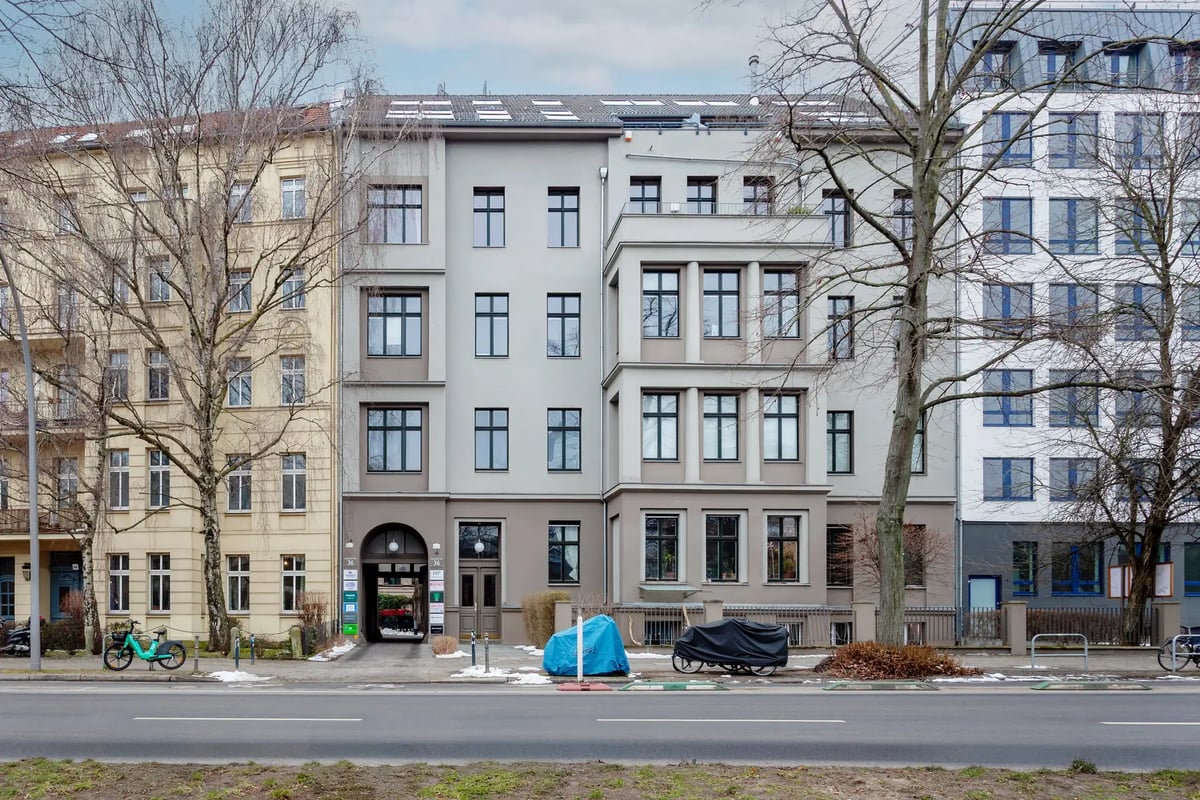


Thousands of apartments in Berlin affected
Asbestos remains a live issue in Berlin. According to a report by the Senate Department for Urban Development and the Environment (17/17 291), thousands of units owned by state housing companies are still contaminated. In the borough of Friedrichshain-Kreuzberg, 3,836 apartments pose an asbestos risk, mostly within GEWOBAG properties. degewo and WBM also report hundreds of cases. At state-owned Berlinovo, around 3,200 apartments are affected, mainly in flooring and adhesives. The companies rule out any acute risk to tenants as long as the materials remain undamaged.
The problem for private owners
There are no official surveys for the private sector. Experts assume, however, that the contamination level in privately rented apartments is similar or even higher. Asbestos was used in numerous building components until it was banned in Germany in 1993: facade panels, roofing, sewage pipes, tile adhesives and floor coverings (so-called floor-flex tiles). Buildings from the 1960s through the 1980s are particularly at risk. For owners, this becomes relevant during renovation or conversion work.
Legal obligations around asbestos
There is no general obligation to proactively test properties for asbestos. However, once contamination is known, an immediate reporting duty applies. Firmly bound asbestos in undamaged condition generally poses no danger. The risk arises when fibres are released through drilling, sawing or sanding.
Only certified specialist firms (qualified under TRGS 519) may carry out work on asbestos-containing materials. Even stricter rules apply to loosely bound asbestos products. Regulations cover protective measures, specialised work procedures and proper disposal. Unauthorised remediation attempts by laypeople or tenants are prohibited and can have serious legal and health consequences.
What owners should do
Owners of apartment buildings or apartments from the critical construction periods should review any available building documentation. When planning a purchase, asbestos should be part of the due diligence process. Suspicions can be confirmed through professional material analysis. Remediation is costly upfront but eliminates a significant defect. Over time, proper asbestos removal can increase a property's value and improve its position on the Berlin market.
Disclaimer
This article is for general information only and does not constitute tax or legal advice. The content does not replace individual consultation with a tax advisor or attorney. No liability is assumed for accuracy or completeness.