

Character and Identity
Pankow lies in the north of Berlin and is both a borough and a district at once, the core district of the administrative borough of the same name. The district owes its name to the Panke, the small river that winds through the quarter from the north. The district is home to 65,114 residents; the stock is spread across 35,820 apartments and 34,680 households (source: Amt für Statistik Berlin-Brandenburg).
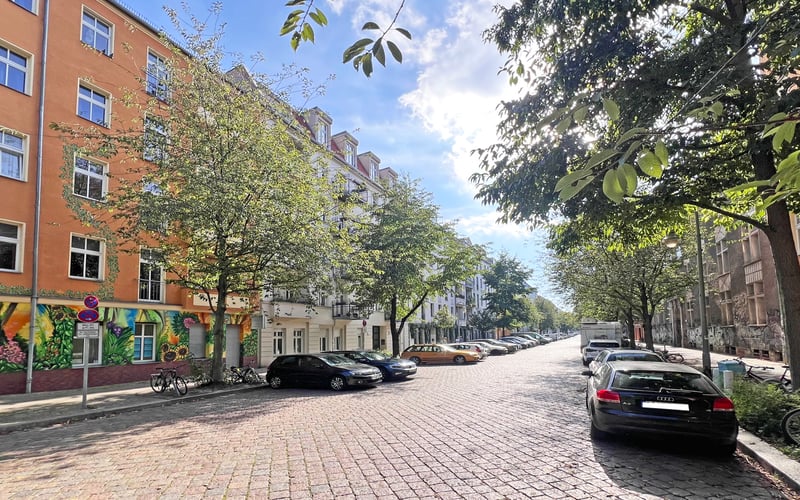
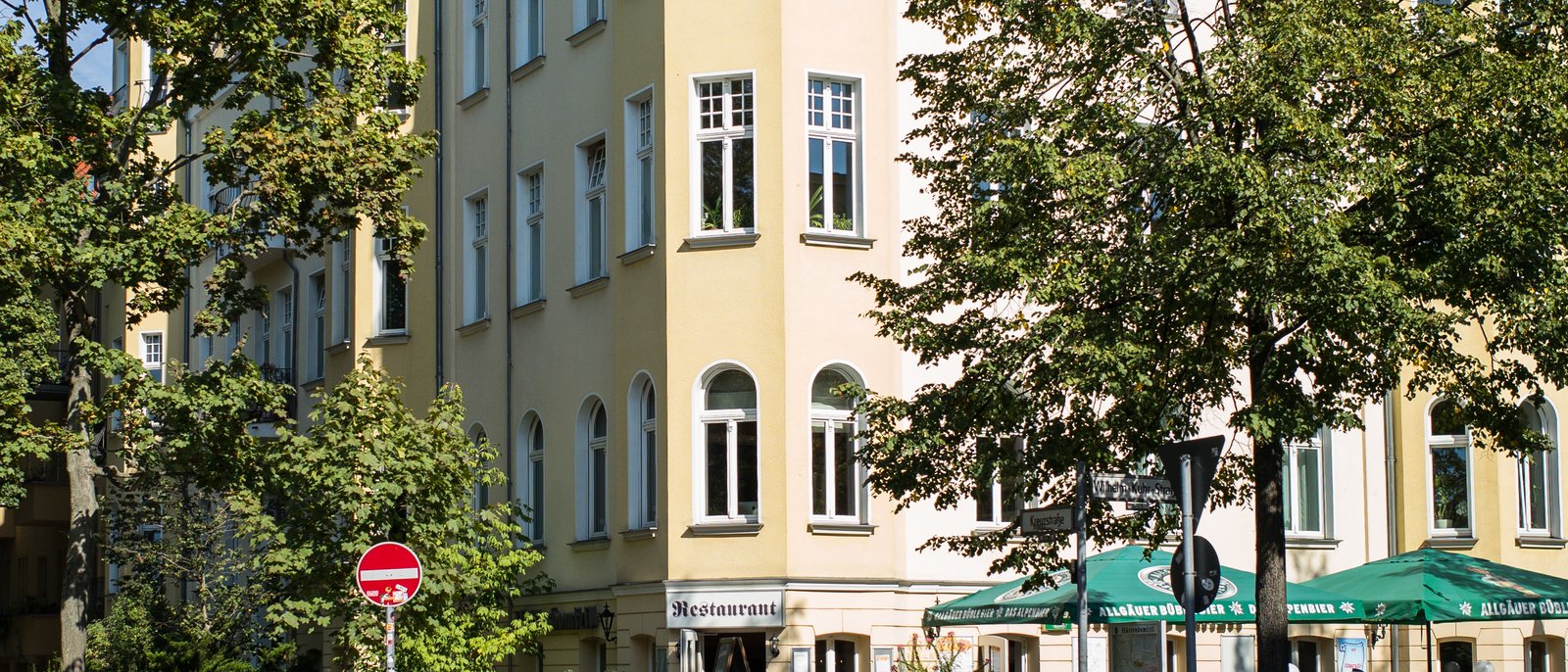
If you visit Pankow for the first time, you usually arrive at Bahnhof Pankow, where the S-Bahn, U-Bahn and tram converge and where Breite Straße begins as the high street. From there the way leads into two worlds: south into densely built Gründerzeit quarters, north into quieter residential areas with plenty of green, the Bürgerpark and the Schlosspark Schönhausen.
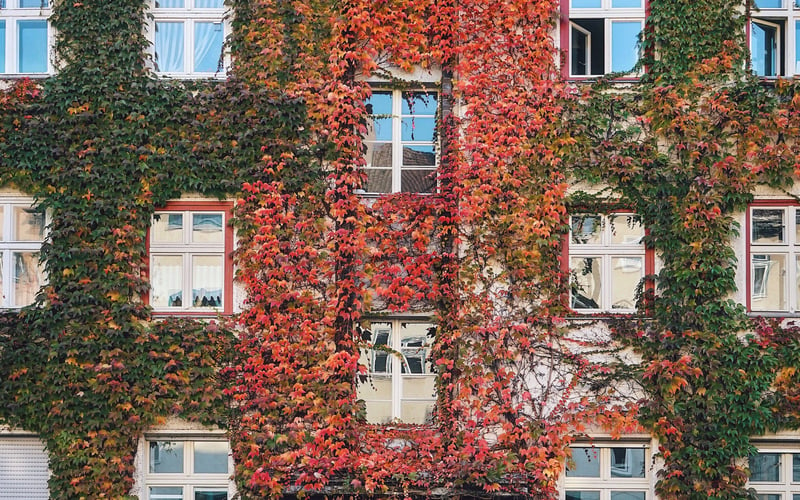
Pankow still carries the echo of its GDR past. For a long time the name was a synonym for the political elite of the state, who resided here. Little of that is felt today. In its place a middle-class, family-oriented residential atmosphere has emerged, one that makes Pankow an alternative for those who find Prenzlauer Berg or Friedrichshain too expensive or too dense.
For clarity: this portrait covers the Pankow district. The borough of Pankow of the same name additionally comprises Prenzlauer Berg, Weißensee, Niederschönhausen, Französisch Buchholz, Buch, Karow, Blankenburg and further districts in the north and north-east.
History and Change
Pankow goes back to a medieval Angerdorf on the Panke, whose village core around the old village church can still be read today. With industrialisation in the 19th century, the village grew into a suburb. Along Berliner Straße and Breite Straße, Gründerzeit apartment buildings appeared, and industrial firms settled here, among them the Garbáty cigarette factory and brewery facilities with a large malting house.
With incorporation in 1920, Pankow became part of Greater Berlin. In the 18th century, Schloss Schönhausen on the northern edge had already brought courtly prominence to Pankow; in the 20th century the quarter was to become an address of power once more. After 1949, Schloss Schönhausen served as the official residence of the first president of the GDR, and in the quiet villa streets north of the Bürgerpark the state and party leadership took up their residences. The Majakowskiring developed into the secluded residential area of the functionary elite.
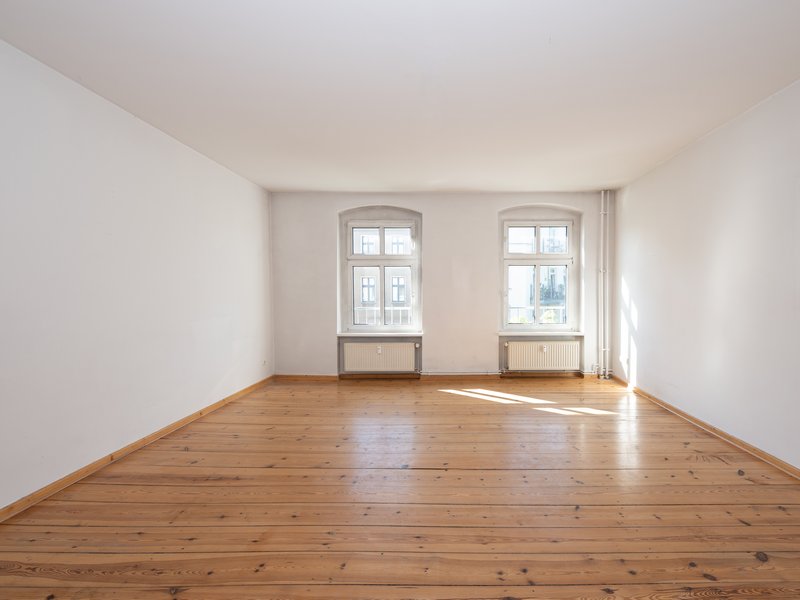
After 1990, Pankow lost this special role and transformed from a remote northern edge into a sought-after residential area. Former industrial sites were repurposed: apartments and lofts were created in the former malting house and in the old Garbáty factory. The Gründerzeit period stock was renovated step by step, and the continuing influx of young families from the inner boroughs shifted the character of the district towards a quiet, middle-class residential quarter with an urban core.
Sights
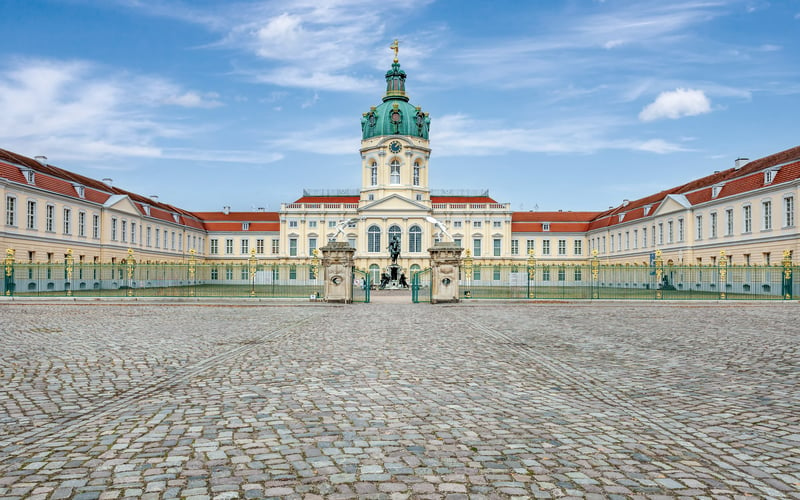
The most defining building is Schloss Schönhausen with its expansive palace park on the northern edge of the district. The Baroque complex served Prussian queens as a summer residence and later the GDR for representational purposes; today it is accessible as a museum palace, the park a popular destination for local recreation. Directly adjacent lies the palace church.
In the heart of the district stretches the Bürgerpark Pankow on the Panke, one of the oldest municipal parks in Berlin, whose historic entrance portal on Wilhelm-Kuhr-Straße has been preserved. Further north adjoins the Schönholzer Heide, a larger wooded area that houses a Soviet war memorial.
The historic village green with the old village church marks the medieval origin. The commercial axis of Breite Straße connects these poles and concentrates retail, markets and gastronomy. The former Garbáty cigarette factory and the old malting house stand as industrial monuments to the structural change of the quarter.
Popular Kieze in Pankow
- Florakiez: Located around Florastraße, dense Gründerzeit period buildings with cafés, small shops and a young, family-oriented residency. One of the most sought-after residential areas of the district.
- Pankow Zentrum / Breite Straße: The urban heart around Bahnhof Pankow, with high street, weekly market and the highest density of amenities in the district. A mix of Gründerzeit and post-war construction.
- Schlosspark and Bürgerpark areas: Quiet residential streets between the two large green spaces, characterised by villas, townhouses and upscale period buildings.
- Old village core: Around the village church and the historic green, the rural origin of Pankow with small-scale development.
Scene and Everyday Life
Everyday life in Pankow plays out less in a pronounced nightlife scene than in the Kieze and parks. Breite Straße is the central supply and shopping axis, with a weekly market, supermarkets and down-to-earth gastronomy. Cafés, bakeries and small shops are concentrated in the Florakiez and along the main streets.
Social life moves outdoors in good weather: into the Bürgerpark, into the Schlosspark Schönhausen and into the Schönholzer Heide. Sports and leisure facilities as well as the open-air pool in the Bürgerpark are among the fixed points of reference. If you are looking for vibrant nightlife, you will find it in neighbouring Prenzlauer Berg, reachable within a few minutes; Pankow itself remains quieter and more everyday-oriented.
Who Lives in Pankow
Pankow is a family-oriented district with a mature resident population. How the households are distributed by size is shown in the following breakdown.
| Household size | Count | Share |
|---|---|---|
| 1 person | 20,070 | 58 % |
| 2 people | 7,732 | 22 % |
| 3 people | 3,741 | 11 % |
| 4 people | 2,388 | 7 % |
| 5 people | 514 | 1 % |
| 6+ people | 235 | <1 % |
The age structure is more broadly mixed than in the inner boroughs; alongside working-age people of middle years, families with children and a noticeable share of older, long-established residents shape the picture.
| Age group | Count | Share |
|---|---|---|
| under 6 | 3,395 | 5 % |
| 6–15 | 5,906 | 9 % |
| 15–18 | 1,933 | 3 % |
| 18–27 | 6,210 | 10 % |
| 27–45 | 20,062 | 31 % |
| 45–55 | 9,586 | 15 % |
| 55–65 | 8,282 | 13 % |
| 65+ | 9,740 | 15 % |
Pankow is also internationally mixed, although less pronounced than the central districts. The composition of the resident population by region of origin is shown in the following overview.
| Region of origin | Count | Share |
|---|---|---|
| EU | 5,560 | 44 % |
| Russia | 1,081 | 9 % |
| Ukraine | 1,017 | 8 % |
| Turkey | 942 | 7 % |
| India | 654 | 5 % |
| Syria | 595 | 5 % |
| USA | 488 | 4 % |
| unassigned | 402 | 3 % |
| United Kingdom | 391 | 3 % |
| Afghanistan | 357 | 3 % |
| Vietnam | 323 | 3 % |
| Iran | 289 | 2 % |
| China | 197 | 2 % |
| Lebanon | 148 | 1 % |
| Kazakhstan | 142 | 1 % |
| Iraq | 128 | 1 % |
Who Is Drawn to Pankow
How the population renews itself is shown by the migration data. Unlike most Berlin districts, which carry their growth above all through influx from abroad, Pankow draws strongly on exchange within Berlin; the influx from the city itself accounts for a considerable part of the growth.
| # | Country | Inflow | Outflow | Net |
|---|---|---|---|---|
| 1 | Indien | 132 | 42 | 90 |
| 2 | Ukraine | 78 | 60 | 18 |
| 3 | Italien | 70 | 56 | 14 |
| 4 | Russische Föderation | 56 | 21 | 35 |
| 5 | Türkei | 49 | 19 | 30 |
| 6 | Arabische Republik Syrien | 33 | 9 | 24 |
| 7 | Islamische Republik Iran | 31 | 10 | 21 |
| – | Deutschland | 1,010 | 1,472 | -462 |
Within Berlin, the exchange is closely tied to the adjacent districts in the north and north-east as well as to the inner boroughs.
| # | District | People |
|---|---|---|
| 1 | Prenzlauer Berg | 529 |
| 2 | Gesundbrunnen | 267 |
| 3 | Friedrichshain | 212 |
| 4 | Mitte | 188 |
| 5 | Weißensee | 188 |
In the opposite direction the movement runs similarly small-scale, above all into the neighbouring districts and the nearby surrounding area.
| # | District | People |
|---|---|---|
| 1 | Prenzlauer Berg | 304 |
| 2 | Niederschönhausen | 258 |
| 3 | Weißensee | 154 |
| 4 | Friedrichshain | 133 |
| 5 | Gesundbrunnen | 117 |
Buildings and Apartments
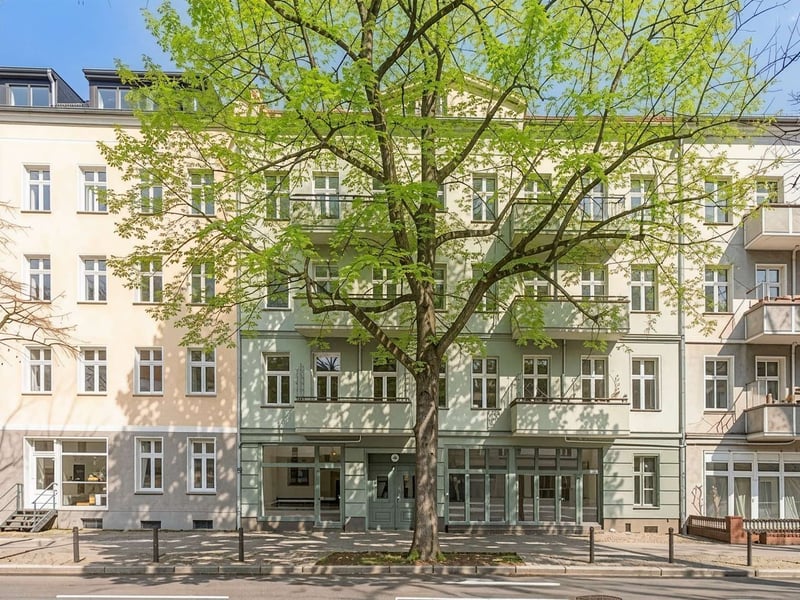
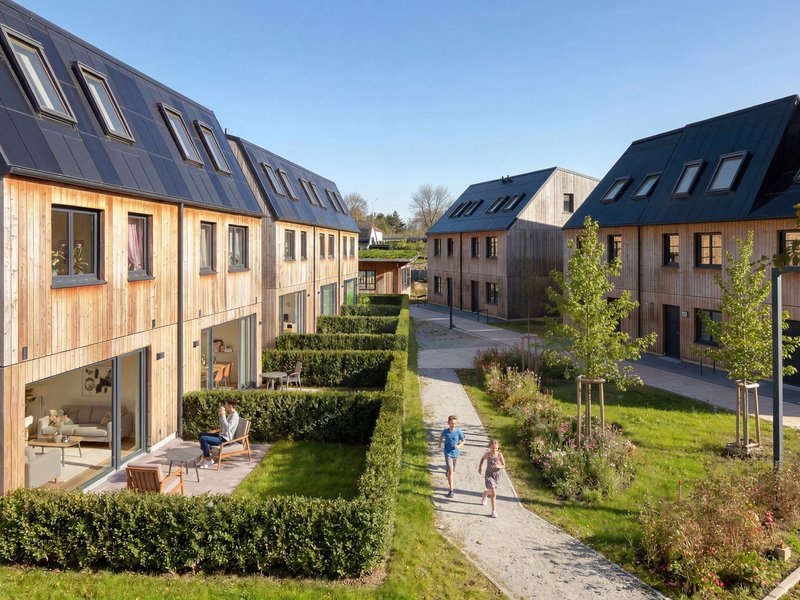
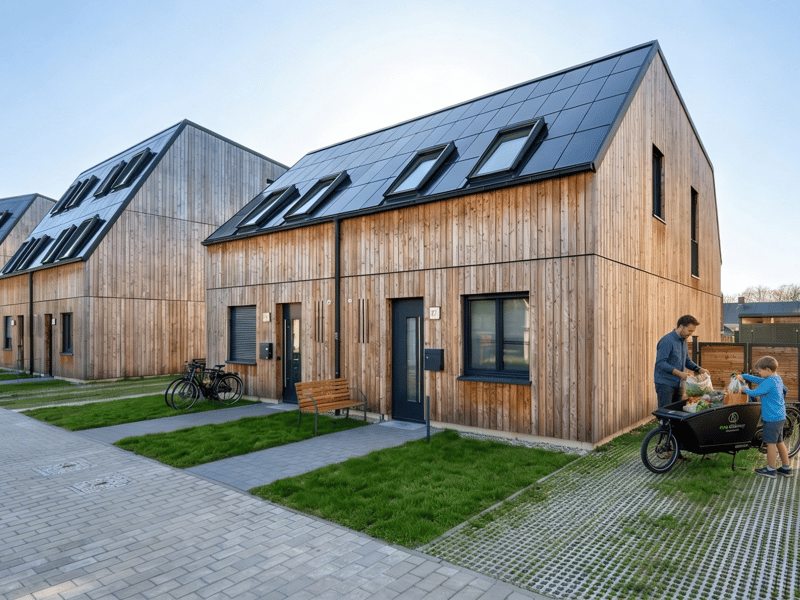
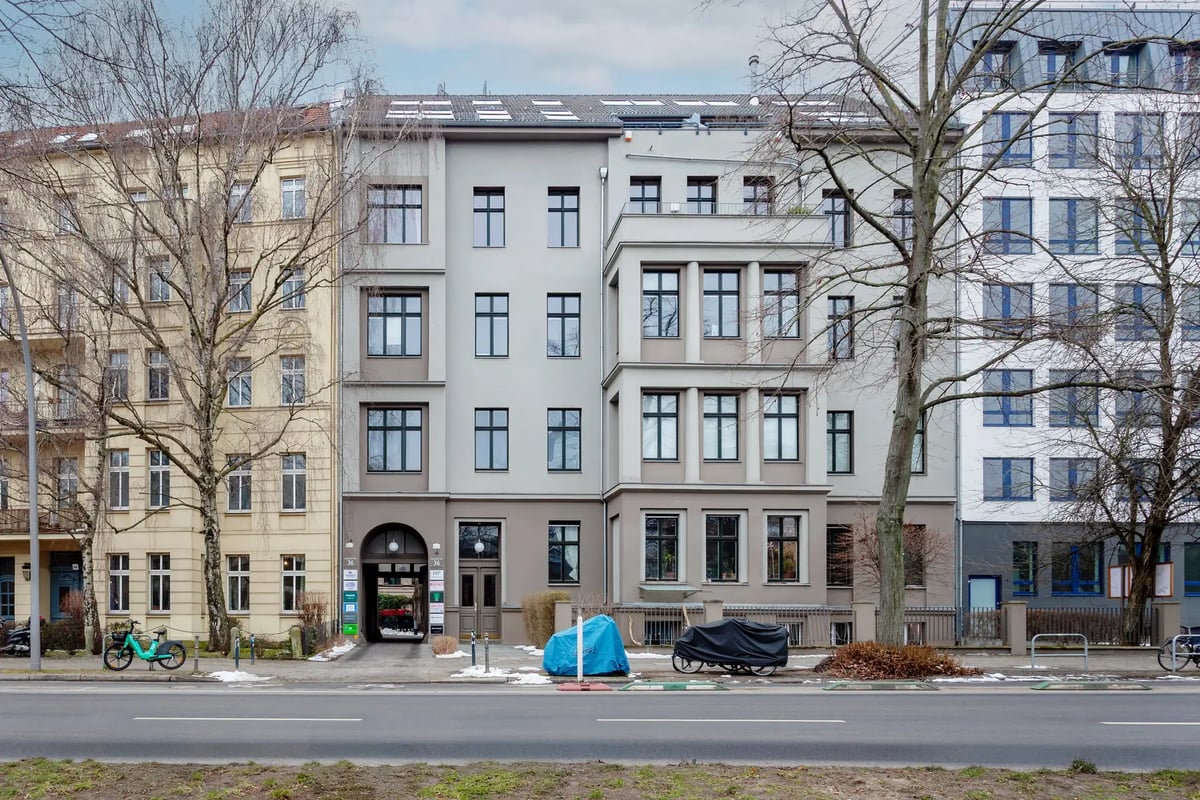
The building stock comprises 3,648 buildings. Characteristic of Pankow is the mix of Gründerzeit period buildings in the southern and central areas, villas and townhouses in the park-adjacent quarters, post-war and GDR residential buildings, as well as repurposed industrial buildings and newer residential complexes. A chart data source for construction periods is not available; this assessment is based on the Guthmann market report.
How the apartment stock is distributed across the size classes is shown in the following overview. Compared to the single-person quarters of the inner city, the share of larger, family-suitable apartments in Pankow is higher.
| Size class | Count | Share |
|---|---|---|
| Unter 40 m² | 2,501 | 7 % |
| 40-59 m² | 13,553 | 38 % |
| 60-79 m² | 11,223 | 31 % |
| 80-99 m² | 4,949 | 14 % |
| 100-119 m² | 1,964 | 5 % |
| 120-139 m² | 908 | 3 % |
| 140-159 m² | 460 | 1 % |
| 160-179 m² | 159 | <1 % |
| 180-199 m² | 75 | <1 % |
| 200+ m² | 59 | <1 % |
The use of the stock is also revealing for the social mix of the district.
| Type of use | Count | Share |
|---|---|---|
| Rented | 32,170 | 89 % |
| Owner-occupied | 2,658 | 7 % |
| Vacant | 987 | 3 % |
| Commercial | 485 | 1 % |
New construction activity in Pankow has been consistently high by Berlin standards for years. How the apartment balance has developed over time is shown in the following representation.
| Period | Apartment balance |
|---|---|
| 2021 | 622 apartments |
| 2022 | 151 apartments |
| 2023 | 471 apartments |
| 2024 | 56 apartments |
In the borough of Pankow, several conservation areas under § 172 BauGB apply, regulating conversion and modernisation in selected quarters (source: Bezirksamt Pankow von Berlin).
Transport and Infrastructure
Towards the north, Pankow is the terminus of the U2, which runs via Schönhauser Allee, Senefelderplatz, Alexanderplatz and Stadtmitte all the way to Ruhleben in the west, connecting the district directly with the city. At Bahnhof Pankow the U-Bahn, S-Bahn and tram converge; the S-Bahn lines of the northern ring and the Stettin railway link Pankow to the ring and the northern outer boroughs. A dense tram and bus network opens up the residential quarters and connects them with the neighbouring districts of Niederschönhausen, Weißensee and Prenzlauer Berg.
For longer-distance travel, Berlin Hauptbahnhof is quickly reachable via the U-Bahn and S-Bahn, while the motorway feeder in the north links to the Berlin ring road. Berliner Straße and Breite Straße form the central traffic axes, complemented by cycle connections along the Panke and through the parks.
Education and local amenities are densely available in the residential environment. Pankow has numerous primary schools, secondary schools and day-care centres, which supports the family character of the district. Amenities are concentrated on Breite Straße with its weekly market and retail as well as on the commercial areas of the residential Kieze; supermarkets lie along the main axes close to homes.
In terms of green space, Pankow is well equipped. The Bürgerpark on the Panke, the Schlosspark Schönhausen and the Schönholzer Heide form a connected network of recreational areas that makes the district considerably greener than the densely built inner-city districts. The Panke itself runs as a green axis with riverside paths through the quarter.
Who Pankow Suits
- Families from the inner boroughs: Larger apartments, plenty of green and a dense supply of schools and day-care centres make Pankow the obvious alternative for those who find Prenzlauer Berg too expensive or too cramped.
- Owner-occupiers in upscale period buildings: Renovated Gründerzeit apartments in the Florakiez and villas in the park areas appeal to buyers seeking living quality and quiet with good city connections.
- Commuters with an inner-city focus: The direct U2 connection and the hub at Bahnhof Pankow bring the city within short reach without the density of the central areas.
- Long-term-oriented investors: A well-maintained, mixed stock and a comparatively relaxed market situation speak for Pankow as a location with a long-term perspective; conservation areas regulate conversion and modernisation in parts of the district.