

Character and Identity
Zehlendorf is the namesake district of the borough of Steglitz-Zehlendorf and lies at the far southwestern edge of Berlin, where the city gives way to forest, lakes and the boundary with Brandenburg. The district is home to 53,066 residents; its housing is spread across 27,631 apartments and 26,451 households (source: Amt für Statistik Berlin-Brandenburg).
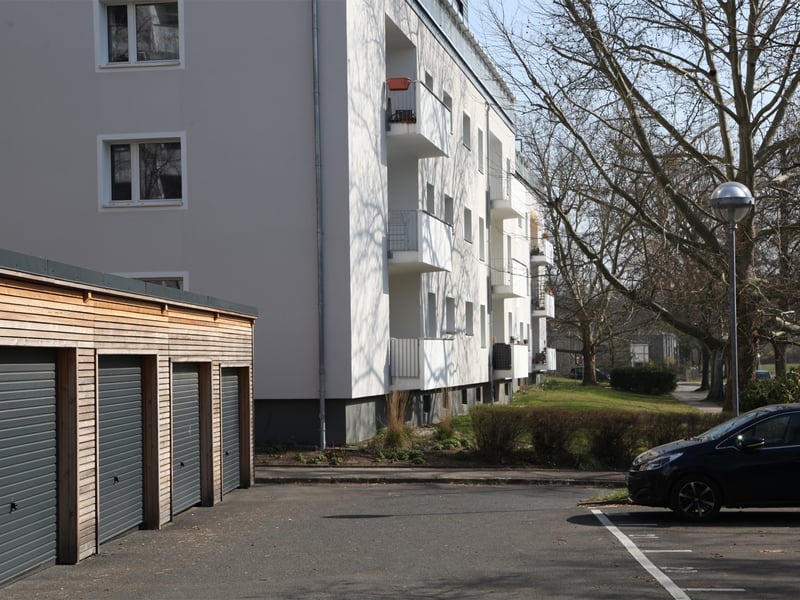
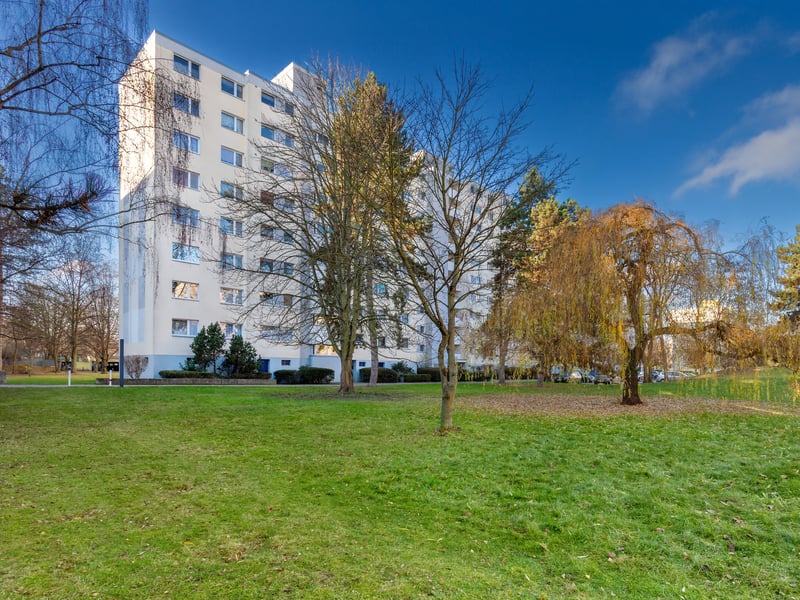
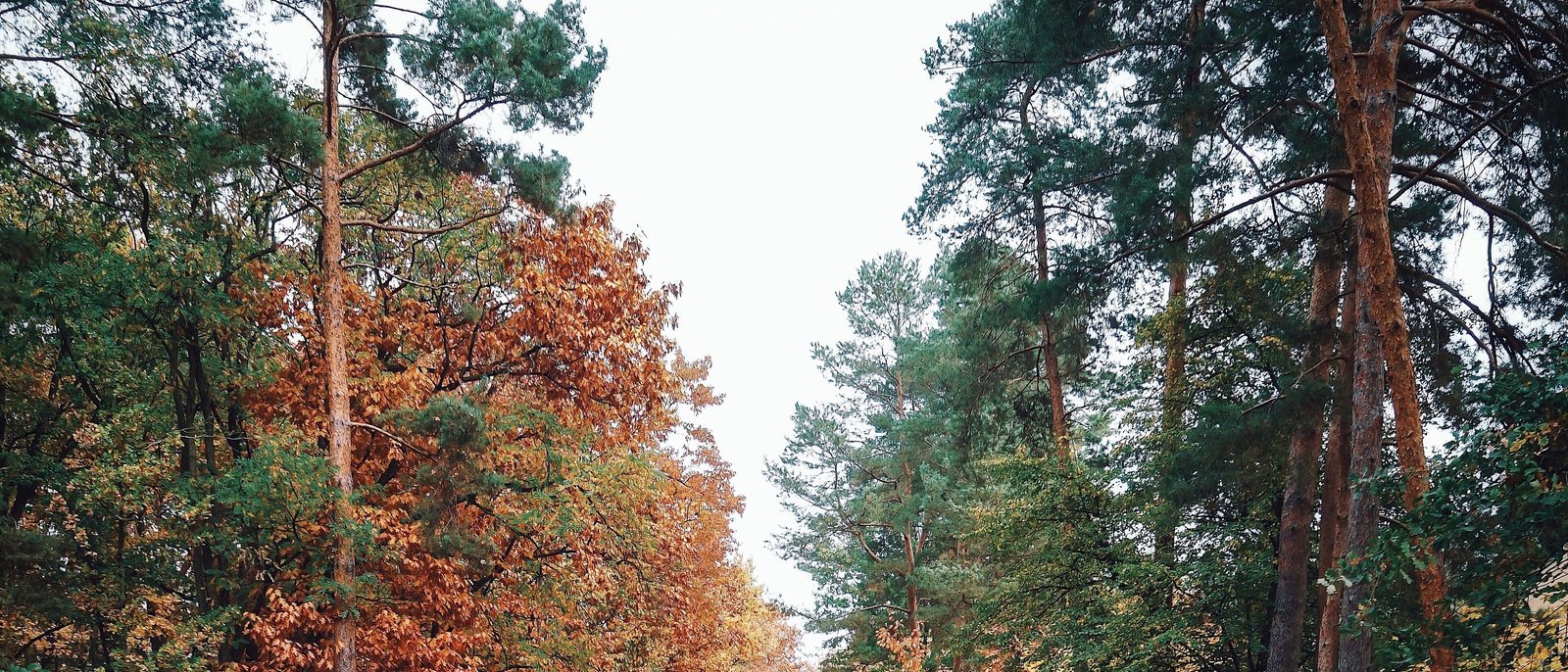
If you come to Zehlendorf, you quickly notice that the big city speaks in a different register here. Instead of dense perimeter block development, the picture is shaped by single-family houses, villas, garden-city settlements and loosely arranged apartment buildings, with mature trees and front gardens in between. The historic village core around the village church and Teltower Damm is a reminder that Zehlendorf was long an independent village at the gates of Berlin.
At the same time, Zehlendorf is no remote suburb. The S-Bahn reaches Bahnhof Zoo in a quarter of an hour, and the proximity to the Free University in neighbouring Dahlem has given the district an academic character for decades. This blend of village origins, comfortable residential calm and good links to the city centre defines its character.
For context: this portrait covers the district of Zehlendorf. Today's borough of Steglitz-Zehlendorf additionally includes, among others, Steglitz, Lichterfelde and Lankwitz as well as the water-rich districts of Dahlem, Nikolassee and Wannsee, which are often mentioned in the same breath but are administratively separate districts in their own right.
History and Change
Zehlendorf is first documented in the 13th century and was for centuries a Mark Brandenburg village green settlement on the old route between Berlin and Potsdam. The village church in the heart of the district dates back to this early settlement history. Agriculture and the location on the trade road shaped life here for a long time, until the railway brought the village within reach of the growing capital.
With the connection to the Stammbahn and later the Wannseebahn in the 19th century, development into a residential location began. Affluent Berliners discovered the leafy southwest as an address away from the tenement blocks. Country houses and villas were built, and Zehlendorf grew from a farming village into a comfortable suburban community. In 1920, as part of the formation of Greater Berlin, the village was incorporated and initially formed its own borough in the southwest.
In the 1920s, Zehlendorf became a stage for reform housing construction. Under the influence of the English garden-city movement, green settlements with low-rise houses, gardens and well-considered floor plans were built, among them the Waldsiedlung Zehlendorf, which is regarded as an example of New Building (Neues Bauen) because of its colourful design. These settlements still shape entire quarters of the district today.
After 1945, Zehlendorf lay in the American sector. For more than four decades, US forces and their families had a presence in the southwest, with barracks, residential complexes and their own infrastructure. This phase left its mark, from the international character to properties that were converted into civilian residential and educational sites after the Allies withdrew. Since the borough boundary reform of 2001, Zehlendorf has belonged to the merged borough of Steglitz-Zehlendorf.
Points of Interest
The district's best-known structure stands on Mexikoplatz. Its S-Bahn station, with a sweeping Art Nouveau façade, is considered one of Berlin's most beautiful station buildings and, together with the semicircular square and its mature trees, forms an urban-design ensemble. The square is both a meeting point and a starting point, with paths leading from here into the surrounding villa streets.
In the historic core lies the Zehlendorf village church, a quiet anchor between Teltower Damm and the surrounding residential streets. It points to the village past that the district, for all its development, has never quite set aside.
Architecturally, the settlements of the 1920s are especially worth seeing. The Waldsiedlung Zehlendorf, popularly named after a former tavern, shows the colourful, garden-oriented housing of those years and is now a listed monument. Walking through its streets, you see a deliberately designed alternative to the dense tenement block.
In terms of natural surroundings, the transition to the Grunewald forest and the lakes is part of the district's appeal. The Krumme Lanke on the western edge is a popular destination for walks and a swim, and the nearby Schlachtensee in the neighbouring district is also quickly reached from Zehlendorf. This landscape of forest and water is part of the identity of the southwest.
Popular Kieze in Zehlendorf
- Zehlendorf-Mitte / village core: Around the village church and Teltower Damm lies the historic centre with retail, a weekly market and administrative facilities. Here apartment buildings and smaller residential houses mix into the liveliest part of the district.
- Mexikoplatz: The quarter around the Art Nouveau station is regarded as one of the most elegant residential areas, shaped by villas, mature trees and quiet streets close to the water.
- Waldsiedlung Zehlendorf: The listed reform settlement of the 1920s, with its colourful houses and green pathways, forms a character of its own between garden city and forest.
- Onkel-Toms-Siedlung: This garden-city quarter in the west combines low-rise residential rows, plenty of greenery and small-scale local amenities at the forest edge.
Scene and Everyday Life
Everyday life in Zehlendorf is more neighbourly than nocturnal. Its focal point is Teltower Damm, with shops, cafés, bakeries and a weekly market that serves the surrounding residential streets. Instead of continuous nightlife strips, the picture is shaped by individual established eateries, ice cream parlours and restaurants, often with regulars from the neighbourhood.
If you are looking for culture, you will find it in quieter forms. A long-established borough cinema, smaller stages and the libraries are part of the offering, and the surroundings of the nearby Free University bring lectures, readings and an academic audience. In summer, social life often plays out outdoors, at the Krumme Lanke, in the parks and gardens, and on the lakeshores of the southwest.
Who Lives in Zehlendorf
Zehlendorf is shaped more by families and established households than the central districts. How households are distributed by size is shown in the following breakdown.
| Household size | Count | Share |
|---|---|---|
| 1 person | 13,703 | 52 % |
| 2 people | 6,912 | 26 % |
| 3 people | 2,692 | 10 % |
| 4 people | 1,973 | 7 % |
| 5 people | 736 | 3 % |
| 6+ people | 435 | 2 % |
The age structure skews older than the Berlin average, with a noticeable share of established and older age groups alongside families with children.
| Age group | Count | Share |
|---|---|---|
| under 6 | 2,193 | 4 % |
| 6–15 | 4,325 | 8 % |
| 15–18 | 1,556 | 3 % |
| 18–27 | 4,857 | 9 % |
| 27–45 | 10,312 | 19 % |
| 45–55 | 5,988 | 11 % |
| 55–65 | 8,316 | 16 % |
| 65+ | 15,519 | 29 % |
At the same time, the district has an international note, historically linked to the American presence and the proximity to the Free University. How the resident population breaks down by region of origin is shown in the following chart.
| Region of origin | Count | Share |
|---|---|---|
| EU | 4,211 | 36 % |
| USA | 1,225 | 11 % |
| Ukraine | 980 | 8 % |
| Turkey | 898 | 8 % |
| Russia | 657 | 6 % |
| Iran | 627 | 5 % |
| unassigned | 612 | 5 % |
| Syria | 598 | 5 % |
| India | 457 | 4 % |
| China | 355 | 3 % |
| United Kingdom | 355 | 3 % |
| Afghanistan | 200 | 2 % |
| Iraq | 126 | 1 % |
| Lebanon | 116 | <1 % |
| Vietnam | 98 | <1 % |
| Kazakhstan | 97 | <1 % |
Who Is Drawn to Zehlendorf
How the population renews itself is shown by the migration data. Inflows from across the city boundary and from abroad account for part of the movement, while the exchange with the surrounding region and the neighbouring boroughs produces patterns of its own.
| # | Country | Inflow | Outflow | Net |
|---|---|---|---|---|
| 1 | Ukraine | 124 | 83 | 41 |
| 2 | Indien | 71 | 28 | 43 |
| 3 | China | 53 | 24 | 29 |
| 4 | Türkei | 46 | 15 | 31 |
| 5 | Islamische Republik Iran | 46 | 12 | 34 |
| 6 | Russische Föderation | 35 | 18 | 17 |
| 7 | Arabische Republik Syrien | 33 | 10 | 23 |
| – | Deutschland | 854 | 1,132 | -278 |
Within Berlin, the exchange is closely tied to the neighbouring districts of the southwest and the adjoining quarters of the borough.
| # | District | People |
|---|---|---|
| 1 | Lichterfelde | 245 |
| 2 | Schöneberg | 186 |
| 3 | Steglitz | 183 |
| 4 | Charlottenburg | 174 |
| 5 | Wilmersdorf | 154 |
In the opposite direction, the movement runs along similarly small-scale lines, primarily into the neighbouring districts and the closer surrounding region.
| # | District | People |
|---|---|---|
| 1 | Lichterfelde | 252 |
| 2 | Steglitz | 129 |
| 3 | Schöneberg | 115 |
| 4 | Wilmersdorf | 112 |
| 5 | Charlottenburg | 109 |
Buildings and Apartments
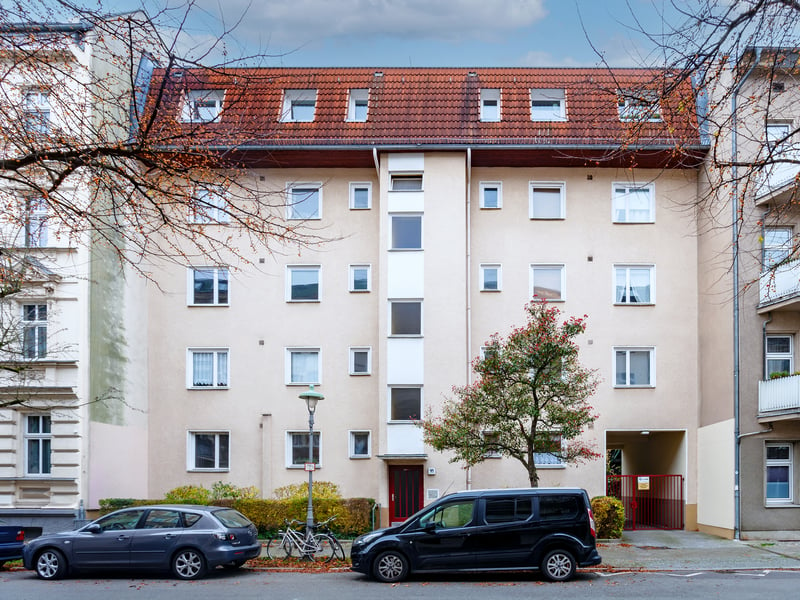
The building stock comprises 9,311 buildings. Unlike in the inner-city districts, detached houses, semi-detached and terraced houses as well as small-scale apartment buildings dominate here. A considerable part of the stock dates back to suburban development before 1920 and the settlements of the 1920s, supplemented by post-war construction and occasional new development. A chart data source for construction periods is not available; this assessment is based on the Guthmann market report.
In line with the many family households, the share of larger apartments is higher than in the central districts. How the stock is distributed across the size classes is shown in the following overview.
| Size class | Count | Share |
|---|---|---|
| Unter 40 m² | 1,432 | 5 % |
| 40-59 m² | 6,737 | 24 % |
| 60-79 m² | 7,215 | 26 % |
| 80-99 m² | 4,231 | 15 % |
| 100-119 m² | 2,744 | 10 % |
| 120-139 m² | 2,043 | 7 % |
| 140-159 m² | 1,082 | 4 % |
| 160-179 m² | 673 | 2 % |
| 180-199 m² | 454 | 2 % |
| 200+ m² | 1,025 | 4 % |
The use of the stock is also revealing for the social mix, with a higher share of owner-occupied property than the Berlin average.
| Type of use | Count | Share |
|---|---|---|
| Rented | 17,930 | 64 % |
| Owner-occupied | 8,958 | 32 % |
| Vacant | 678 | 2 % |
| Commercial | 377 | 1 % |
New development in this densely green district tends to arise selectively, through individual projects and infill rather than on large open sites.
| Period | Apartment balance |
|---|---|
| 2021 | 138 apartments |
| 2022 | 13 apartments |
| 2023 | 48 apartments |
| 2024 | 26 apartments |
Transport and Infrastructure
Zehlendorf is well connected to the city centre via the S-Bahn. The Wannseebahn links the district through the Zehlendorf and Mexikoplatz stations with Steglitz, Bahnhof Zoo and the wider city network, running in parallel with the connection towards Wannsee and Potsdam. In addition, bus lines and Teltower Damm as a main axis open up the district. The urban motorway to the northwest and the arterial roads towards Potsdam connect Zehlendorf to the regional road network.
Education is a defining feature of the southwest. The Free University in neighbouring Dahlem is quickly reachable from Zehlendorf and shapes the surroundings with students and academics. The district itself is home to several well-regarded general schools as well as day-care centres, which fits the family orientation of the quarter.
Local amenities are concentrated on Teltower Damm and in the village core, with supermarkets, specialist shops and the weekly market. Added to this are doctors close to home, pharmacies and smaller centres within the settlements. For larger shopping trips, the centres in Steglitz are within a short distance.
When it comes to greenery, Zehlendorf does not have to economise. The transition to the Grunewald, the Krumme Lanke and the nearby lakes of the southwest offer local recreation right on the doorstep, alongside parks, allotment gardens and consistently abundant trees in the residential streets. This provision of green space is among the most pronounced of any Berlin district.
Who Zehlendorf Suits
- Families seeking a home of their own: A high share of larger apartments and houses, plenty of greenery and a well-regarded range of schools appeal to families looking for space and residential calm.
- Established owner-occupiers and retirees: The older age structure and the high share of ownership suit people who want to live long-term in a quiet, leafy location.
- Academic milieu: The proximity to the Free University in Dahlem makes the district attractive for academics and the university's international guests, including with a view to rental housing.
- Nature-loving commuters: If you value forest and lakes on your doorstep while still wanting to reach the city centre by S-Bahn in a manageable time, Zehlendorf offers the balance between the two.